Two hours
Two hours: Plaza de España, La Concepción exterior, TEA exterior and the market if open. No full exhibitions, Palmetum or beach.

WHAT TO SEE AND HOW TO PLAN
Explore the historic centre between Plaza de España, La Concepción, the market and TEA. Add García Sanabria as another urban section or allocate time to the Auditorium and Palmetum to the south. Las Teresitas is a separate bus outing, not a continuation of the central walk.
Durations are indicative: queues and all indoor visits are not included.
Two hours: Plaza de España, La Concepción exterior, TEA exterior and the market if open. No full exhibitions, Palmetum or beach.
One day: historic centre, market and TEA in the morning, choosing one interior. After lunch choose García Sanabria or the Auditorium and Palmetum, checking garden admission and last entry. Do not also add Las Teresitas.
Two days: devote day one to the centre, TEA and García Sanabria. On day two choose the Auditorium and Palmetum or an unhurried Las Teresitas outing on bus 910. Combining both requires fewer interiors and planned transfers and return travel.
With children: a short market and central walk followed by García Sanabria. Palmetum is another activity requiring admission and breaks; Las Teresitas needs its own outing, transport and attention to swimming conditions. There is no need to complete eight stops.
Rain: prioritise TEA exhibitions with confirmed opening and a central meal. The Auditorium requires a booked tour or performance. Shorten or omit Palmetum and the beach in poor weather; check official transport notices before travelling.
OpenStreetMap loads on request. Markers are indicative, not audited entrances. Use links for street directions.
Audio uses your device voice and depends on your browser. The full text is always available to read.
1 / 8 · SANTA CRUZ DE TENERIFE
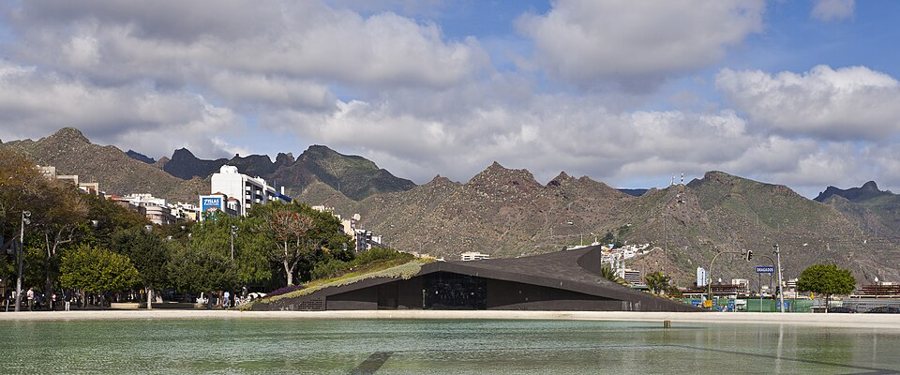
Plaza de España reveals Santa Cruz’s transformation from a town protected by fortifications into a capital opening towards its port. The square began taking shape in 1929 after San Cristóbal Castle disappeared. The fortress was not completely erased: remains are displayed below the square, while Calle del Castillo preserves its name. Compare this buried history with today’s broad space, conceived as a monumental arrival point for travellers reaching the harbour. The island government building and surrounding façades reinforce its civic role. There is no single historical period here: defence, commerce and institutional power have occupied the same waterfront in succession. Starting here helps explain why the sea has organised the city’s shape, connections and public identity over time.
Explanation source ↗2 / 8 · SANTA CRUZ DE TENERIFE
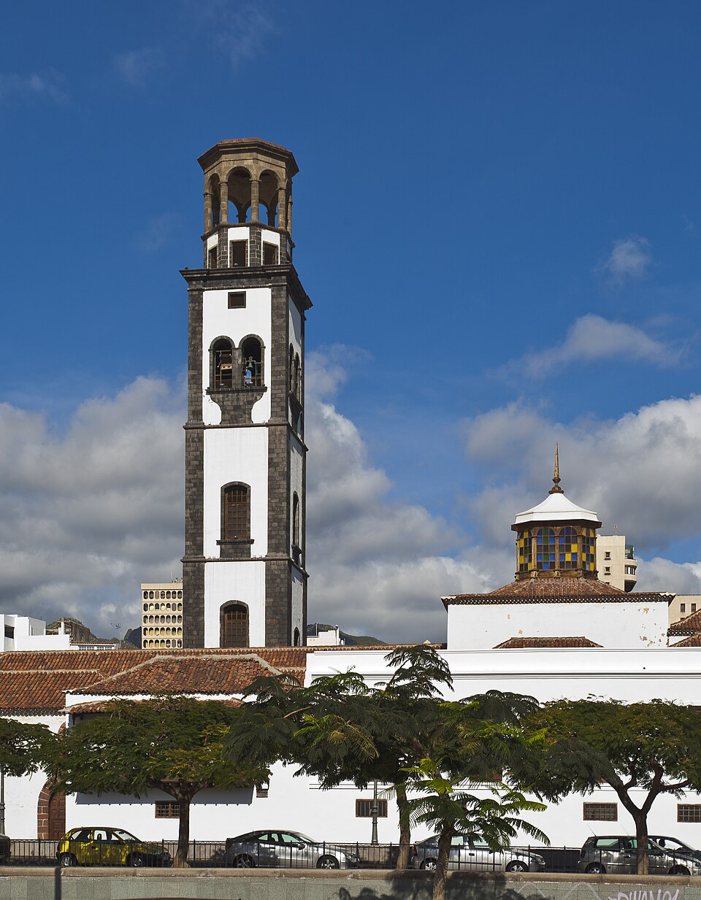
La Concepción’s tower marks the skyline of old Santa Cruz. Raised in 1786, it identifies a church whose history reaches back to the early years following the Castilian conquest. The present building does not belong to a single moment: a fire in 1652 forced reconstruction, and successive enlargements eventually produced five aisles. Changing religious needs, contributions and building campaigns explain its appearance. Highlights include the Carta family chapel and the early image of the Virgin of Consolation. Notice the contrast between pale walls, dark stone and the bell tower. Around the church, beside the Santos ravine and La Noria, the streets retain the scale of the port settlement from which today’s capital developed over the centuries.
Explanation source ↗3 / 8 · SANTA CRUZ DE TENERIFE
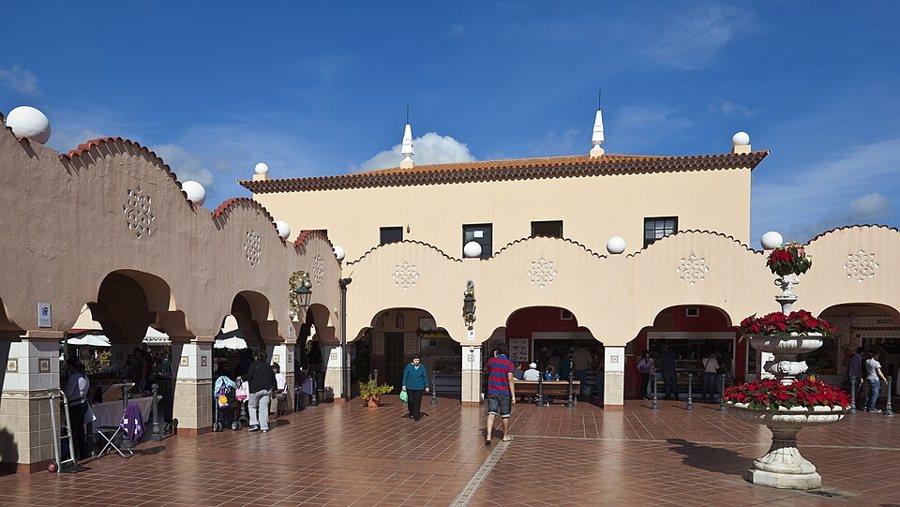
La Recova is architecture designed for shopping, conversation and discovering Tenerife’s produce. Nuestra Señora de África Market opened in 1943 when the previous facilities had become too small. Enrique Marrero Regalado designed the building, and Enrique Rumeu de Armas directed construction. Its entrance arch, tower and galleries arranged around courtyards give it an identity extending beyond commerce. Before examining the stalls, notice how the building organises movement and encounters. Fruit, vegetables, fish and cheese tell an everyday story connecting countryside, coastline and island capital. Serrador Bridge, built alongside the market project, strengthened links with the El Cabo district by crossing the Santos ravine. Together, market and bridge explain how food supply and urban growth helped reshape this part of Santa Cruz.
Explanation source ↗4 / 8 · SANTA CRUZ DE TENERIFE
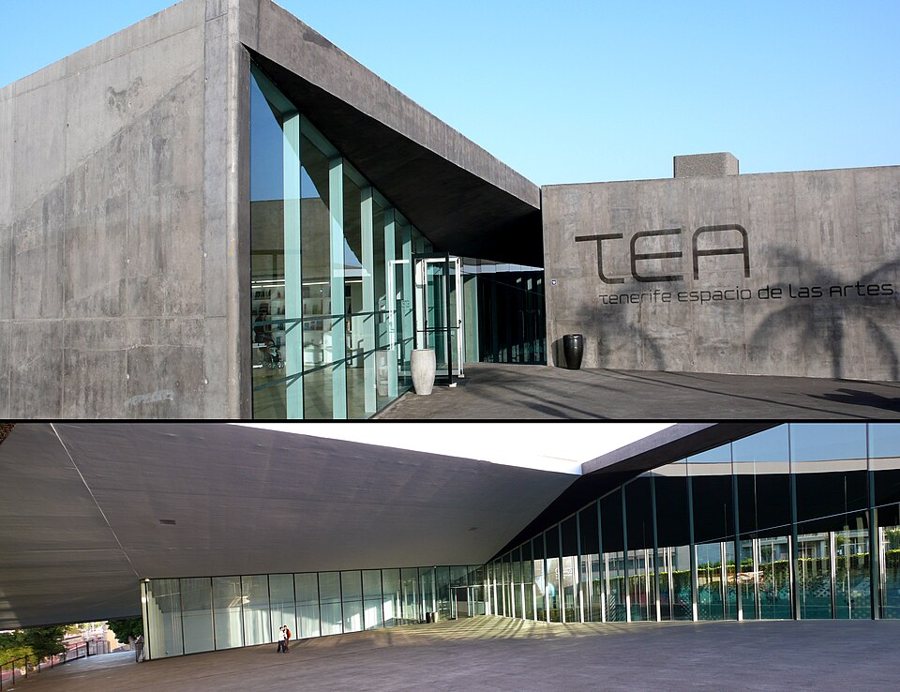
TEA offers a contemporary way of moving through the city, rather than simply a building for viewing exhibitions. Herzog and de Meuron, working with Canarian architect Virgilio Gutiérrez, used diagonals, ramps and different levels to connect it with the Santos ravine and surrounding streets. Public space enters the complex, linking activities that retain their own identities. Contemporary art, photography, a library and cinema coexist here: different ways of producing and sharing culture. Notice how passages and openings replace the idea of one grand, formal façade. Between the market and La Concepción, TEA adds a recent layer to the old urban centre. It invites comparison between present-day cultural architecture and historic neighbours while making the act of crossing the site part of the experience.
Explanation source ↗5 / 8 · SANTA CRUZ DE TENERIFE
Separate outing beyond the central walk
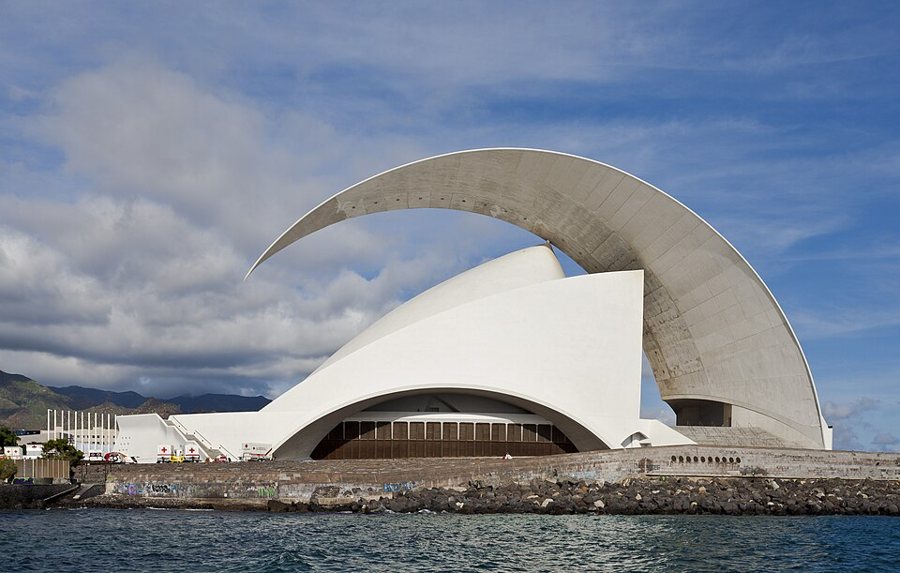
Tenerife Auditorium turned cultural architecture into a new landmark on Santa Cruz’s waterfront. Designed by Santiago Calatrava and inaugurated in 2003, its great curved form changes as you walk around: what appears to be a light gesture requires a structure of considerable presence. From outside, consider the relationship between roof, forecourt and ocean before seeking a frontal photograph. The building is more than an image, housing Tenerife Symphony Orchestra and a programme of music and performing arts. The orchestra began in 1935 as the Canary Islands Chamber Orchestra and received its current name in 1970. An older musical institution therefore found a contemporary home here. Interior access, a guided tour and attending a concert are distinct experiences with separate availability.
Explanation source ↗6 / 8 · SANTA CRUZ DE TENERIFE
Separate outing beyond the central walk
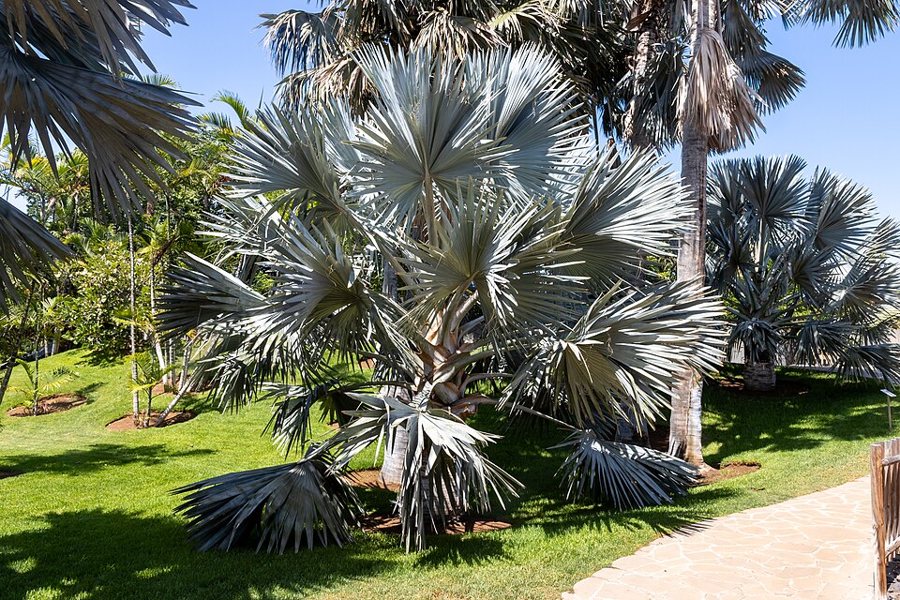
The Palmetum tells an environmental transformation that its palms alone cannot reveal. This artificial hill was once a rubbish dump, closed in 1983, leaving a mountain of waste beside the sea. Turning it into a botanical garden required years of work, trials and planting before the public opening in 2014. Agronomist Manuel Caballero promoted the idea of assembling palms on this degraded site. Paths, viewpoints and planted areas now invite comparisons between leaf shapes, trunks and landscapes. Remembering what lay underneath makes the visit more meaningful: this is not untouched nature but a recovery project. Give it a dedicated block after the Auditorium and check admission and opening arrangements; it does not operate like an unrestricted public square you simply cross.
Explanation source ↗7 / 8 · SANTA CRUZ DE TENERIFE
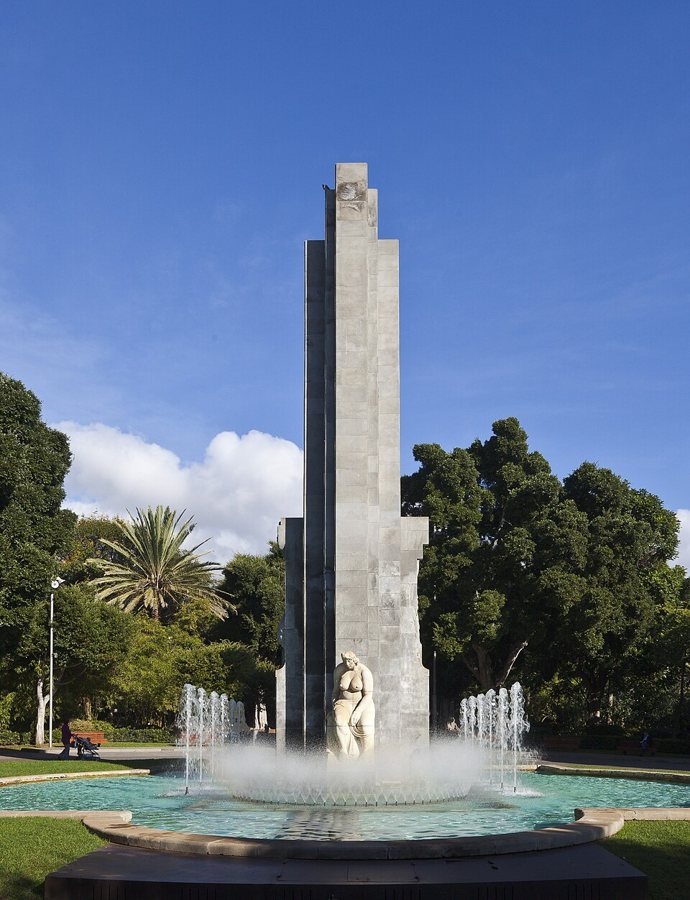
García Sanabria Park grew from a civic ambition: to create a substantial green space within Santa Cruz. The land purchase was signed in 1923 after a public subscription gathered donations and organised fundraising activities. The garden therefore tells a story of participation as well as botany. In its central square, the monument to Mayor García Sanabria and Francisco Borges Salas’s Fertility sculpture bring civic representation into the landscape. Other works along the paths connect the park with the city’s tradition of outdoor sculpture. Read tree labels and compare Canarian species with tropical plants from elsewhere. Rather than treating it solely as a shortcut or resting place, take time to notice how vegetation, monuments and everyday movement share the same public garden.
Explanation source ↗8 / 8 · SANTA CRUZ DE TENERIFE
Separate outing beyond the central walk
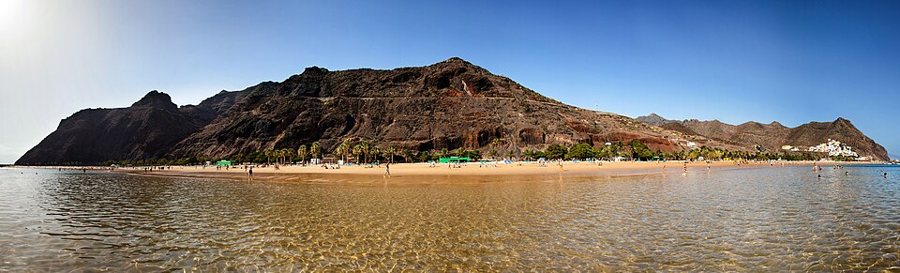
Las Teresitas is not a beach on the central Santa Cruz walk, but a separate outing beside San Andrés that requires its own journey. Its present appearance emerged from a major transformation inaugurated in 1973. Previously this coast contained smaller dark volcanic beaches and stony stretches; golden sand and a breakwater changed its relationship with swimming and leisure. Palms and mountain scenery complete a landscape where nature and human intervention meet. From the shore, notice the marine protection and the proximity of San Andrés’s fishing settlement. Bus 910 provides a way to organise the visit from the interchange and Plaza de España. Allocate a substantial part of the day and a return journey rather than presenting it as a walking continuation from the city centre.
Explanation source ↗Calle El Clavel, 19, Santa Cruz de Tenerife
Canarian cooking in the historic centre. Its own website confirms Calle El Clavel, 19; check the menu and book directly.
Official website ↗ · Walking directions ↗Calle San Francisco, 17, 38002 Santa Cruz de Tenerife
Family restaurant in an old Canarian house, with a terrace near San Francisco. A seated meal option after exploring the centre.
Official website ↗ · Walking directions ↗Calle San Clemente, 43, Santa Cruz de Tenerife
Fusion cooking drawing on Japanese, Peruvian and Mexican influences. An alternative to traditional Canarian food, with menu and booking information online.
Official website ↗ · Walking directions ↗Editorial selection based on the venues’ own websites, not a personal dining review or sponsorship. Check opening, menus, allergens and prices before visiting.
Check final prices, conditions, tour language and availability on Civitatis. Optional paid activities; affiliate links may earn a commission.
See activities in Santa Cruz de Tenerife ↗Distinguish the airports: Aena lists route 20 between Tenerife North, La Laguna and Santa Cruz, and route 10 between Tenerife South and Santa Cruz. Check current stops and timetables with TITSA. Metrotenerife tram connects Intercambiador and Trinidad; it does not serve Las Teresitas or replace airport buses. TITSA route 910 reaches Las Teresitas via Plaza de España and San Andrés. Palmetum and the Auditorium lie south of the centre; plan walking or transport from your starting point. Canary Islands time is one hour behind mainland Spain. Coordinates are approximate; accessibility has not been audited.
Emergencies: 112. For non-urgent medical assistance, consult local services.