Two hours
Two hours on foot: Plaza Mayor, El Fadrí exterior, Santa María doorways, Hemp Trading Hall, La Farola and Ribalta. A tower climb requires availability and extra time. Leave Lledó and El Grao outside this short walk.

WHAT TO SEE AND HOW TO PLAN
Castellón de la Plana combines a walkable centre, ceramics, architecture and maritime landscapes. El Fadrí, Santa María, the trading hall, La Farola and Ribalta form the central walk. Checked 17 October 2026: the historic Central Market is undergoing works and trading has moved to the temporary Santa Clara market. Lledó and El Grao are separate outings requiring transport.
Durations are indicative: queues and all indoor visits are not included.
Two hours on foot: Plaza Mayor, El Fadrí exterior, Santa María doorways, Hemp Trading Hall, La Farola and Ribalta. A tower climb requires availability and extra time. Leave Lledó and El Grao outside this short walk.
Spend the morning in the centre: El Fadrí, Santa María, the trading hall and the Central Market exterior during works. For shopping, check Santa Clara temporary market. Eat centrally, then visit La Farola and Ribalta. If time remains, choose one transferred extension: Lledó or El Grao.
Day one covers the central circuit, available interiors and a relaxed Ribalta walk. On day two, arrange Lledó and a separate journey to El Grao; they lie in different directions and are not consecutive walking stops. Book a seafood meal and explore Plaza del Mar. Check return services first.
Alternate Plaza Mayor and the trading hall arches with a longer Ribalta break. Look for the ornamental storks near La Farola. El Fadrí has spiral stairs and no lift: decide whether it suits your group. For another half day, transfer to El Grao’s public waterfront without entering working port areas.
Shorten the outdoor circuit and check trading hall exhibitions, Santa María visiting and MUCC indoor sites. The historic Central Market is under renovation: do not rely on it as indoor shelter; check Santa Clara temporary market. Save Ribalta, Lledó and El Grao for better weather or suitable transfers.
OpenStreetMap loads on request. Markers are indicative, not audited entrances. Use links for street directions.
Audio uses your device voice and depends on your browser. The full text is always available to read.
1 / 8 · CASTELLÓN DE LA PLANA
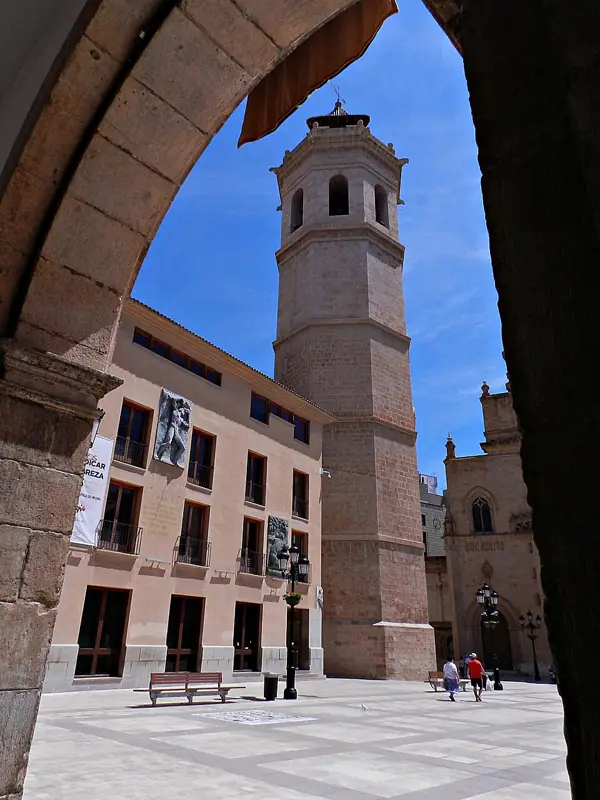
El Fadrí watches over the square without leaning against the church. That separation explains its Valencian name, meaning bachelor. The octagonal tower rises 58 metres, and building work begun in the fifteenth century reached completion in 1604. Inside, it brings together functions we now tend to imagine separately: a public clock, an ecclesiastical prison, the bell ringer’s home and the bell chamber. From ground level, notice how the cornices organise the masonry and how the silhouette changes as you walk around it. Bells once communicated events to people unable to read a written notice. MUCC publishes visiting information and describes roughly two hundred spiral steps: check availability before climbing. This outdoor explanation also makes sense without undertaking the ascent.
Explanation source ↗2 / 8 · CASTELLÓN DE LA PLANA
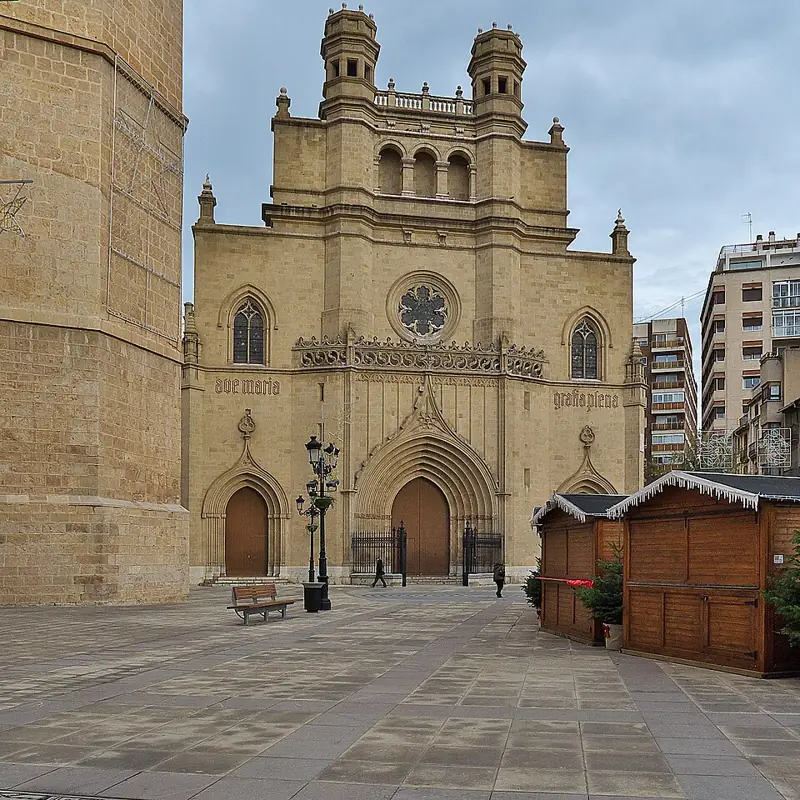
Santa María tells a story of rebuilding rather than an untouched medieval church. Its origins reach back to the thirteenth century; fire required reconstruction, and the Civil War brought further destruction. The present building revives Gothic architectural language, while three entrances preserve evidence of earlier fabric. To recognise the distinction, compare those doorways with the church’s larger volumes. The entrance on Arcipreste Balaguer street is particularly useful for examining the older stonework. Inside, the Latin cross plan and ribbed vaults direct your gaze towards the altar. Baroque sculptures, including an eighteenth century Immaculate Conception, introduce another period into the visit. Its title of co-cathedral reflects a diocese that shares its seat with Segorbe. Looking at these different layers gives the building a richer story than simply calling it Gothic.
Explanation source ↗3 / 8 · CASTELLÓN DE LA PLANA
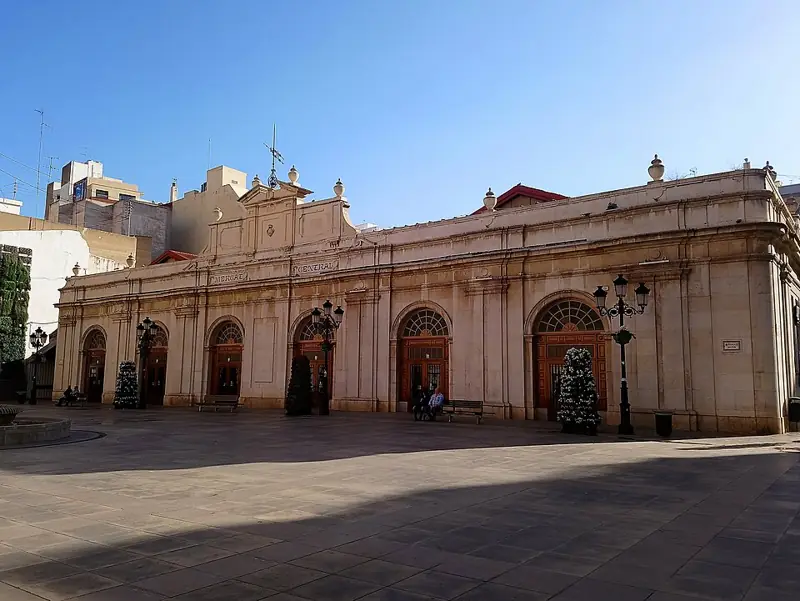
The Central Market opened on 21 December 1949 beside Castellón’s monumental heart. Its history links trading in the old squares with a city supplied by market gardens and the Mediterranean. Rather than seeking one extraordinary product, consider that combination: seasonal vegetables, fish and family businesses explain everyday cooking in La Plana. Status checked on 17 October 2026: the historic building is undergoing renovation. The council announced the temporary Santa Clara market’s opening on 12 February and was still reporting construction work in September. This stop therefore explains the exterior; it does not promise entry to the historic stalls. For active food shopping, head to the nearby temporary building and check its current hours. The relocation also shows how a living market differs from a static architectural monument.
Explanation source ↗4 / 8 · CASTELLÓN DE LA PLANA
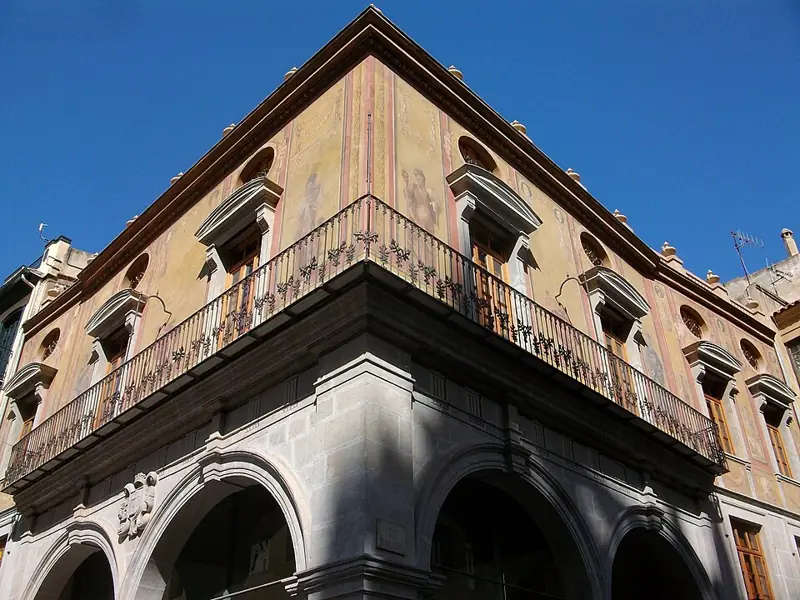
The Llotja del Cànem helps you imagine an economy before modern shops. Built between 1606 and 1617 to a design by Francisco Galiança, it provided covered space for exchanging goods, especially hemp. Its fibres mattered for rope making and other everyday materials. Look at the arches and Tuscan columns: an open trading building needed to shelter activity without cutting it off from the street. The upper storey belongs to a later transformation, so the whole façade should not be read as one seventeenth century project. Paintings associated with Joaquín Oliet add another layer to that history. Today the building serves as a cultural centre for Universitat Jaume I. Exhibitions, classes and conversations now circulate where commodities once changed hands, preserving a public role in a different form.
Explanation source ↗5 / 8 · CASTELLÓN DE LA PLANA
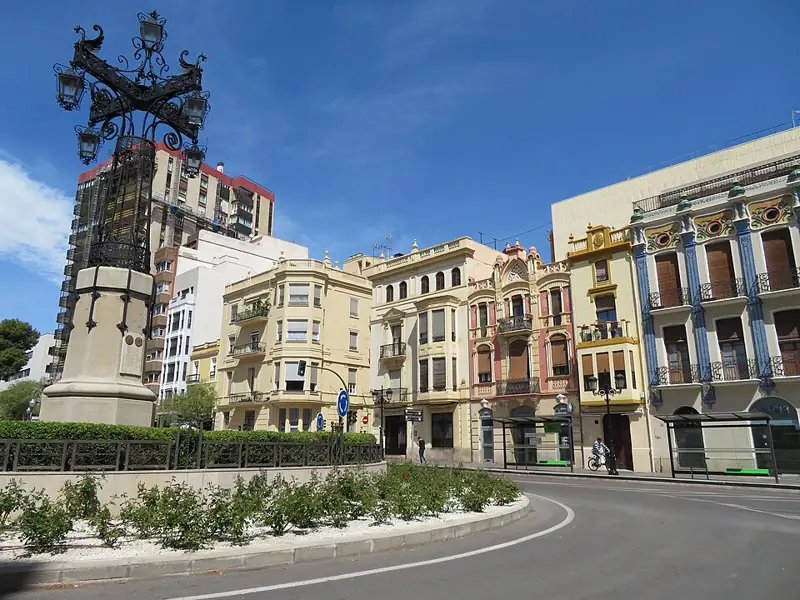
La Farola transforms a street lamp into one of Castellón’s emblems. Francesc Maristany designed it in 1929 on the site where the Virgin of Lledó’s coronation had taken place. The monument connects the city’s modern expansion with a shared religious tradition. From the square’s edge, also study the surrounding buildings. Casa de les Cigonyes, built in 1912, uses ceramic decoration and ornamental storks that explain its name. The Alcón, Xilida and Calduch houses complete an ensemble combining Modernista and historical architectural references. There is no need to enter private homes to appreciate it: compare balconies, colours and roof details from the pavement. Here the walk changes scale, moving from commercial streets towards Ribalta Park’s open landscape and the city’s nineteenth century expansion.
Explanation source ↗6 / 8 · CASTELLÓN DE LA PLANA
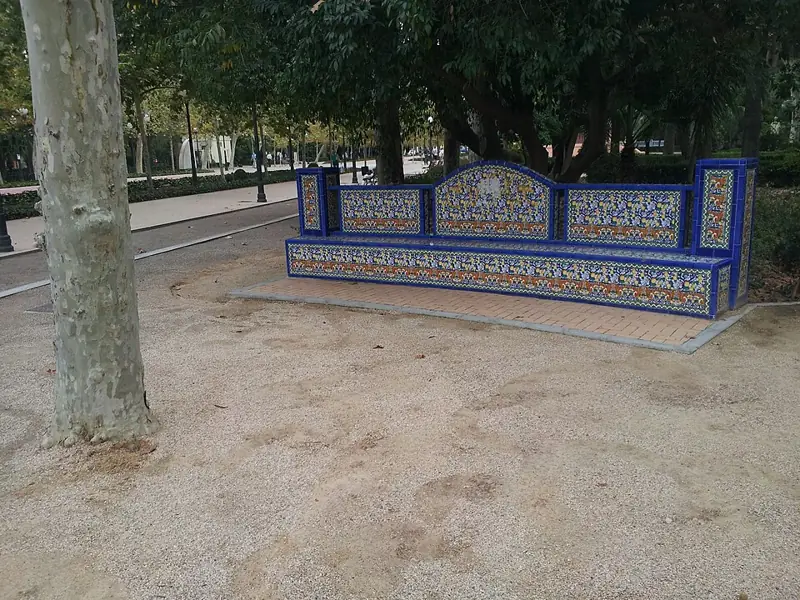
Ribalta began in 1868 on land formerly occupied by the Calvario cemetery. The city was reshaping its public image around the railway and chose a garden to welcome arriving visitors. That origin explains why this is more than leftover green space: it belonged to a modern way of representing Castellón. Paths, the pond, mature trees and ceramic benches turn the walk into a sequence of small scenes. Look for differences in leaves, shade and the curves of the paths rather than crossing quickly. Its name recalls the painter Francisco Ribalta. The park also preserves monuments and spaces connected with local cultural life. It provides a useful pause after Plaza Mayor without requiring a journey beyond the centre, and rewards a slower pace than the surrounding shopping streets.
Explanation source ↗7 / 8 · CASTELLÓN DE LA PLANA
Separate outing beyond the central walk
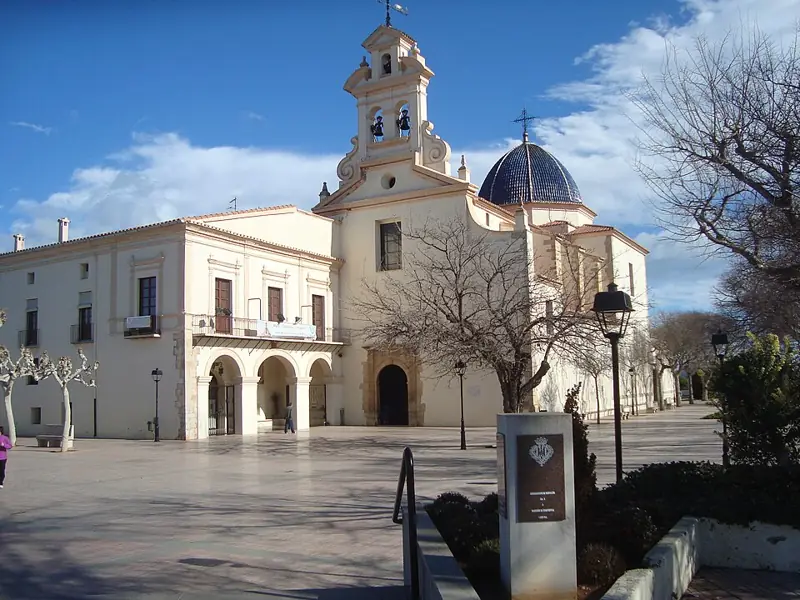
Lledó Basilica preserves the connection between Castellón and its agricultural landscape. The hermitage is documented from 1375, while construction of the present large church began in 1724 and finished forty two years later. Tradition attributes discovery of the small revered image to a farmer, Perot de Granyana. Treat that as a devotional story rather than the same kind of evidence as documented dates. Approach the doorway and notice how the dome organises the sanctuary’s mass. The building reflects the participation of different groups in a shared pilgrimage centre. The image’s coronation took place in 1924. This is a separate extension to the compact central walk: arrange a bus, taxi or other transfer and allow time to return, rather than adding it as a neighbouring square.
Explanation source ↗8 / 8 · CASTELLÓN DE LA PLANA
Separate outing beyond the central walk
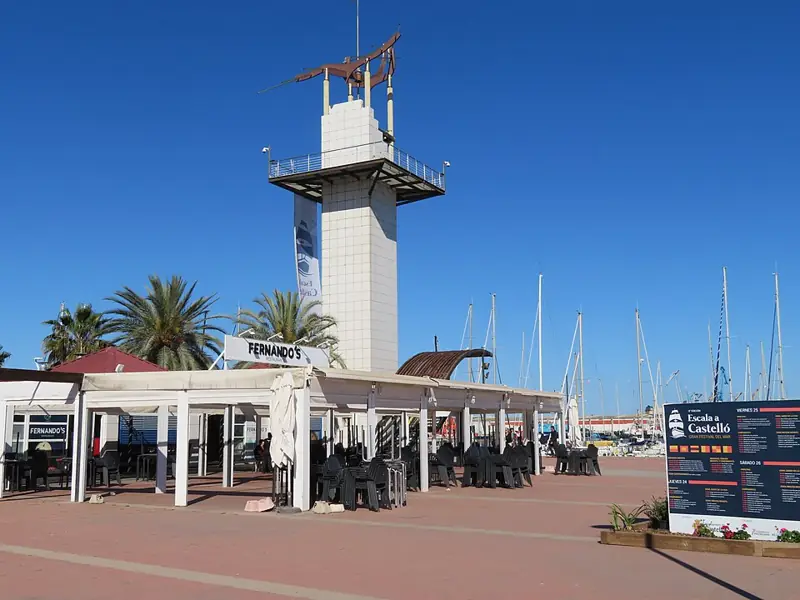
El Grao is Castellón’s maritime district, several kilometres from the centre. Plaza del Mar and the waterfront reveal a different city: boats, port activity and cooking associated with fish and rice. To understand its history, remember La Panderola, the steam railway that linked towns in La Plana with the harbour. It carried oranges and goods such as tiles, but also became part of everyday travel for local residents. MUCC’s itinerary recovers this relationship between industry, trade and passengers. Observe the marina from public spaces without confusing them with restricted working areas. This outing requires a TRAM, bus or taxi transfer; it is not part of the compact old town monument walk. Leave enough time to enjoy the waterfront and return comfortably to your accommodation.
Explanation source ↗Calle Temprado, 12, Castellón de la Plana
Small central restaurant with individual cooking based on produce and seasonality. Its own website presents the food offering and booking contact; check the current menu and conditions.
Official website ↗ · Walking directions ↗Avenida del Puerto, 13, 12100 Grao de Castellón
Mediterranean seafood cooking and rice dishes in El Grao. Combine it with the harbour outing rather than treating it as a central stop. The venue address appears in its legal notice; check menus and reservations online. Notice checked on 18 October 2026: the website announces a holiday closure and return on 29 October. Confirm reopening before visiting.
Official website ↗ · Walking directions ↗Carrer de Churruca, 28, 12100 Grao de Castellón
Another maritime district option, serving Spanish and Mediterranean cooking with a terrace according to its own website. Requires the El Grao transfer. Contact the restaurant for current dishes and reservations; no fixed menu or price is assumed.
Official website ↗ · Walking directions ↗Editorial selection based on the venues’ own websites, not a personal dining review or sponsorship. Check opening, menus, allergens and prices before visiting.
Check final prices, conditions, tour language and availability on Civitatis. Optional paid activities; affiliate links may earn a commission. The Grao is a separate outing beyond the central walk: arrange transport.
See activities in Castellón ↗The intermodal station combines rail and buses. Renfe offers C-6 suburban and longer distance services; check your actual train. Walk around the centre; the council links urban routes and the UJI–Grao TRAM. Check urban connections or use a taxi for Lledó; no unverified bus number is assigned. Castellón Airport lists a flight-linked bus to the bus station and a Torreblanca shuttle for onward trains. Consult official timetables and tickets.
Emergencies: 112. For non-urgent medical assistance, consult local services.