
Hemp Trading Hall
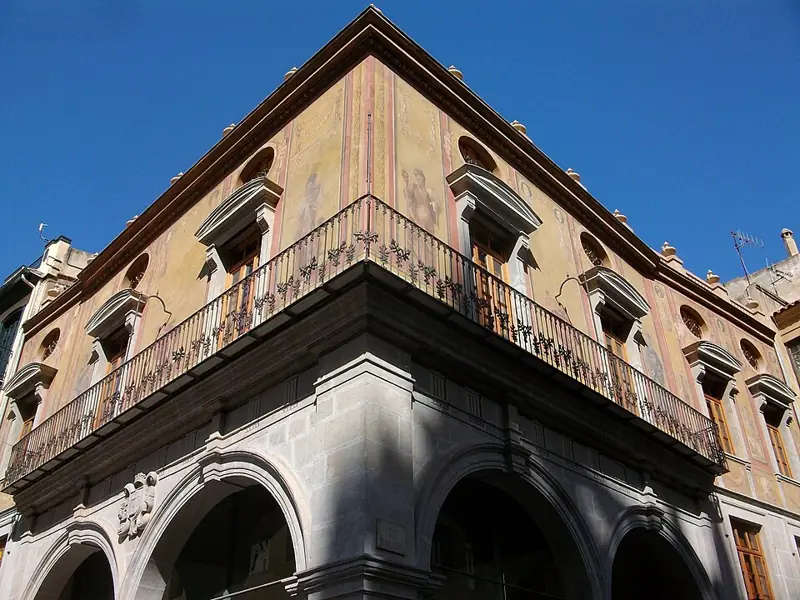
The Llotja del Cànem helps you imagine an economy before modern shops. Built between 1606 and 1617 to a design by Francisco Galiança, it provided covered space for exchanging goods, especially hemp. Its fibres mattered for rope making and other everyday materials. Look at the arches and Tuscan columns: an open trading building needed to shelter activity without cutting it off from the street. The upper storey belongs to a later transformation, so the whole façade should not be read as one seventeenth century project. Paintings associated with Joaquín Oliet add another layer to that history. Today the building serves as a cultural centre for Universitat Jaume I. Exhibitions, classes and conversations now circulate where commodities once changed hands, preserving a public role in a different form.
Explanation source ↗Sources checked on 17 October 2026. Opening and access may change. The walk does not include admission; allow extra time for interiors. Routes have not been audited for accessibility.