Two hours
Around two hours: San Vicente exterior, walls and cathedral surroundings, Mercado Chico, Santa Teresa exterior and Mercado Grande with San Pedro. No lengthy interiors or optional outlying stops.

WHAT TO SEE AND HOW TO PLAN
Ávila combines a walled city, Romanesque churches and the memory of Teresa of Jesus. Six central stops make a compact walk; Santo Tomás and Cuatro Postes are extensions in different directions. Coordinates are approximate and accessibility has not been audited.
Durations are indicative: queues and all indoor visits are not included.
Around two hours: San Vicente exterior, walls and cathedral surroundings, Mercado Chico, Santa Teresa exterior and Mercado Grande with San Pedro. No lengthy interiors or optional outlying stops.
Explore the six central stops and choose one substantial interior or an open rampart section. Have lunch centrally and allow time for admission, worship and breaks.
Use day one for the centre and an interior visit. Day two can include Santo Tomás with admission checked; make a separate outing to Cuatro Postes if weather permits. They lie in different directions.
Spot gates and towers from ground level, alternate Mercado Chico and Mercado Grande and choose one interior. Check stairs before climbing the walls; pushchair accessibility is not assumed.
Prioritise the cathedral or visitable Santa Teresa spaces with opening confirmed, central lunch and short transfers. Santo Tomás requires its own journey. Avoid ramparts and Cuatro Postes in wind or unsafe underfoot conditions.
OpenStreetMap loads on request. Markers are indicative, not audited entrances. Use links for street directions.
Audio uses your device voice and depends on your browser. The full text is always available to read.
1 / 8 · ÁVILA
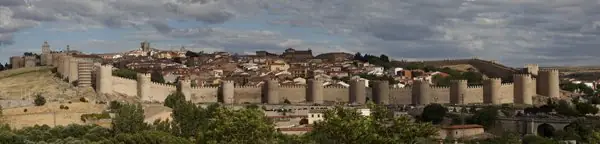
The walls are more than a photographic backdrop: they help explain how Ávila organised defence and housing. Some palaces built beside them also served defensive purposes, while their owners maintained sections of the enclosure. Follow the rhythm of the towers as it changes near gateways, religious buildings and uneven ground. From street level, look for the junction between the fortifications and the cathedral apse: military and religious architecture belong to the same system here. Walking around the outside and climbing the ramparts are different experiences. The elevated visit uses designated entrances and access points, so check which sections are open, where stairs occur and whether any closures apply. Do not assume that one ticket provides an uninterrupted circuit around the entire perimeter.
Explanation source ↗2 / 8 · ÁVILA
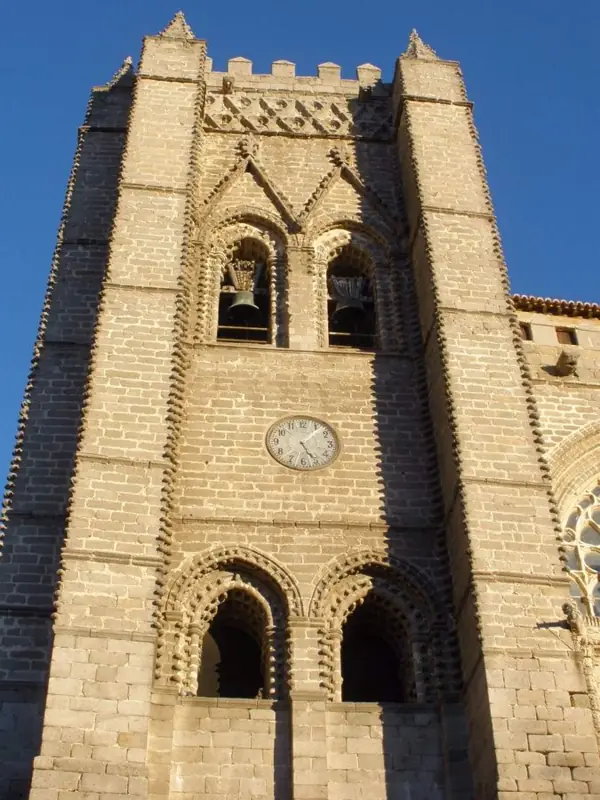
Ávila Cathedral was conceived as both church and fortress. Its apse, known as the cimorro, forms part of the city walls, making this dual role understandable before you enter. In 1172 Alfonso VIII promoted the enlargement of the previous building and entrusted the work to the French master Fruchel. Construction reveals the transition from Romanesque to Gothic, also expressed through changes in stone. Notice how the defensive mass outside contrasts with the search for height and light within. You need not identify every detail at once: begin with the apse, aisles and towers. If visiting inside, allow time to distinguish its successive artistic phases. Cultural admission follows the conditions set by the cathedral authorities and must accommodate religious worship.
Explanation source ↗3 / 8 · ÁVILA
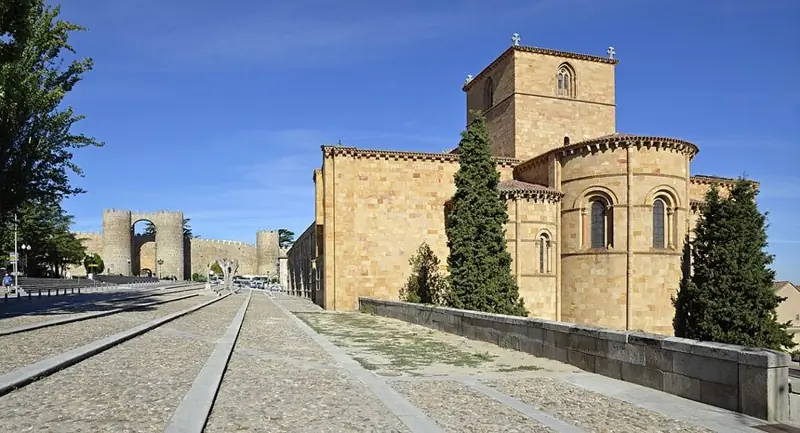
Outside the walls, San Vicente shows that historic Ávila did not end at its gateways. The basilica is a landmark of local Romanesque architecture and is associated, according to religious tradition, with the martyrdom of Vicente, Sabina and Cristeta. Distinguish that remembered story from what the masonry allows you to observe directly. Walk around slowly to compare volumes, doorways and carved decoration; if you enter, notice the funerary monument recounting the saints’ story. Medieval sculpture turned narratives into images for people approaching the church. Later restoration also contributes to the building seen today. From here, you can return inside the enclosure without greatly extending the route. Check interior visiting arrangements and respect any religious services taking place during your visit.
Explanation source ↗4 / 8 · ÁVILA
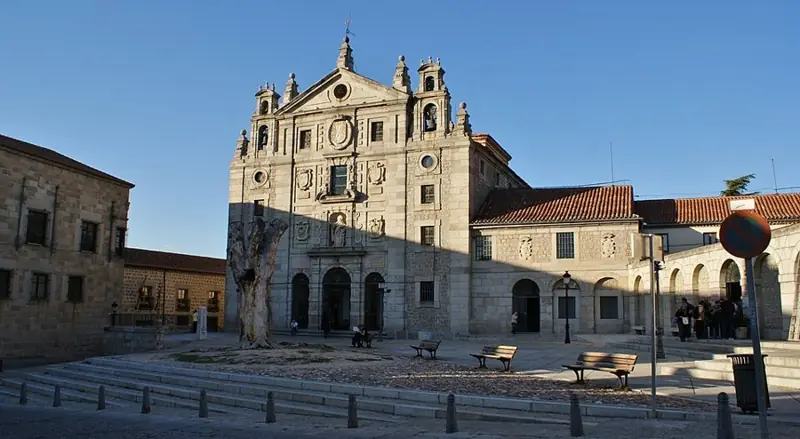
This complex occupies the site of the house where Teresa de Cepeda y Ahumada was born in 1515; it should not be mistaken for an original home preserved intact. The basilica and convent belong to a later building campaign, begun in 1629 and inaugurated in 1636, designed by the Carmelite Alonso de San José. The transformation of a domestic site into a sanctuary explains how Teresa’s public memory developed. Look at the façade and its relationship with the square before approaching any available interior spaces. Ávila contains other places associated with Teresa, but each belongs to a different stage of her life and the Carmelite reform. This stop establishes her birthplace; a museum visit needs its own time and admission checks.
Explanation source ↗5 / 8 · ÁVILA
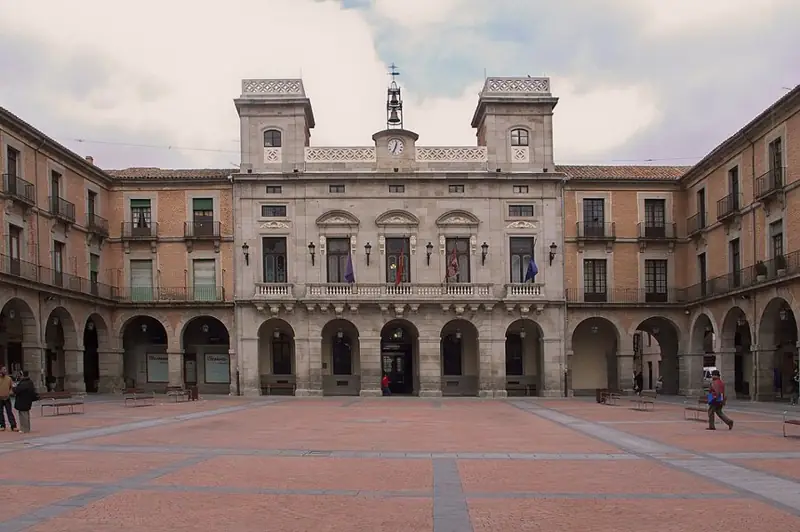
Mercado Chico represents civic life within the walled city. Its formation is linked to the resettlement of the late eleventh century, although the orderly appearance seen today reflects much later changes. The present town hall was built between 1839 and 1845 and subsequently extended. Arcades, balconies and a regular composition express a square designed to represent municipal authority as well as accommodate movement and meeting. Look towards its different exits: narrow streets contrast with the openness of the central space. This is an easy place to rest without losing the thread of the walk. Imagine the change in scale from council meetings beside a church to a dedicated public headquarters. The square remains an everyday place rather than an isolated historical stage set.
Explanation source ↗6 / 8 · ÁVILA
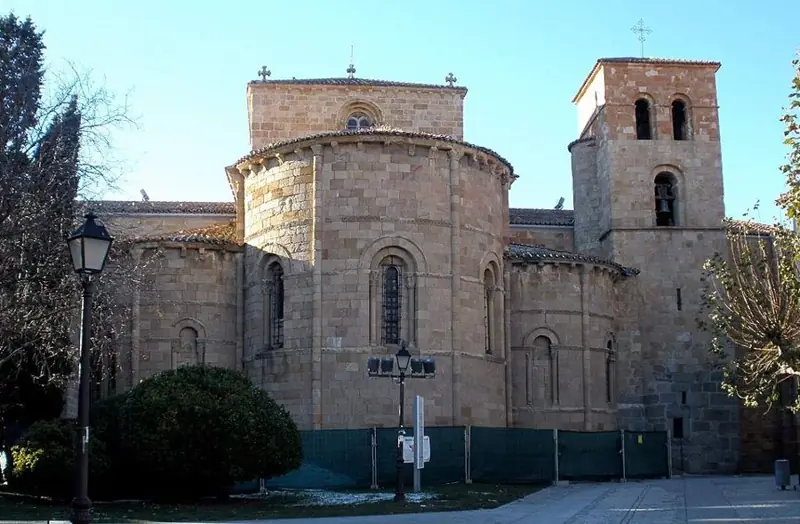
San Pedro overlooks Mercado Grande outside the walls, facing the area around the Alcázar gateway. Its position helps you compare an open square with the streets inside the enclosure. The church belongs to Ávila’s Romanesque tradition, although prolonged construction introduced solutions different from the initial design. A rose window stands out on the western façade, bringing a luminous contrast to architecture characterised by solid volumes. Then study the relationship between the eastern end, main body and tower instead of limiting your attention to a single frontal photograph. From the square, it becomes clear why city gates attracted activity and important buildings. Exterior viewing fits the central walk; entering depends on visiting arrangements and the church’s continuing religious use.
Explanation source ↗7 / 8 · ÁVILA
Separate outing beyond the central walk
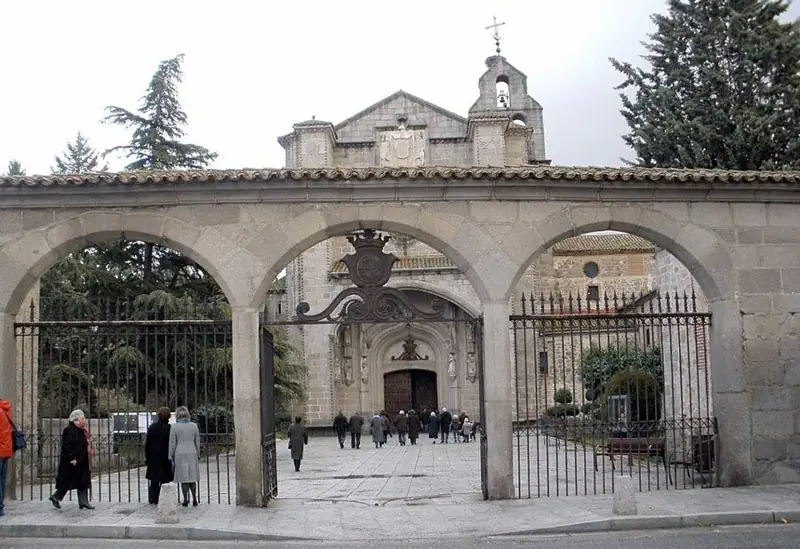
Santo Tomás is an extension southeast of the centre and deserves separate time. Construction began in 1482 under Martín de Solórzano, and the complex combines a church with three cloisters. Its connection with the Catholic Monarchs appears in their patronage and in the memory of their son Juan, whose tomb survives in the church. Do not reduce the visit to that monument: the courtyards allow comparisons of scale, decoration and the functions of convent life. The enclosure also houses museum collections, whose availability should be checked when arranging admission. Distance and the richness of the interior make it unsuitable for a hurried addition to the short walk. Set aside a morning or a quiet part of the second day and allow for the return journey.
Explanation source ↗8 / 8 · ÁVILA
Separate outing beyond the central walk
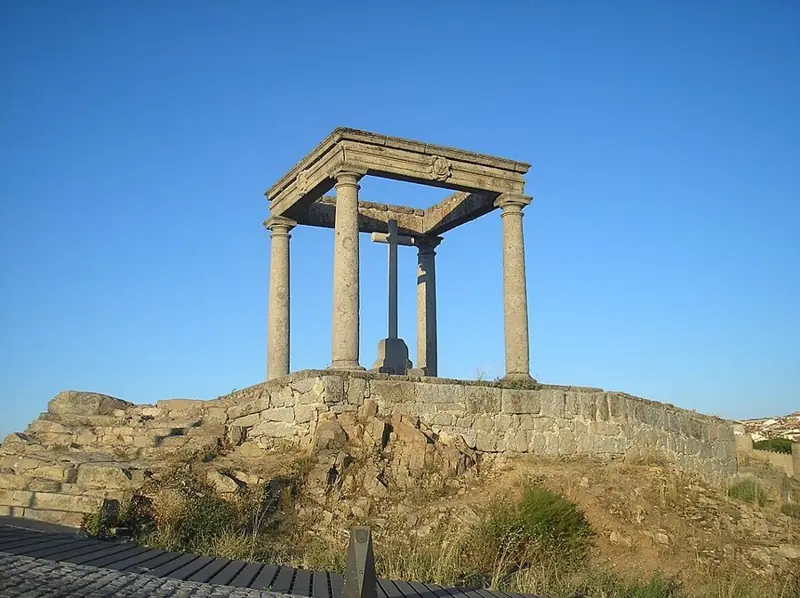
From the left bank of the Adaja, Cuatro Postes lets you see the walled city as a whole. The small monument is the shrine of San Sebastián, dated 1566: four Doric columns joined by an entablature surround a granite cross. Ávila’s coat of arms reinforces the relationship between this place and the city spread out opposite. Rather than seeking a photograph identical to everyone else’s, identify gateways, towers and the way the enclosure follows the terrain. This stop lies outside the compact central walk and requires planning the river crossing, uphill approach and return. In wind or fading light, judge the journey carefully. The main attraction is the panorama; climbing onto parts of the monument is unnecessary to appreciate it.
Explanation source ↗Calle Pedro Lagasca, 5, Ávila
Central restaurant serving Castilian cooking. Check the menu and book directly; useful between stops inside the walls.
Official website ↗ · Walking directions ↗Calle Estrada, 11, 05001 Ávila
Cooking combining traditional and contemporary ideas near Mercado Grande. Check the current menu and availability.
Official website ↗ · Walking directions ↗Carretera de Salamanca, 6, 05002 Ávila
Restaurant in a former grain store built in 1880, with its own wine list. Outside the centre, it can accompany the Cuatro Postes outing; plan the journey.
Official website ↗ · Walking directions ↗Editorial selection based on the venues’ own websites, not a personal dining review or sponsorship. Check opening, menus, allergens and prices before visiting.
Check final prices, conditions, tour language and availability on Civitatis. Optional paid activities; affiliate links may earn a commission.
See activities in Ávila ↗Check Renfe for rail arrivals and plan the connection between the station and historic centre. Avanza publishes Ávila urban bus routes and maps. The centre is walkable, with stone paving, slopes and monument entrances that may involve steps. Santo Tomás lies southeast and Cuatro Postes west across the Adaja: they do not form one short walk. Check current wall access and each monument operator. Coordinates are approximate; accessibility has not been audited.
Emergencies: 112. For non-urgent medical assistance, consult local services.