
Ávila Cathedral
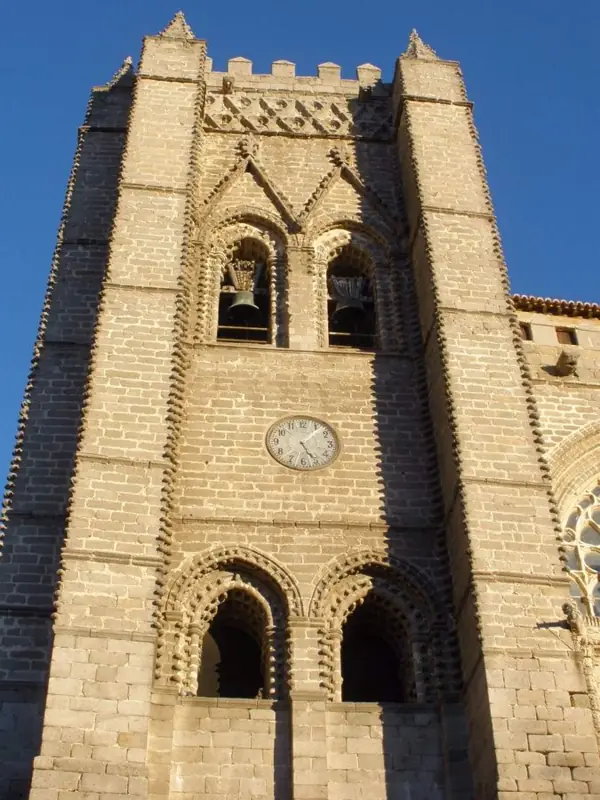
Ávila Cathedral was conceived as both church and fortress. Its apse, known as the cimorro, forms part of the city walls, making this dual role understandable before you enter. In 1172 Alfonso VIII promoted the enlargement of the previous building and entrusted the work to the French master Fruchel. Construction reveals the transition from Romanesque to Gothic, also expressed through changes in stone. Notice how the defensive mass outside contrasts with the search for height and light within. You need not identify every detail at once: begin with the apse, aisles and towers. If visiting inside, allow time to distinguish its successive artistic phases. Cultural admission follows the conditions set by the cathedral authorities and must accommodate religious worship.
Explanation source ↗Sources checked on 17 October 2026. Opening and access may change. The walk does not include admission; allow extra time for interiors. Routes have not been audited for accessibility.