Alcalá connects Cisneros’s university town, Cervantes’s world and a walkable historic centre. Eight stops link San Ildefonso, Calle Mayor, the cathedral and Las Bernardas. Arrange interiors separately; palace and Puerta de Madrid are exterior stops, while Complutum requires a separate outing.
Start at San Ildefonso and continue to Plaza de Cervantes. Choose the university or guided Corral visit, ordering stops around your booking. Follow Calle Mayor to the birthplace, where an exterior or short visit can end the block; do not squeeze three interiors into the same time.
From the cathedral walk to Puerta de Madrid, then return through the Archbishop’s Palace area towards Las Bernardas. Use public spaces without relying on the temporarily closed enclosure or Antiquarium. Afterwards allow a proper MARPA visit if open rather than a five-minute stop.
A separate outing within the municipality to discover another chapter of Alcalá. Check which archaeological sectors, including Casa de los Grifos, are open on your date. It is outside the compact colleges-and-squares walk and is not an indoor rainy-day substitute.
Plan travel to the confirmed site entrance and return using current CRTM information or your own transport; the entrance is not beside Plaza de Cervantes.
Allow a separate day for the Infantado Palace and a central walk. Choose a few interiors and confirm each visit; a monumental façade does not guarantee access to every room.
Check Renfe for the actual connection and engineering changes. Include travel from Guadalajara station to its centre and check the return before departure.
Continue the Cervantes theme through Huertas and Plaza de Santa Ana, exploring the quarter’s connections with Golden Age writers. Street walking includes no house-museum or theatre admissions, which need separate planning.
Check Cercanías Madrid for a suitable station and onward walking or urban transport. Keep this outing separate from your Alcalá day.
Choose a Golden Age household at the birthplace or archaeological objects at MARPA, leaving time for square and arcades. Family workshops depend on the actual programme; do not assume daily children’s visits or access to every courtyard.
In the rain
Make MARPA the main block, then choose birthplace or Corral according to opening. Eat between visits to avoid repeated crossings. Arcades help briefly, but squares, university exterior, gateway and Complutum are not covered attractions.
What to try and where to pause
Match lunch to your current area: Hostería near the colleges or Martilota at Plaza de la Paloma. Confirm dining space, format and allergens. Allow a proper meal break rather than a narrow gap between timed admissions.
Sources for this update
Turismo Alcalá · Complutum y Casa de los Grifos
Turismo Guadalajara · patrimonio urbano
Turismo Madrid · Barrio de las Letras
Choose your walk
Durations are indicative: queues and all indoor visits are not included.
Plan my route
Street map
OpenStreetMap loads on request. Markers are indicative, not audited entrances. Use links for street directions.
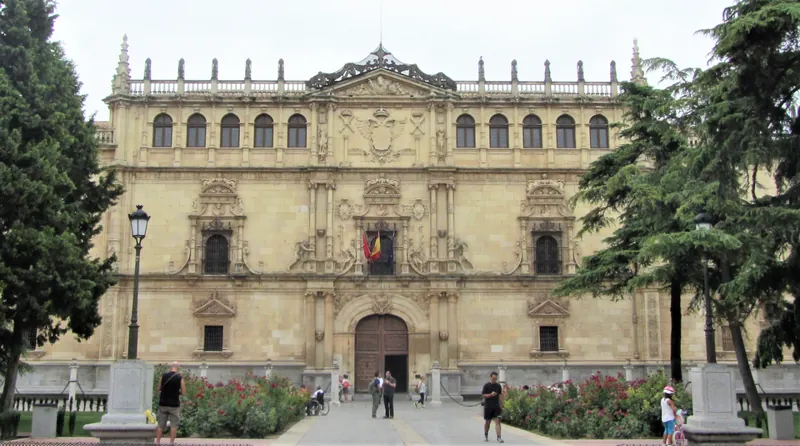
San Ildefonso’s façade presents the university as an institution capable of shaping a city. Cisneros’s project began in 1499, while Rodrigo Gil de Hontañón built this front between 1537 and 1553. Begin with the composition from Plaza de San Diego, then approach to distinguish figures, reliefs and ironwork. Inside, courtyards change the pace and lead towards academic spaces such as the Paraninfo, where the Cervantes Prize is presented. You can view the façade independently, but check which courtyards, chapel and ceremonial rooms your chosen university visit includes. Set aside a separate slot: understanding the relationship between architecture and intellectual life is more rewarding than taking only a photograph of the entrance.
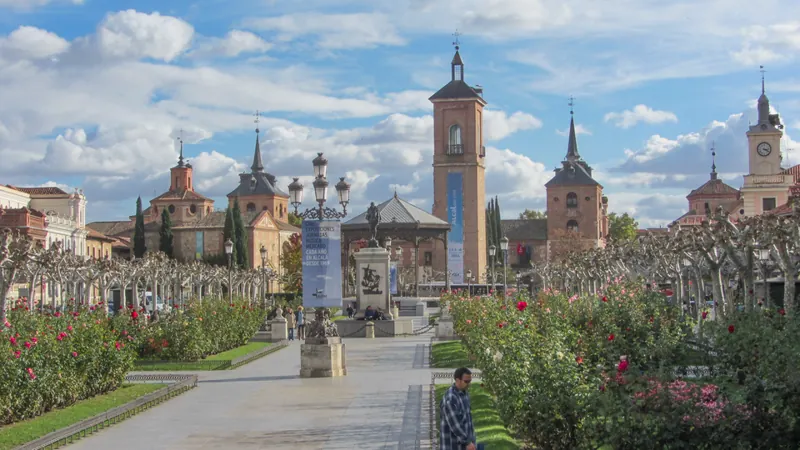
Plaza de Cervantes brings university life and everyday town life together. Formerly the market square, it now takes its central reference from the writer’s bronze statue, inaugurated in 1879. Follow one side first, comparing the open space with the arcades and balconies around it. The Corral de Comedias recalls that people gathered here for performances as well as trading goods. Then find a bench and notice how surrounding streets lead towards San Diego and Calle Mayor. The square distributes your walk rather than functioning as an isolated monument. Use the pause to choose your next interior visit instead of trying to enter every nearby building in one continuous sequence.
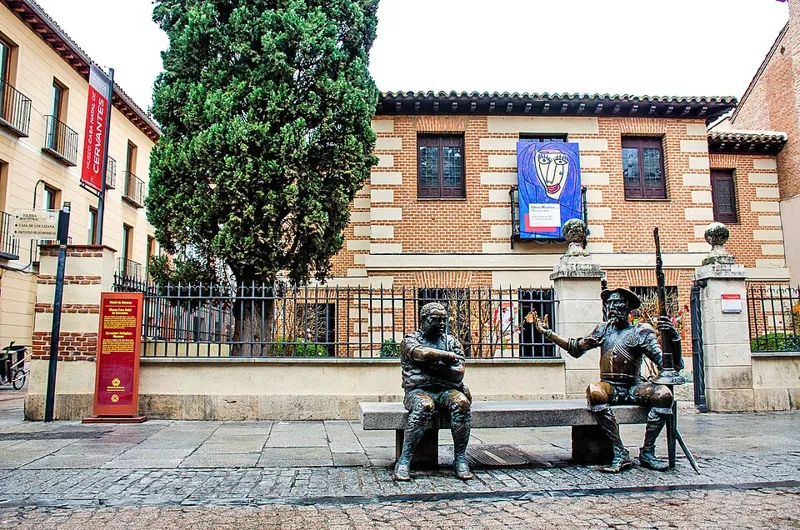
The museum recreates a prosperous sixteenth- and seventeenth-century home on the site identified by Luis Astrana Marín as Cervantes’s family house. Do not imagine every room surviving untouched from his childhood: the visit reconstructs ways of living during Spain’s Golden Age. Study the courtyard, then choose one room and ask what its objects enabled people to do, who used them and how the household was organised. Everyday life brings the writer closer without confusing a museum with an unchanged relic. Calle Mayor continues outside, connecting domestic rooms with commercial public space. Check current museum arrangements and programming, since an activity or group visit may require different planning from an independent visit.
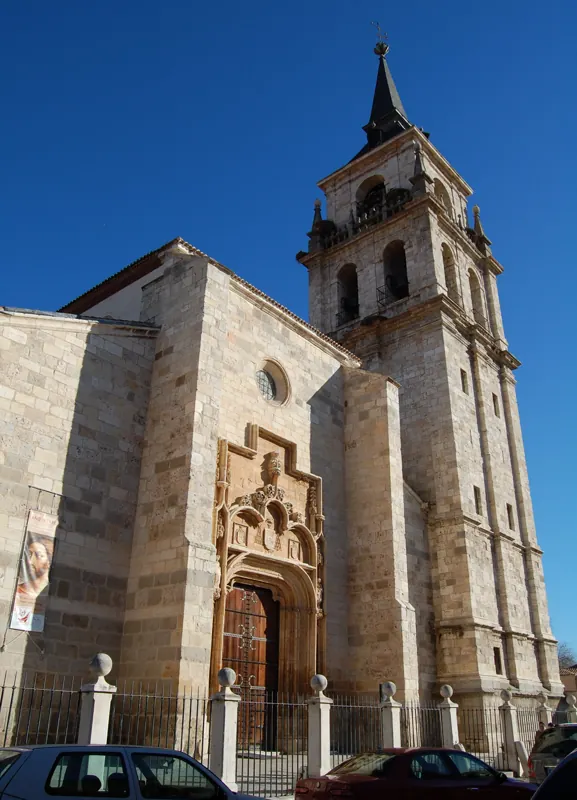
The Magistral Cathedral stands at the medieval town’s core, where streets once led towards the gates in the walls. Cisneros promoted the present Gothic building from 1497; cathedral status followed in 1991 when the diocese was restored. Distinguishing a church’s age from its institutional title helps explain its successive stages. Before entering, walk around Plaza de los Santos Niños and consider the tower’s relationship with the main building. Inside, look first at the structure before concentrating on chapels and museum objects. Check included areas and any tower climb separately: an entrance open for worship does not guarantee a complete cultural visit. Continue afterwards towards Plaza del Palacio.
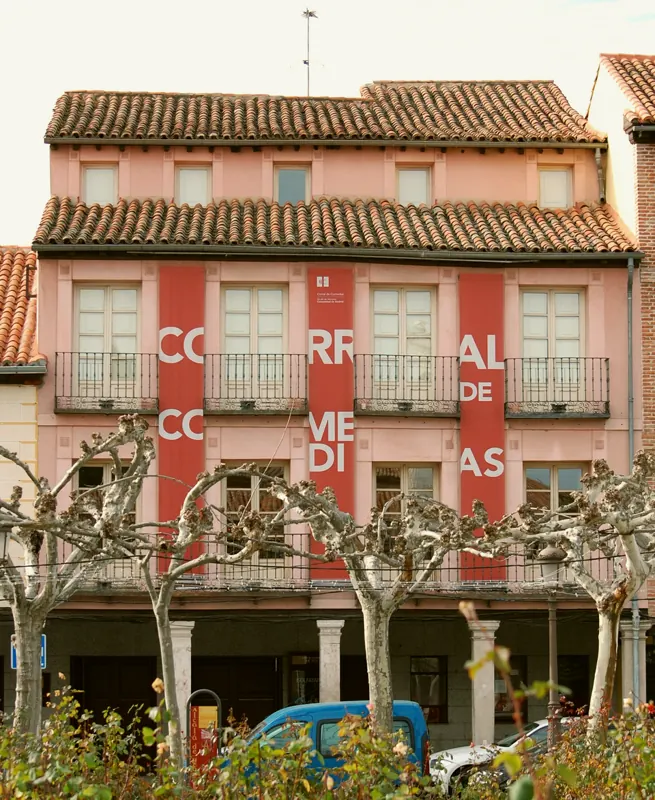
The Corral de Comedias traces performance history within one building. It began as an open-air playhouse in 1601, was roofed as a coliseum in the eighteenth century, and later became a Romantic theatre and cinema. These layers make the visit interesting rather than presenting a frozen image of the Golden Age. Consider the relationship between stage, courtyard and galleries, imagining how a performance changes with the spectator’s position. The well and old courtyard paving help identify the earliest use beneath later alterations. Check guided heritage visits and the performance programme separately: exploring the building and attending a production are different experiences. Neither should be assumed included in a general city walk.
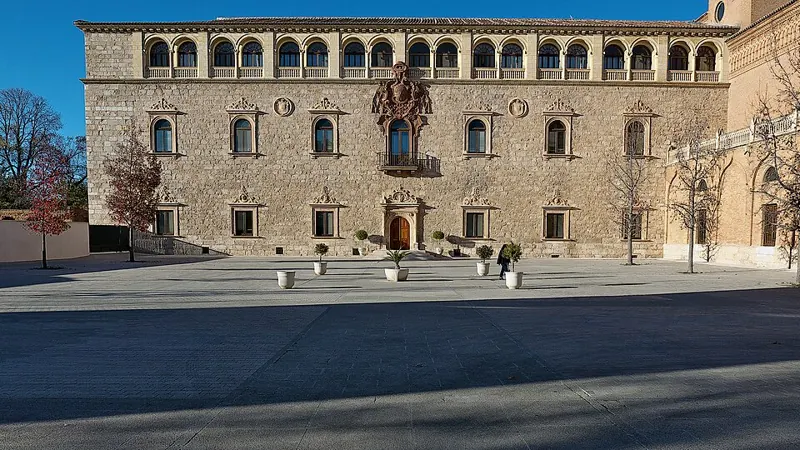
The Archbishop’s Palace recalls Alcalá’s role as a centre of ecclesiastical power. It housed Toledo’s archbishops and belongs to a setting in which palace, defences and square explain one another. From public space, study the façade and the different volumes that prevent it being read as a uniform building. Much of its Renaissance splendour was lost in the 1939 fire; surviving remains do not amount to an entire palace open for visiting. This stop is planned outside, connecting the cathedral area with Las Bernardas. The municipal enclosure and Antiquarium listing announces temporary closure, so do not rely on entering its towers without fresh confirmation. Continue through the inhabited town, respecting restricted entrances.
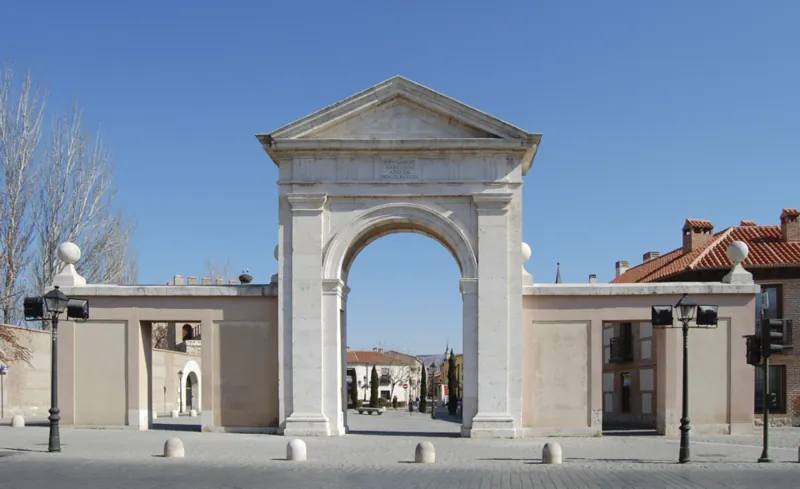
Puerta de Madrid preserves the name of a historic exit, but its monumental appearance belongs to the late eighteenth century. Replacing an earlier defensive gateway expressed a change of purpose: an entrance should represent the city as well as control passage. Study the composition from a safe pavement, comparing the central opening, side sections and pediment. Then move to the other side to see how the gateway reads differently when entering or leaving the old town. This is not Madrid’s Puerta de Alcalá, though both introduce the monumental language of their period. Treat it as an urban exterior stop; visiting the nearby walled enclosure involves separate arrangements and requires checking current access.
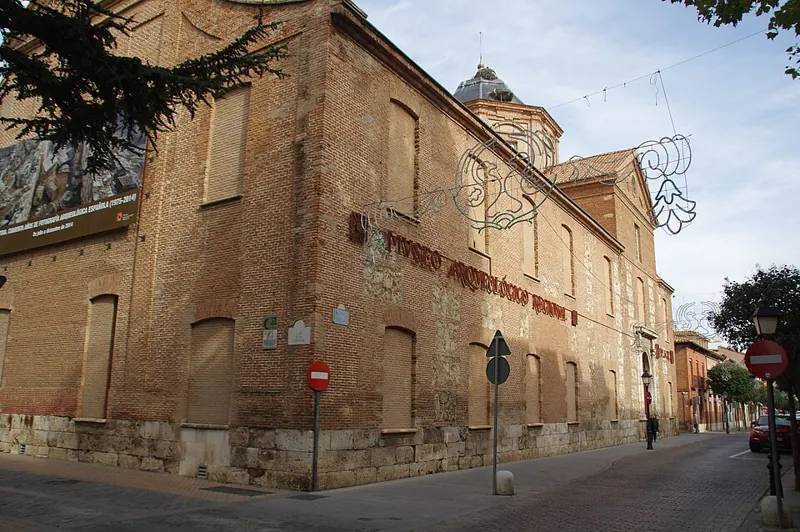
The museum takes Alcalá beyond Cervantes and its university colleges. Occupying the former Madre de Dios convent since 1999, it explores the Madrid region’s past through archaeology and palaeontology. Select a few exhibits and ask what evidence they offer: an object, bone or ceramic vessel can answer different questions about a society or landscape. This approach distinguishes interpretation from simply accumulating antiquities. Consider too how the former convent has been adapted to present-day galleries. Plaza de las Bernardas provides a pause afterwards and connects with the Archbishop’s Palace. Check exhibitions and programming for your date, since a temporary display mentioned in an older guide may already have ended.
Paradores restaurant in the former San Jerónimo college near the university. Confirm that your booking is for the Hostería rather than another Parador dining room, checking menu, opening and allergens directly.
A central option for an unhurried meal between visits. Check your chosen dining space, current offer, availability and dietary requirements; the link goes to the restaurant and includes no booking.
Editorial selection based on the venues’ own websites, not a personal dining review or sponsorship. Check opening, menus, allergens and prices before visiting.
Optional activities, separate from the independent walk. The checked listings advertise a Spanish-speaking guide; this page language does not change the activity language. The free tour operates on tips. Access on the guided tour depends on events and venue availability: not every interior is guaranteed. Check dates, included admission, meeting point and conditions on Civitatis. Affiliate links: we may earn a commission if you book. Checked on 20 October 2026.
Choose Alcalá de Henares station for this historic-centre walk; do not confuse it with Alcalá Universidad or La Garena. Check Renfe’s current Cercanías Madrid route and engineering notices rather than relying on line names alone. CRTM’s interurban223 connects Avenida de América interchange with Alcalá: confirm stop, direction and last return. Station and bus transfers add to walking time. Alcalá has no metro. Arrange a specific connection from Madrid airport without assuming a direct train to this centre. Some crossings carry traffic, while Complutum and other cities need separate travel. Approximate markers, no accessibility audit. Reach the centre from Alcalá de Henares station and orient yourself at Plaza de Cervantes. The station transfer is not included in the short walk’s two hours. Organise your morning around any university or Corral booking, allowing time to find the correct reception.