Two hours
Two hours: Market, Roman walls, Pilar square, and the exteriors of La Lonja and La Seo. Add the bridge if time permits; reduce stops if entering a monument.

WHAT TO SEE AND HOW TO PLAN
Discover Zaragoza between the Ebro, the Pilar and the remains of Caesaraugusta. Explore the old town and its museums, leaving time for El Tubo and a separate visit to the Aljafería.
Durations are indicative: queues and all indoor visits are not included.
Two hours: Market, Roman walls, Pilar square, and the exteriors of La Lonja and La Seo. Add the bridge if time permits; reduce stops if entering a monument.
One day: old town in the morning, lunch in El Tubo, the Roman Theatre Museum in the afternoon and an Ebro riverside walk. Check opening times.
Two days: devote the first to the centre and Roman Zaragoza. Reserve the second for the Aljafería and a relaxed riverside walk.
With children: Roman walls, Pilar, the little horse sculpture at La Lonja and the bridge, with breaks. The Theatre Museum is an optional addition. Accessibility has not been audited.
Rainy day: choose nearby interiors such as La Seo, La Lonja according to its programme and the Caesaraugusta museums. Transfers are not fully sheltered.
OpenStreetMap loads on request. Markers are indicative, not audited entrances. Use links for street directions.
Audio uses your device voice and depends on your browser. The full text is always available to read.
1 / 8 · ZARAGOZA
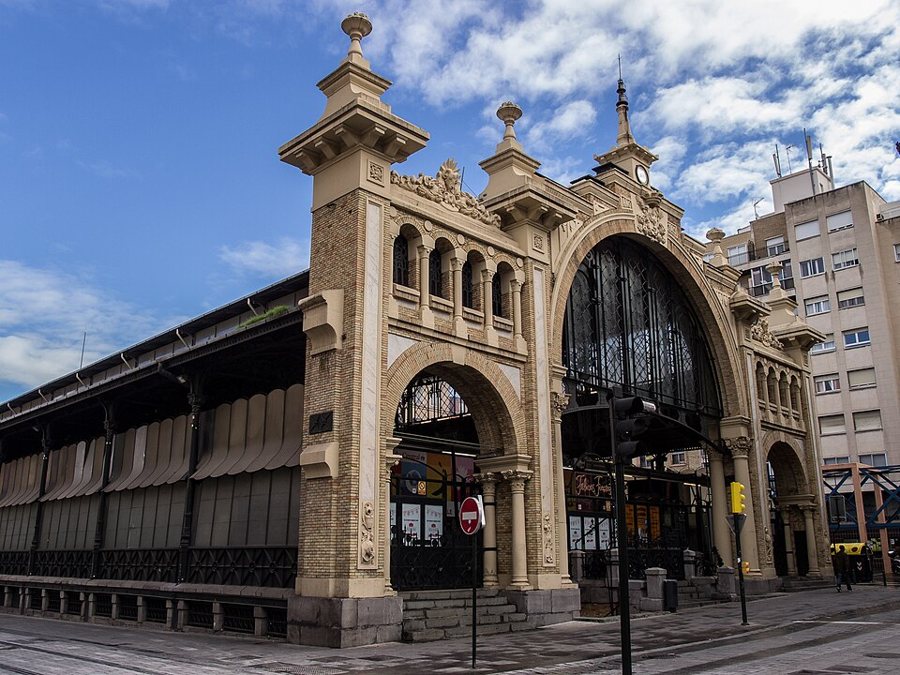
The Central Market introduces Zaragoza through what its residents buy and eat. Designed by Félix Navarro, its iron building opened in 1903 and regained its splendour after renovation in 2020. Before entering, notice the structure and the light: new materials transformed the architecture of European markets. Inside, food stalls share space with places to eat. This is architectural heritage, but also an everyday workplace and meeting point. Give traders room to serve their customers and look for products that you may later recognise on restaurant menus around the old town.
Explanation source ↗2 / 8 · ZARAGOZA
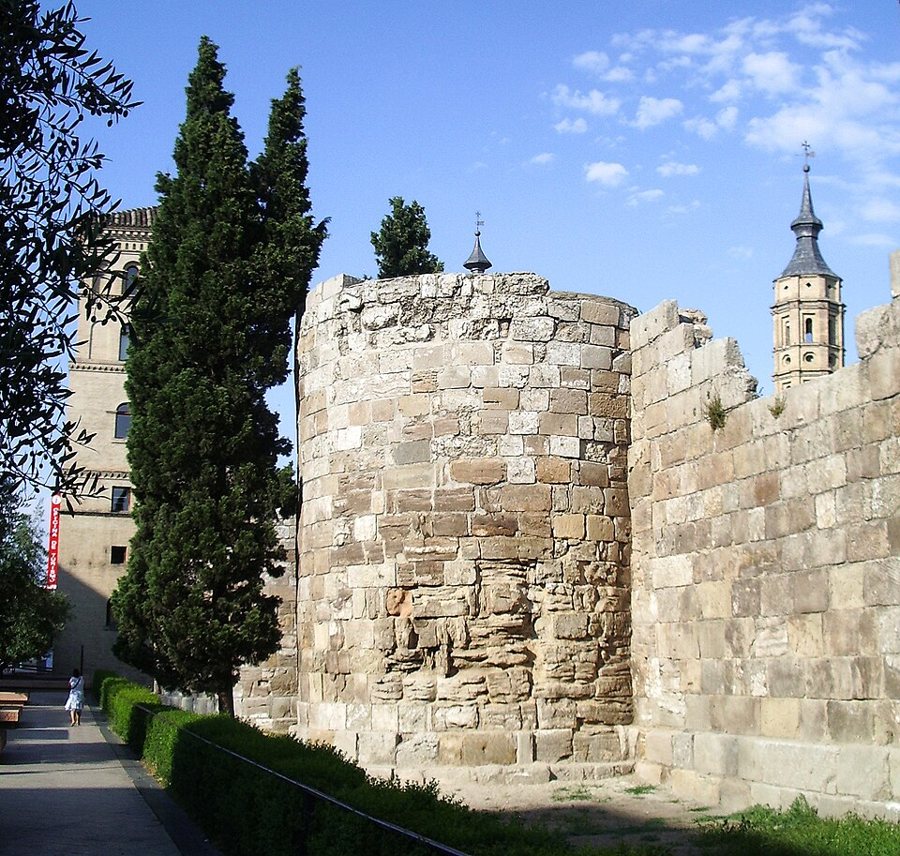
These massive blocks reveal a Zaragoza older than its cathedrals: the Roman city of Caesaraugusta. The surviving walls beside the Zuda tower mainly date from the second and third centuries AD. They protected the population while defining the city’s boundaries and entrances. Their course continued to shape the streets for centuries, even as rulers changed. Notice the thickness of the masonry and the rounded towers, then compare their scale with today’s streets. Nearby stands a bronze copy of Augustus of Prima Porta, another reminder that Roman history remains part of everyday Zaragoza.
Explanation source ↗3 / 8 · ZARAGOZA
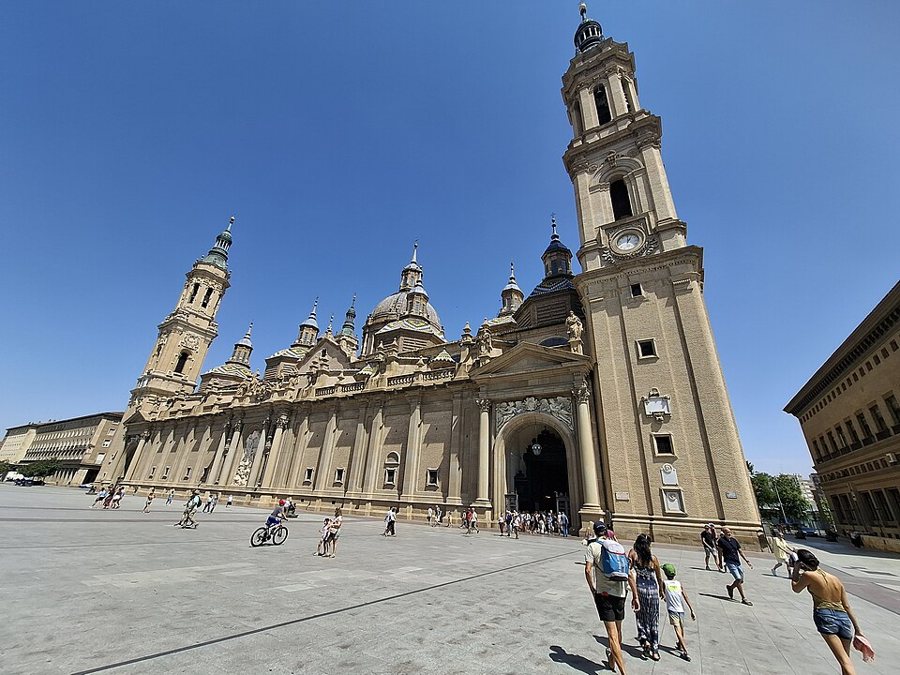
The domes of the Pilar shape Zaragoza’s skyline beside the Ebro. Today’s Baroque church follows a long succession of religious buildings on this site. Its origins are linked to the Christian tradition of Mary coming to the apostle James, a belief that explains the sanctuary’s importance to pilgrims. From the square, notice how the towers and rooflines combine and change with your viewpoint. Inside are paintings by Goya and a sixteenth-century alabaster altarpiece. Respect worship during your visit. The panoramic tower experience is a separate activity whose availability should be checked on the official website.
Explanation source ↗4 / 8 · ZARAGOZA
Although surrounded by important churches, La Lonja was built for trade. In the sixteenth century Zaragoza created a dedicated civic building for commercial exchanges. Its brick exterior combines Aragonese construction traditions with ideas from the Italian Renaissance. If the building is open, look upwards: ringed columns support a magnificent hall beneath star-shaped vaulting. It now hosts exhibitions, giving this historic trading space another public role. On the river side, find the little horse sculpture. It honours the photographer who spent decades photographing children sitting on a cardboard horse as a souvenir of Zaragoza.
Explanation source ↗5 / 8 · ZARAGOZA
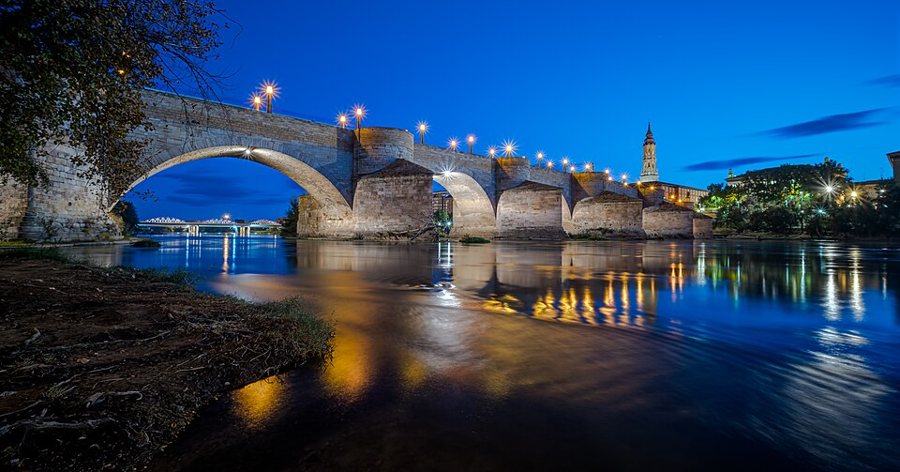
Crossing the Stone Bridge helps explain Zaragoza’s relationship with the Ebro. The present bridge was built in the fifteenth century, although a crossing already linked these banks in Roman times. The river brought resources and connections, but its floods could also threaten the city. Look at the bronze lions at the ends of the bridge: they recall one of Zaragoza’s emblems. As you approach the opposite bank, the view of the Pilar changes, bringing water and sky into the composition. Use the side spaces for photographs without obstructing pedestrians, and be aware of the wind.
Explanation source ↗6 / 8 · ZARAGOZA
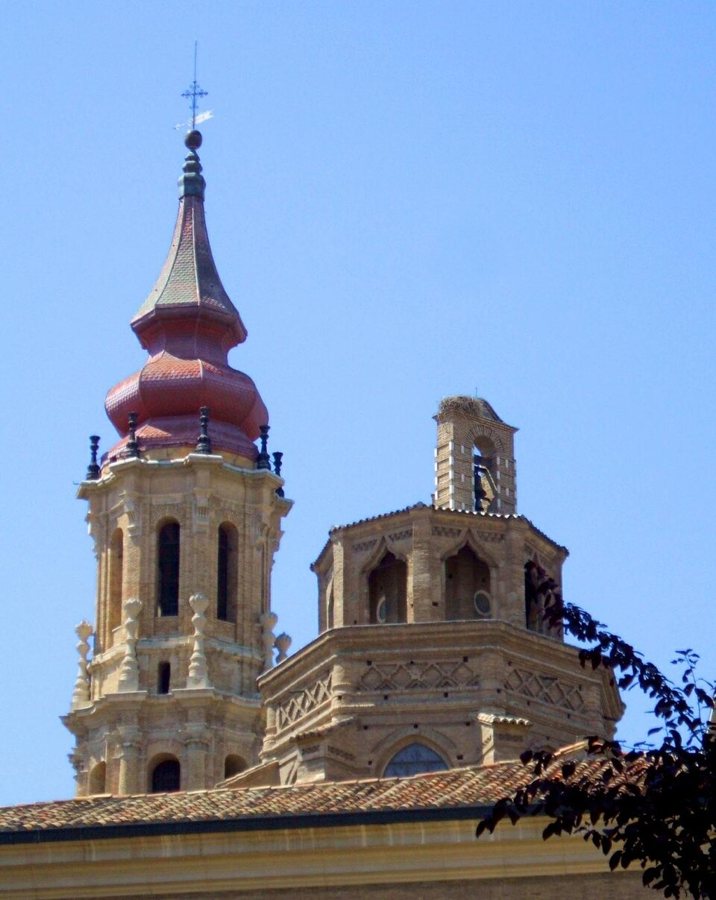
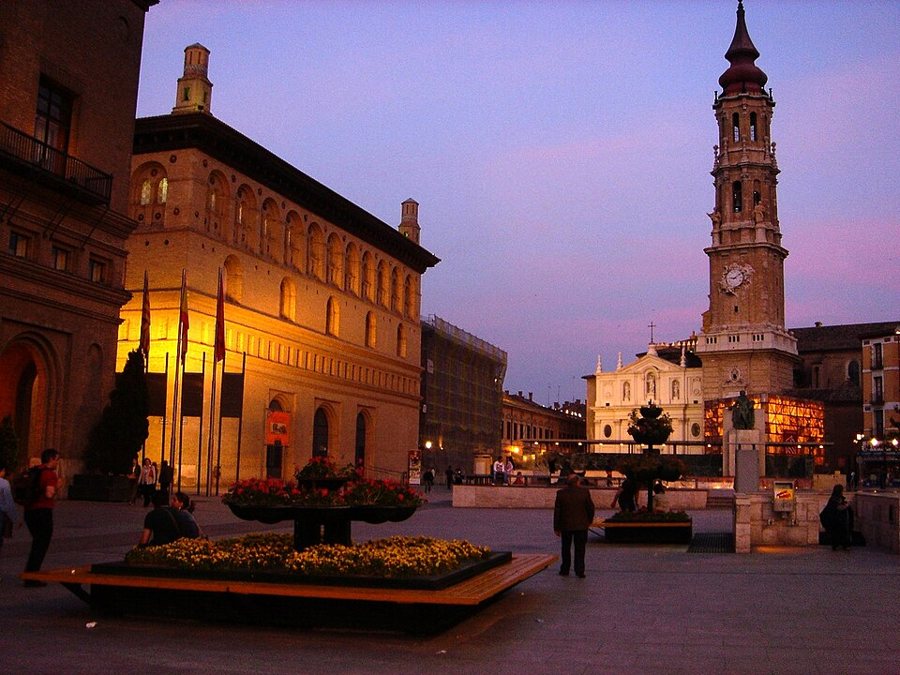
La Seo brings together many of Zaragoza’s successive identities. Its setting was associated with the Roman forum and later the main mosque before becoming a Christian cathedral. Read the building as a layering of periods, from Romanesque elements to Neoclassical additions. Do not stop at the main façade: find the outer wall of the Parroquieta of San Miguel. Its brick and ceramic patterns are an outstanding expression of the Aragonese Mudéjar tradition recognised by UNESCO. Inside, the main altarpiece and tapestry collection deserve unhurried attention. Check official visiting arrangements before planning an interior visit.
Explanation source ↗7 / 8 · ZARAGOZA
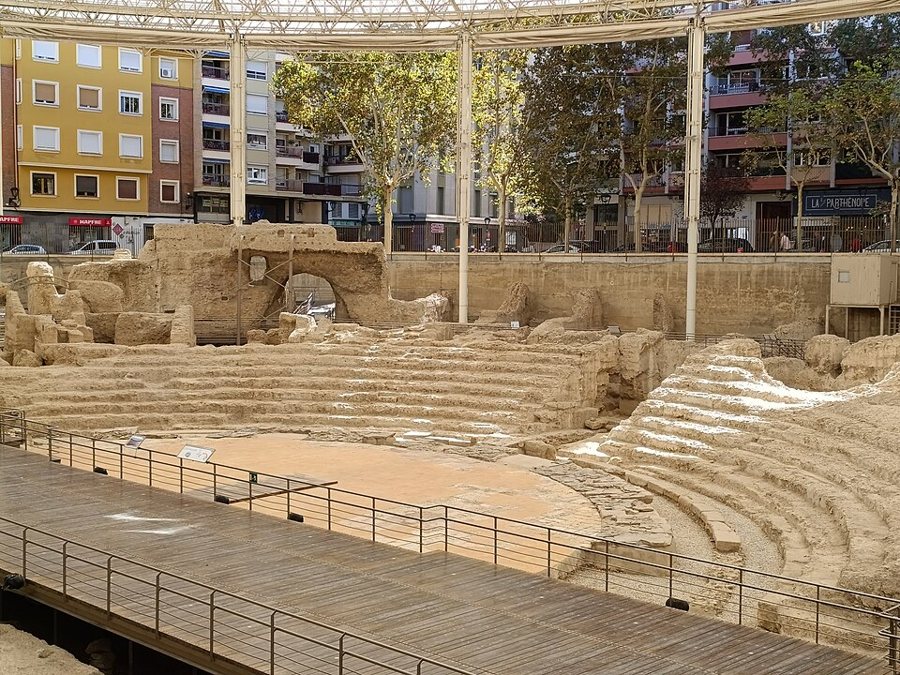
A large Roman theatre survived beneath modern Zaragoza for centuries. Built in the first century AD, it came to light again during construction work in 1972. Its remains evoke a gathering place where entertainment mixed with social life and the political messages of imperial power. The museum also explores how later communities occupied the site, so the story continues beyond the end of theatrical performances. Notice the relationship between seating, stage and audience. Reconstructions help you imagine the missing parts: this is not an intact building, but evidence recovered and interpreted through archaeology.
Explanation source ↗8 / 8 · ZARAGOZA
Separate outing beyond the central walk
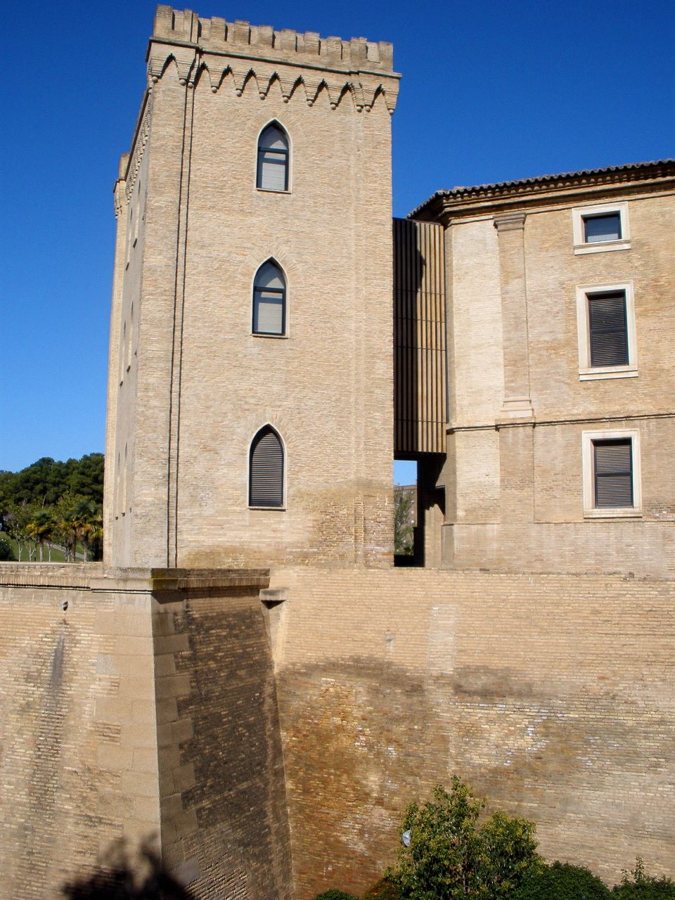
The Aljafería surprises visitors with the contrast between defensive walls and delicate interiors. It began as a leisure residence for taifa rulers and was later transformed by Christian monarchs. Its courtyards, arches and rooms reveal these overlapping periods rather than a single moment in history. The Troubadour Tower is connected with the story of a Verdi opera. The palace also served as a fortress, prison and barracks; today it houses the Aragonese parliament. Treat it as a separate extension to the central walk, allowing sufficient time and checking visiting arrangements for this working institutional building.
Explanation source ↗Calle Mártires, 12, Zaragoza
Historic restaurant in El Tubo with a focus on vegetables. Check the menu and booking arrangements for a seated meal.
Official website ↗ · Walking directions ↗Calle Estébanes, 9, Zaragoza
Cooking focused on Aragonese lamb, with traditional and informal options. Consult the current menu.
Official website ↗ · Walking directions ↗Calle Estébanes, 10, Zaragoza
Historic wine establishment in El Tubo. Check its current offering before visiting.
Official website ↗ · Walking directions ↗Editorial selection based on the venues’ own websites, not a personal dining review or sponsorship. Check opening, menus, allergens and prices before visiting.
Optional paid activities, separate from the free self-guided walk. Affiliate links: Ayuda Turística may earn a commission if you book. Civitatis confirms the final price, included or additional admission, language, conditions and availability. These activities advertise a Spanish-speaking guide: reading this page in English does not change the tour language. Images illustrate the monuments, not the service. Reviewed 16 October 2026.
See all activities ↗From Delicias, check city buses or commuter trains towards Portillo and Goya; the tram does not directly serve Delicias. Aena lists airport bus 505 with a provisional departure at Paseo María Agustín, 5 and a Delicias stop. Check current schedules.
Emergencies: 112. For non-urgent medical assistance, consult local services.