Discover La Laguna through squares, noble houses and streets where university life, trade and worship still coexist. Eight stops divide the historic centre into blocks, supported by a history museum. This guide focuses on the town; Tegueste, Tacoronte and Santa Cruz require separate travel and time.
Explore Adelantado and Nava outside, continue to the cathedral and allow a Lercaro block. Comparing square, palace, church and museum reveals different functions. Choose one principal interior if time is short; façades do not all come with open rooms.
Estimated time: 2-3 hours outdoors, plus selected visits
Compare Salazar and the former San Agustín convent, continue to Concepción and allow the section towards the Cristo. This is an exterior walk with institutional and religious access subject to opening, not a chain of public courtyards. Rest before the final sector.
Walk around San Marcos to compare a neighbouring town with La Laguna. The municipal office provides a historic-centre map and route programming. Do not assume daily guided visits or access to every building.
Check TITSA for actual origin, stop and return, adding stop-to-centre travel. Do not combine this automatically with an Anaga hike requiring its own preparation.
A separate outing links Tacoronte's sanctuary, church and historic streets. Official heritage information includes El Cristo, former convent and Santa Catalina. Select confirmed openings rather than treating an advertised route as an included booking.
Check TITSA route and direction for your date and the last return. Historic sites require walking between them; arriving in Tacoronte does not place you at every doorway.
The capital changes urban scale and offers a cultural block such as MUNA near TEA. Plan one museum and a central walk rather than adding harbour, beaches and every venue to one outing.
Tram line 1 connects La Trinidad with Santa Cruz. Choose the stop for your museum and add walking; check current service and notices before returning. Museum admission is separate.
Sketch one balcony façade and one coat of arms, then choose a Lercaro object to discuss everyday life. This works without entering institutions. Alternate looking with meals and rest; workshops and children's visits require checking programmes and ages rather than being included with the centre.
In the rain
Prioritise Lercaro and check the cathedral cultural visit, which should not be assumed available on Sunday. Salazar remains the bishopric and San Agustín a school, so interiors are not automatic substitutes for a closed museum. Allow a sheltered meal between blocks.
What to try and where to pause
Guaydil and Laguna Nivaria allow a historic-centre meal near the main routes. Confirm dining space and current arrangements: hotel restaurant, café and menu are not necessarily one offer. Ask about Canarian products, allergies and seasonal choices without an included dish assumed.
Sources for this update
Ayuntamiento Tegueste · casco histórico y plano
Turismo Tenerife · patrimonio de Tacoronte
Turismo Tenerife · MUNA y centro de Santa Cruz
Metrotenerife · conexión Santa Cruz-La Laguna
Choose your walk
Durations are indicative: queues and all indoor visits are not included.
Plan my route
Street map
OpenStreetMap loads on request. Markers are indicative, not audited entrances. Use links for street directions.
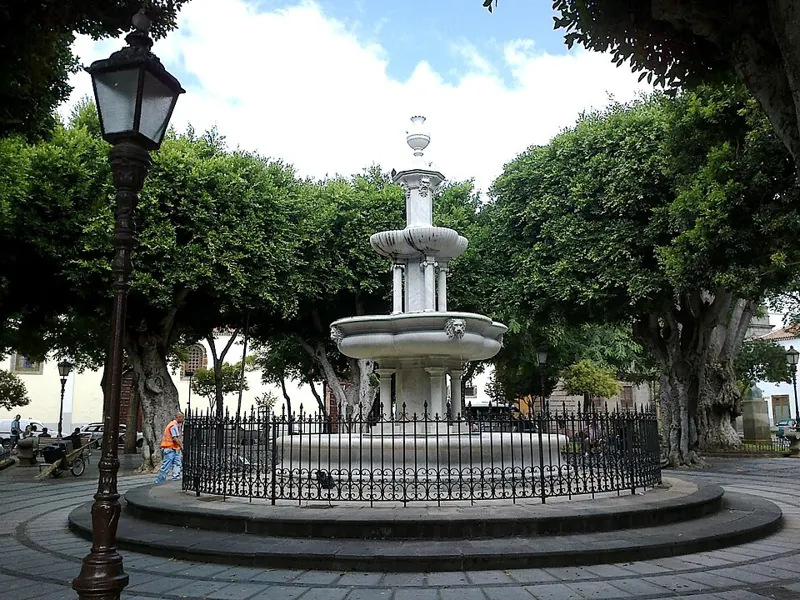
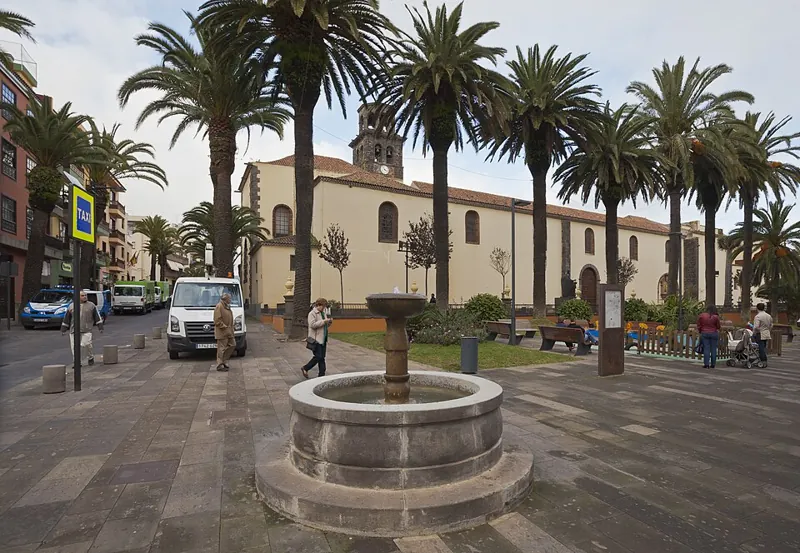
Plaza del Adelantado lets you begin with the town plan rather than accumulating building names. Institutions, religious houses and powerful families gathered around this Villa de Abajo space, while the Concepción nucleus developed a less regular layout. Look at the streets leaving the square and compare them with the open ground: their relationship explains urban expansion. The town hall occupies the site of the first island council, but its Neoclassical façade belongs to another period rather than the town's foundation. San Miguel chapel and neighbouring fronts add different functions to the picture. Walk around the perimeter, then choose your next direction. Much can be understood outside without assuming every administrative or religious interior is available for visiting.
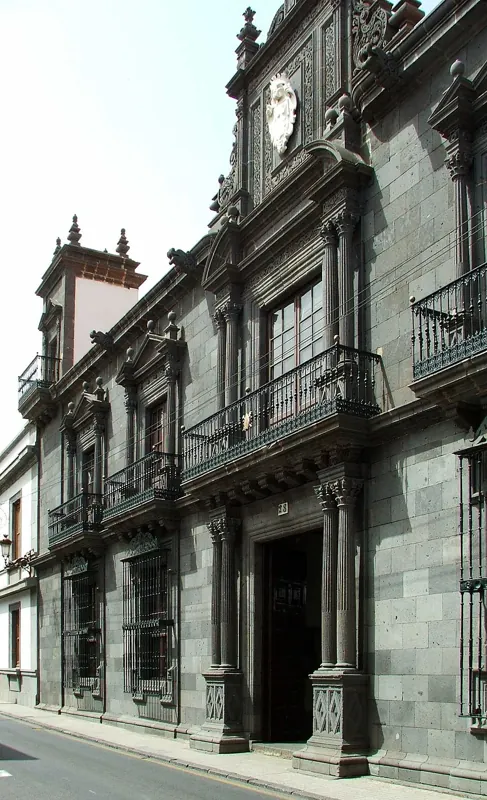
Nava encourages reading a façade as a process rather than a building created all at once. Construction began in 1585, but later changes, particularly in 1776, transformed its image. Stone, heraldry and the central crest display a residence seeking visibility beside Plaza del Adelantado. Begin with the symmetry of windows and balconies, then approach columns, reliefs and details reflecting different artistic tastes. Comparing it with Salazar elsewhere on the walk shows how families expressed prestige through architecture. The interest does not depend on entering every room: this stop is designed from the public street. If a scheduled opening exists, confirm the included spaces before allocating interior time; describing historic courtyards does not mean they operate as an open museum.
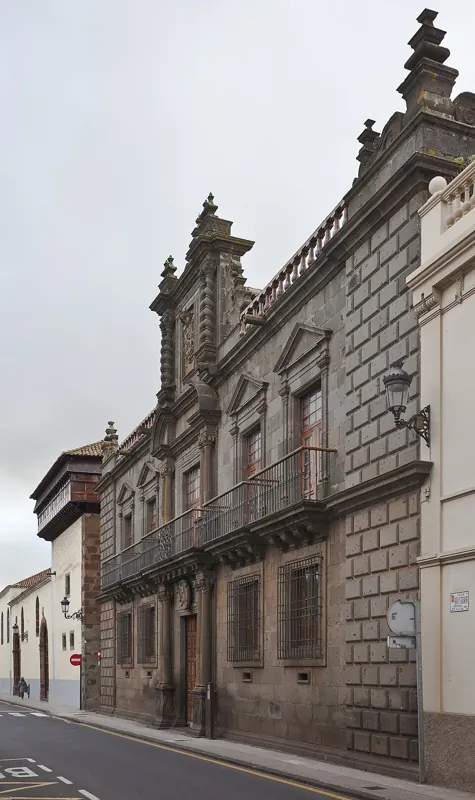
Salazar combines noble display with an institutional function still in use. Commissioned in the seventeenth century, its stone façade arranges balconies, columns, heraldry and small towers into an image of authority. Study the composition, then compare its details with Nava Palace: similarities reveal a shared language without making the buildingsidentical copies. The interior suffered serious damage in the 2006 fire and was restored to preserve both architecture and episcopal headquarters. Recovery belongs to its history, preventing an assumption that every room survives unchanged from construction. The main stop is from Calle San Agustín. As this is the bishopric, a courtyard described in a guide does not mean permanent public access; check particular openings and respect institutional work and religious spaces.
Lercaro House connects the walk's façades with broader historical processes. This branch of Tenerife's History and Anthropology Museum occupies a Genoese-origin family's residence and examines conquest, institutions, economy, trades and everyday life. Expect no single closed account: objects invite questions about who participated in change and whose experiences left fewer material traces. Choose a document, map or domestic object and relate it to the town outside. The house's architecture deserves attention too, particularly courtyard and galleries. The museum is at Calle San Agustín 22; distinguish it from Casa de Carta, another branch in Valle de Guerra. Check current galleries and activities before adding a guided visit, since programmes and access arrangements can change.
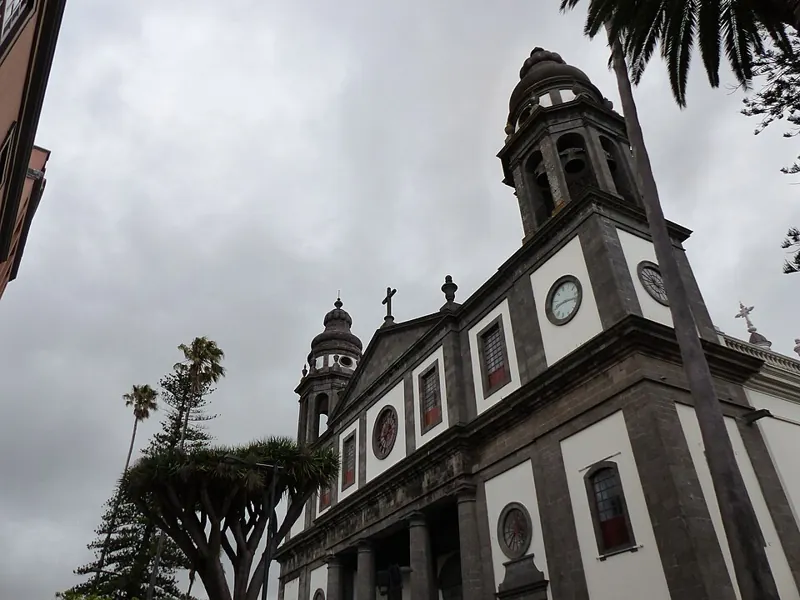
The cathedral distinguishes an institution's history from the age of its masonry. Consecrated in 1913, the current church combines a retained Neoclassical façade with a Neo-Gothic interior rather than being wholly medieval. Approach from the square to study proportions and towers, then compare the outside with the direction of the vaults if you enter. The contrast reveals decisions about rebuilding and continuity. The church remains a place of worship as well as offering a heritage visit under its own arrangements. For bell-tower or other access, check the current product and notices because visit formats differ. Pause afterwards and look back across the square: the cathedral also organises movement and viewpoints within the town centre.
Concepción marks the Villade Arriba nucleus, contrasting with the more regular layout towards Adelantado. Its stone tower serves as a visual reference, but the church combines building and rebuilding phases rather than displaying one foundation date in every element. Study tower, adjoining structures and surroundings, then follow the street to see its appearance change. Inside, notice columns, arches and timber roofs before concentrating on an individual image. Structure and decoration can then be understood together. Church visiting and a possible tower ascent should be checked separately; an open door for worship does not guarantee a full tourist circuit. Afterwards seek views along neighbouring streets and compare their scale with the cathedral square.
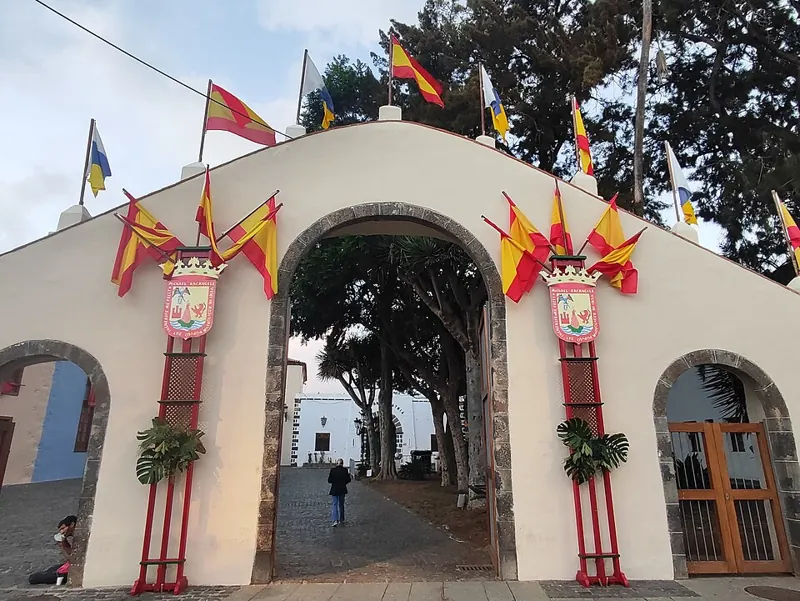
The Cristo sanctuary extends the walk towards one of the town's central devotions. Its origins connect with San Miguel de las Victorias Franciscan convent, although fires and rebuilding transformed the complex. The Christ image is an early-sixteenth-century Flemish carving, placing La Laguna within wider cultural and religious networks. Study the portico facing the square and the transition from public to religious space. Inside, if worship and opening allow, compare the plain nave with the intensity of the silver altarpiece. A procession is unnecessary to understand that the sanctuary remains active. September festivities have their own programme and may alter access and movement; check the calendar without presenting a celebration as a daily attraction.
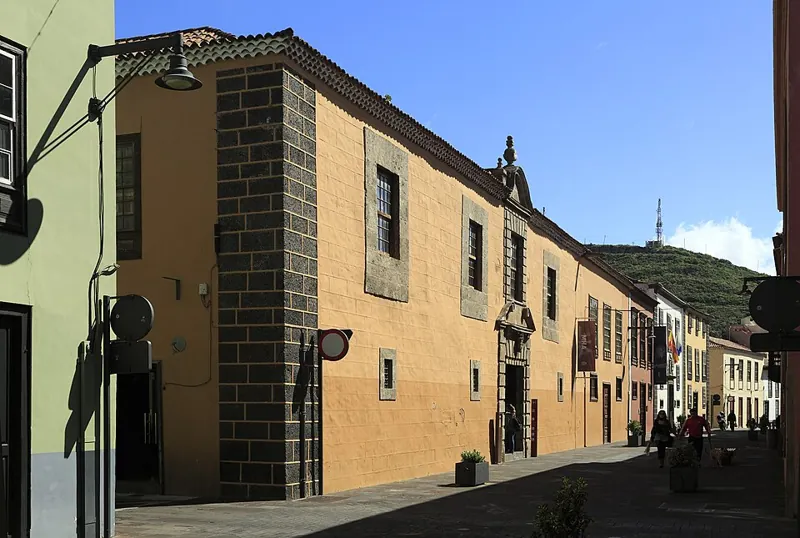
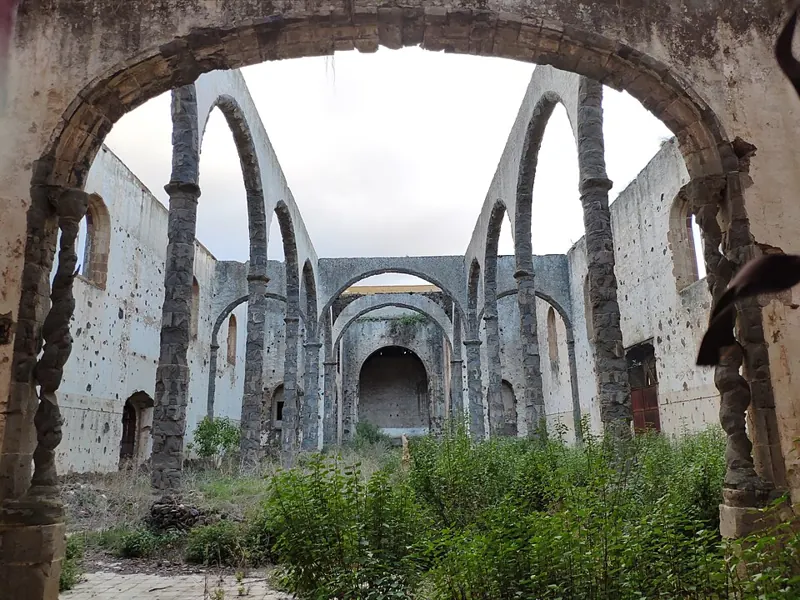
San Agustín brings together religion, education and the memory of loss. Construction began in the sixteenth century and the former convent later housed educational institutions; today it belongs to IES Canarias Cabrera Pinto. It is neither an abandoned convent backdrop nor a museum open without conditions. The church burned in 1964, leaving ruins that tell another part of the complex's history. From outside, study how walls and entrances separate different uses. The stone-and-timber cloister deserves attention during authorised openings, but its heritage description is not permission to enter a working school. Connect this stop with Lercaro House and the street's façades: within a short distance appear different ways of preserving, teaching and using the past.
Historic-centre restaurant for a break between Adelantado and La Carrera. Its own website confirms the address; check current menu, booking and dietary needs directly without an assumed set menu or price.
Plaza del Adelantado, 11, San Cristóbal de La Laguna
Hotel restaurant on the square with several dining spaces. Confirm restaurant versus café or a particular offer, together with opening, availability and allergens; the link includes no accommodation.
Editorial selection based on the venues’ own websites, not a personal dining review or sponsorship. Check opening, menus, allergens and prices before visiting.
Optional activities, separate from the independent walk. Both listings advertise a Spanish-speaking guide; this page language does not change the tour language. The free tour operates on tips. Confirm dates, meeting point, route and accessibility for the chosen option before booking. Interior visits and admission are not assumed included. Affiliate links: we may earn a commission if you book. Checked on 21 October 2026.
From Tenerife Norte-Ciudad de La Laguna Airport (TFN), Aena and TITSA list line 020 towards La Laguna interchange and Santa Cruz. Check direction, outside versus inside stop and actual service, since arrangements vary. From Santa Cruz, tram line 1 reaches La Trinidad; consult Metrotenerife routes and notices. The tram does not reach the airport: a proposed extension is not an operating service. Add stop-to-centre travel. Tenerife Sur is a different airport requiring its own plan. Walk the centre, selecting crossings, surfaces and entrances according to mobility. For Tegueste and Tacoronte check TITSA dates and returns without assumed frequencies. Markers identify surroundings rather than audited entrances. Reach the centre from La Trinidad or the interchange, arranging luggage before walking. TITSA 020 links TFN, La Laguna and Santa Cruz, but notes distinguish stops and departures: check the one you need. The short walk begins at Adelantado or your chosen point, excluding airport travel.