Two hours
Around two hours: Plaza del Castillo, Town Hall, San Saturnino exterior, cathedral exterior and one wall section. Return through the old town; excludes full interiors, Taconera and the Citadel.

WHAT TO SEE AND HOW TO PLAN
Pamplona combines medieval streets, meeting-place squares, religious heritage and a belt of gardens and fortifications. Walk the central route; Taconera and the Citadel extend the day. Outside San Fermín, the bull-run streets are everyday city streets. Coordinates are approximate and accessibility has not been audited.
Durations are indicative: queues and all indoor visits are not included.
Around two hours: Plaza del Castillo, Town Hall, San Saturnino exterior, cathedral exterior and one wall section. Return through the old town; excludes full interiors, Taconera and the Citadel.
Morning in the old town, cathedral subject to admission and city walls. Take a food break, then visit the bullring exterior and stroll through town. Add Taconera if energy allows rather than every interior.
Day one: old town and cathedral visit. Day two: Taconera, Citadel and Vuelta del Castillo, adding exhibitions only if available. Any trip outside Pamplona requires separate transport and planning.
Shorten to Plaza del Castillo, Town Hall and one garden. Separate the centre and Citadel into different walks, take breaks and watch children near walls and changes in level. Eight stops are not compulsory.
Prioritise the cathedral visit and a Citadel exhibition with confirmed opening, plus lunch in the centre. Shorten walls and gardens in heavy rain or wind; paving can become slippery.
OpenStreetMap loads on request. Markers are indicative, not audited entrances. Use links for street directions.
Audio uses your device voice and depends on your browser. The full text is always available to read.
1 / 8 · PAMPLONA
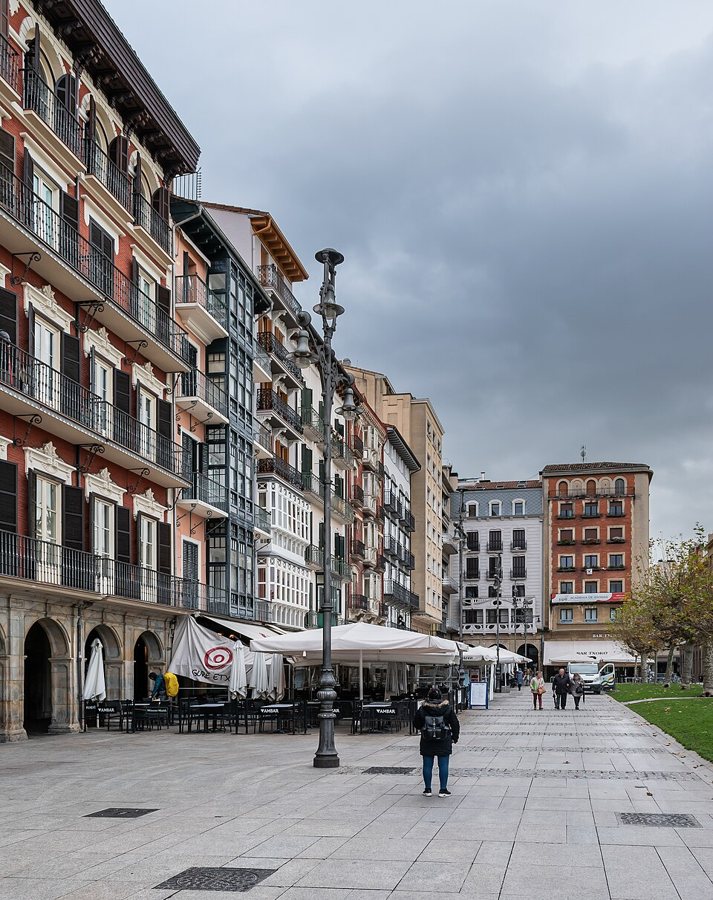
Plaza del Castillo lets you begin exploring Pamplona without entering a monument. Its façades, arcades and terraces form a meeting place connecting different parts of the centre. Walk along one side and look again from another: the square changes when you stop treating it simply as somewhere to cross. Pause here before entering the old-town streets, or finish your day watching everyday activity. Do not assume there will be an event or an available café table; that depends on the moment. Choose your next direction at leisure and keep shop and residential entrances clear while taking photographs or gathering with your group.
Explanation source ↗2 / 8 · PAMPLONA
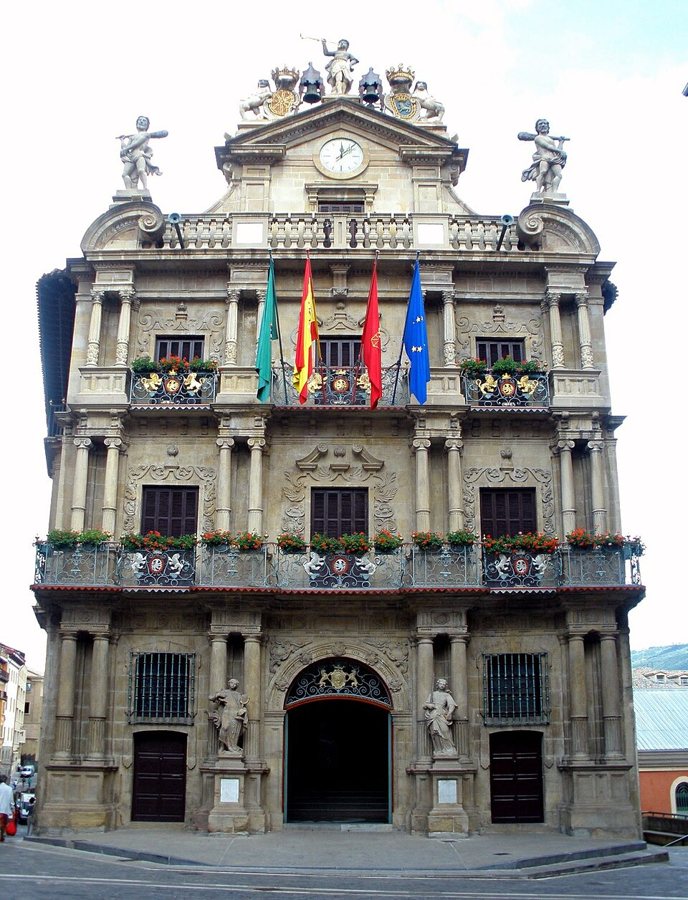
The Town Hall façade gathers one of Pamplona's most recognisable images into a relatively small space. Approach without blocking the way and observe how Baroque decoration organises balconies, columns and the upper section. The square is connected with the historical union of the former boroughs and with the Chupinazo that opens San Fermín. Yet visiting during the festival is not necessary to appreciate its importance: this space also belongs to everyday city life. Viewing the exterior does not mean municipal rooms are open to visitors. From here, continue towards San Saturnino or the streets leading up to the cathedral at your own pace.
Explanation source ↗3 / 8 · PAMPLONA
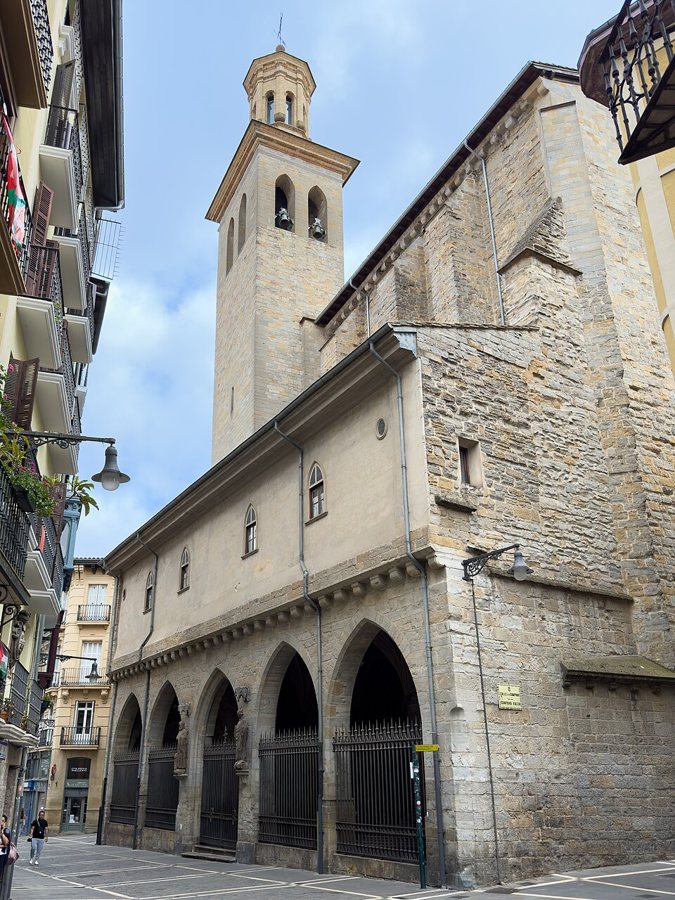
San Saturnino, also known as San Cernin, recalls a city once formed by separate boroughs. Its sturdy presence and towers help explain how a medieval church could also have a defensive role. Observe the entrance and the transition between street noise and religious space. The saint's name is connected with local Christian tradition, but tradition should not be confused with archaeological proof of every associated story. If the church is open, check that visiting is compatible with worship and remain quiet. You can also appreciate this stop from outside before returning towards the Town Hall or continuing through the old town.
Explanation source ↗4 / 8 · PAMPLONA
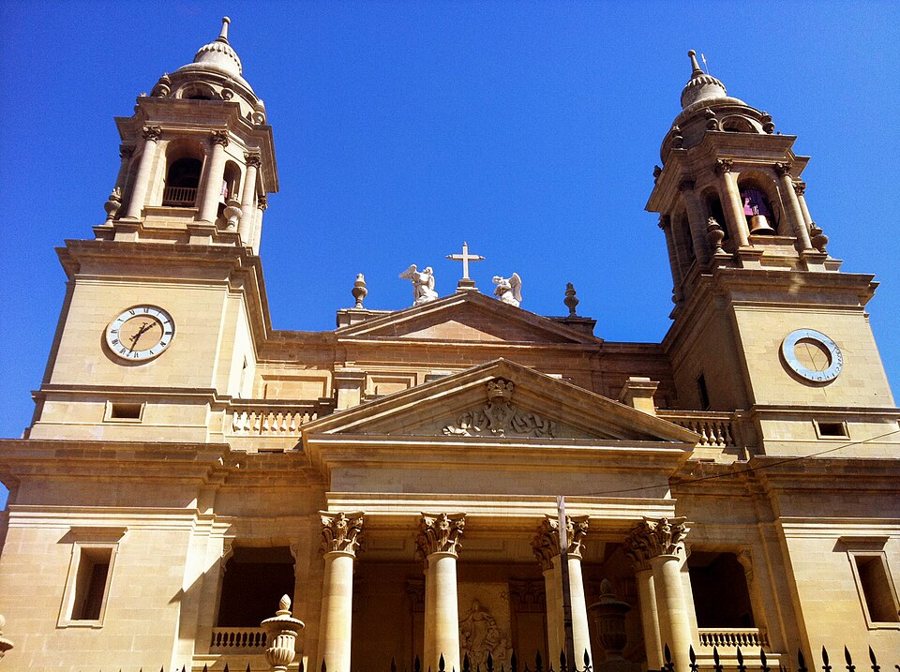
The cathedral presents a contrast worth observing slowly: behind a Neoclassical façade stands a medieval ensemble. Church, cloister and rooms associated with the museum introduce the different functions of a cathedral beyond its exterior image. If you enter, choose a few details and notice how light, proportions and movement change between spaces. Do not reduce the whole visit to a photograph of the cloister. Check the operator's website for admission inclusions and activities requiring reservations or separate opening arrangements. Worship remains part of this place. Afterwards, the surrounding Navarrería district offers a continuation towards the walk beside the city walls.
Explanation source ↗5 / 8 · PAMPLONA
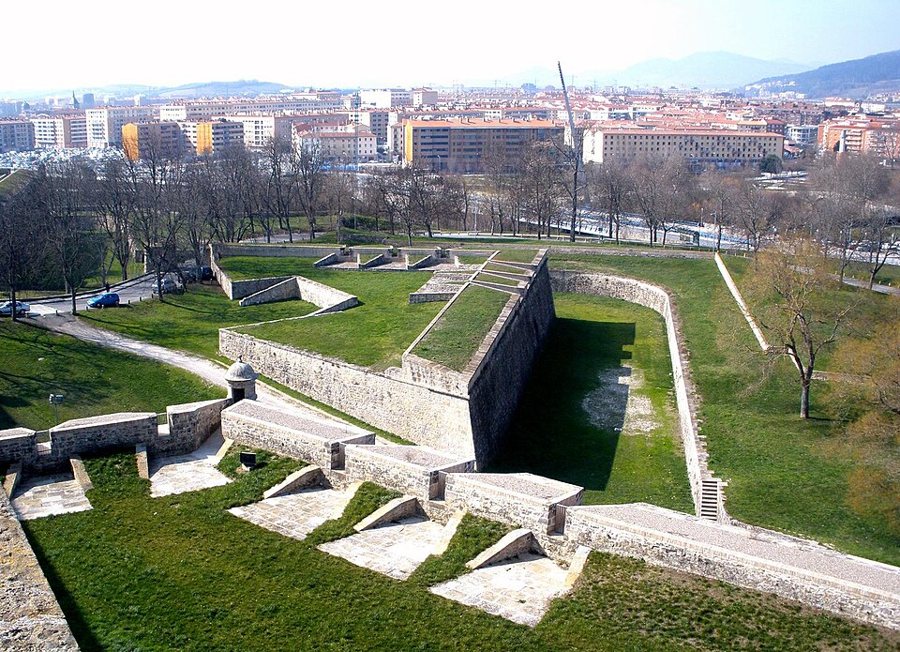
Around El Redín and Caballo Blanco, Pamplona regains its elevated position above the Arga surroundings. The walls stop being a line on a map and become a landscape of stone, changes in level and viewpoints. Notice how a place designed for surveillance and defence has become a public walk. You do not need to cover the whole enclosure to understand it: choose one stretch and allow time to look. Keep to designated paths rather than climbing parapets or approaching edges for photographs. Wind and wet ground can change the comfort of the route. Afterwards, return to the old town or continue according to your energy.
Explanation source ↗6 / 8 · PAMPLONA
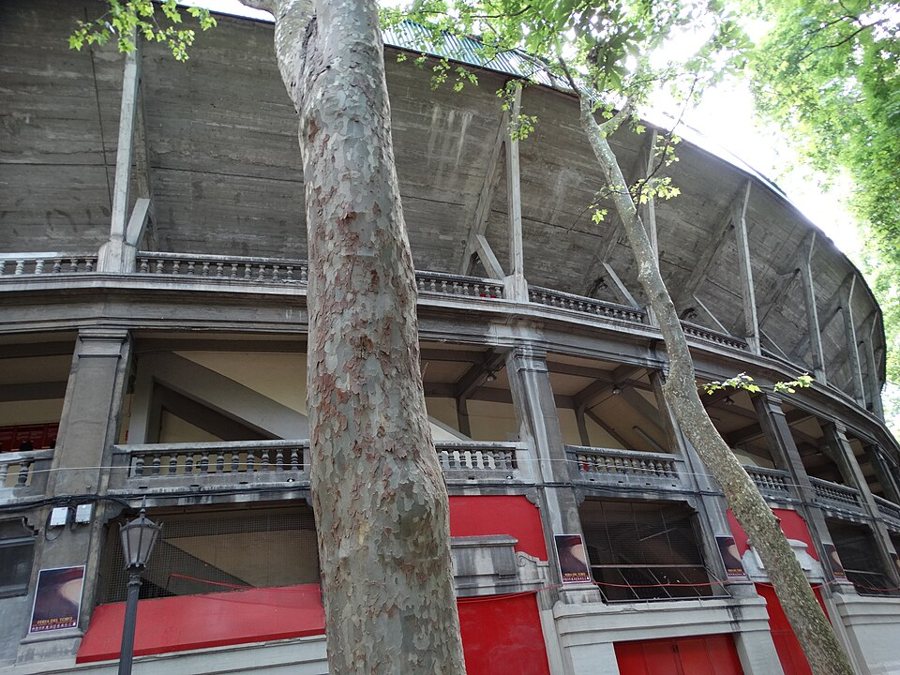
The bullring places one familiar aspect of San Fermín in context without confusing the festival with the entire city. Opened in 1922, it marks the end of the bull-run route and belongs to Pamplona's modern history. Observe its exterior and relate it to the nearby streets, which have other rhythms and uses outside festival celebrations. A cultural visit to the venue, when offered, is different from attending a performance: check the operator's conditions and programme. This walk does not propose participating in a bull run. During events or restrictions, follow official instructions and keep access clear for residents and other visitors.
Explanation source ↗7 / 8 · PAMPLONA
Separate outing beyond the central walk
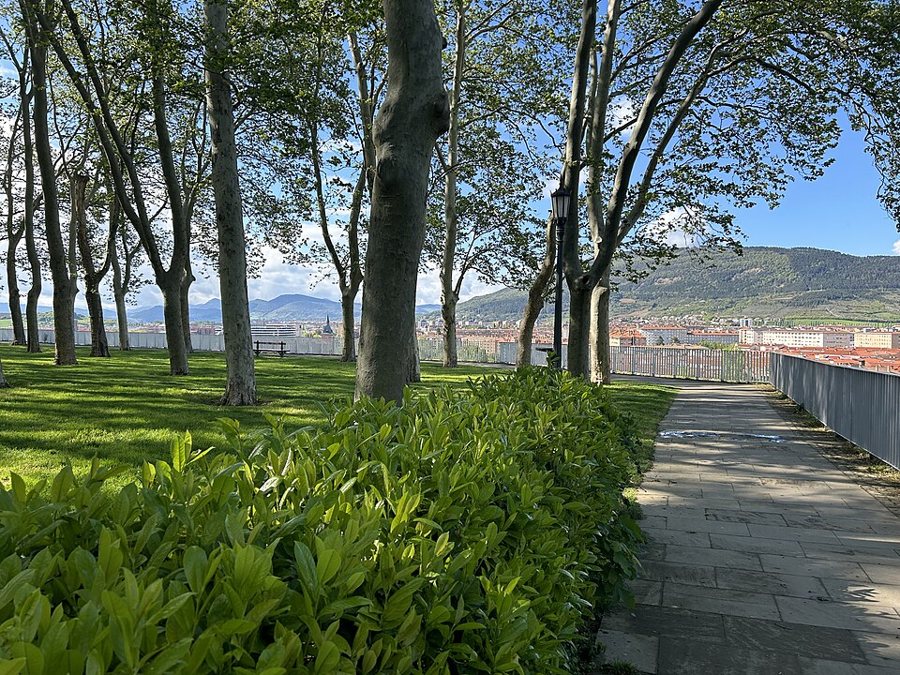
Taconera offers a change of pace among gardens, paths and remnants of Pamplona's defensive landscape. As one of the city's historic green spaces, it lets you pause without leaving town. Rather than searching for just one famous point, notice how trees, flowers, fountains and sculptures organise different corners. Enjoying a garden also means choosing somewhere to rest. This extension works well when you do not need another interior visit. With children, allow time for appropriate play areas and take care near changes in level. Respect animals, plants and barriers, without expecting any particular activity. Continue towards the Citadel only if time and energy allow.
Explanation source ↗8 / 8 · PAMPLONA
Separate outing beyond the central walk
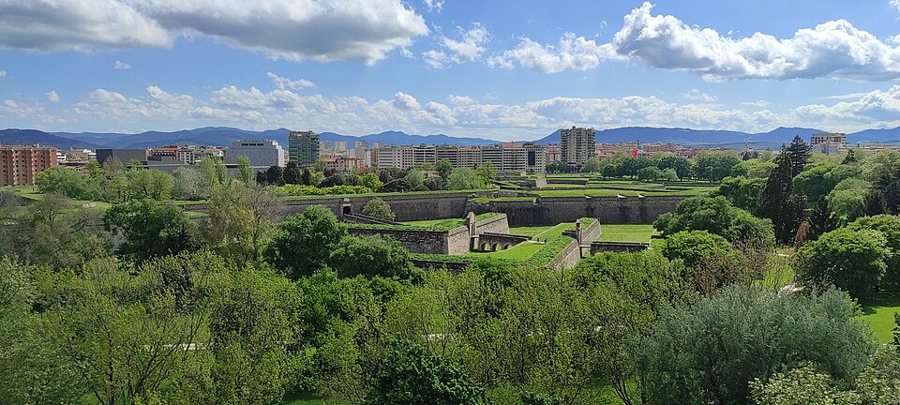
The Citadel shows how a fortification can become a meeting place. The enclosure and Vuelta del Castillo combine military architecture, green space and cultural uses. Observe the angles and relationship between walls and ground before looking for an entrance: these forms follow defensive logic rather than purely monumental design. Today some buildings host exhibitions and activities, but check the programme before visiting. Walking around the grounds does not mean every room is accessible. Choose a circuit suited to the time available rather than turning the visit into a race. Finish a quieter day between heritage and parkland while respecting closures and clearly marked access arrangements.
Explanation source ↗Plaza del Castillo 44, Pamplona
A café, bar and restaurant founded in 1888 on Plaza del Castillo. A central stop; check the menu, seating area and availability directly.
Official website ↗ · Walking directions ↗San Nicolás 32, Pamplona
A bar and restaurant on San Nicolás for a food stop in the old town. Check the offering and seating area for your date, along with allergens and reservations.
Official website ↗ · Walking directions ↗Travesía Espoz y Mina 7, Pamplona
A bar near Plaza del Castillo for a pintxo stop. Check the day's selection and availability rather than assuming any particular pintxo will be served.
Official website ↗ · Walking directions ↗Editorial selection based on the venues’ own websites, not a personal dining review or sponsorship. Check opening, menus, allergens and prices before visiting.
Check final prices, tour language and availability on Civitatis. Optional paid activities; affiliate links may earn a commission.
See activities in Pamplona ↗Check Renfe for trains and plan your station-to-centre connection. The regional urban bus service, locally known as villavesas, publishes routes and timetables through the Mancomunidad. The airport is outside the centre; Aena provides taxi and access information. Do not assume a direct bus operates. Check event-related changes. Walk the central route; coordinates are approximate and accessibility has not been audited.
Emergencies: 112. For non-urgent medical assistance, consult local services.