Mérida lets you explore a Roman capital within a living town. Eight stops connect entertainment, homes, worship, water and defences from different periods. Group enclosed sites into blocks, allowing time for the National Museum of Roman Art and the Guadiana rather than racing between admissions.
Visit Theatre and Amphitheatre in their shared enclosure, then cross to MNAR under its own arrangements. Finish at Diana, connecting entertainment and public representation. Select museum galleries and allow a break; four names do not equal four complete visits in two hours.
Begin at Mitreo, then continue to the Alcazaba-Bridge sector. After a meal or rest give Los Milagros park its own block. The last leg adds urban travel and can be shortened with transport; this is neither adjoining doorways nor a covered circuit.
Expand the Roman theme through thermal water and Alange village. The surviving baths belong to an operating establishment: heritage visit, bathing circuit and treatment are different and are not included simply by reaching town.
Arrange road travel both ways and confirm the access type with the spa. By bus check the current route, stop and final service; no frequent Mérida connection is guaranteed.
Compare the hillside theatre with Mérida's and add the castle surroundings if opening and pace allow. The municipal portal lists visits and schedules; a performance and an archaeological visit need separate arrangements.
Check municipal travel information and prepare the return before departure. Road travel and the ascent from town add to visiting time; do not assume a train arrives beside the theatre.
Allow a separate day for a border city with a different history. Alcazaba and Plaza Alta connect fortification, market and urban fabric. Choose a few confirmed interiors; the outdoor walk includes no automatic museum admissions or complete wall circuits.
Search the actual Mérida-Badajoz connection with Renfe or the relevant bus operator for your date. Add terminal-to-centre travel and check the last return rather than reusing historical timetables.
Choose one question per block: where audiences sat, how water arrived and how a house worked. Sketch theatre and amphitheatre plans without turning play into an endless checklist. Add rest, food and water; cistern, steps and mosaics require routes suited to age and mobility.
In the rain
Make MNAR the main block after checking galleries and crypt. A short urban walk and relaxed meal may be enough afterwards. Archaeological sites retain outdoor sections despite partial roofs. Check current Consorcio notices before committing to several admissions in one day.
What to try and where to pause
Allow an Extremaduran meal between sites, asking about ingredients and season. A de Arco distinguishes reserved dining from arrival-order tapas; Rex Numitor is another central option. Confirm menus and allergens without promising a dish or old price. Breaks help divide a town with more heritage than one morning holds.
Sources for this update
Turismo Extremadura · conjunto romano y Alange
Balneario de Alange · información oficial
Turismo Medellín · teatro, castillo y visita
Turismo Badajoz · alcazaba y murallas
Turismo Badajoz · enlace alcazaba y Plaza Alta
Choose your walk
Durations are indicative: queues and all indoor visits are not included.
Plan my route
Street map
OpenStreetMap loads on request. Markers are indicative, not audited entrances. Use links for street directions.
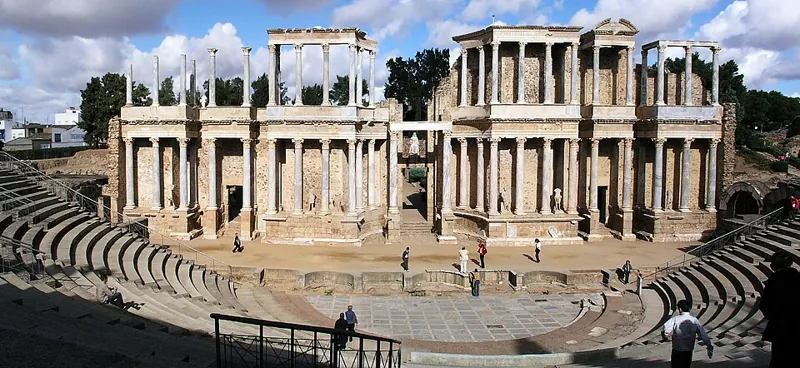
The theatre presents a city gathering to watch a stage while also displaying itself. Its inauguration dates to 16–15 BCE and its patronage is associated with Marcus Agrippa. Seating divisions and honorary positions show that spectators did not occupy a socially neutral space. First take in the whole ensemble, then compare the curve of the tiers with the vertical stage front. Columns, statues and doorways created prestige as well as supporting performance. Do not imagine every part surviving untouched from Rome: excavation, conservation and recovery also explain today's appearance. An archaeological visit and a festival performance are different experiences, with separate admission arrangements. Allow time for the neighbouring amphitheatre within the same visit rather than treating it as a distant excursion.
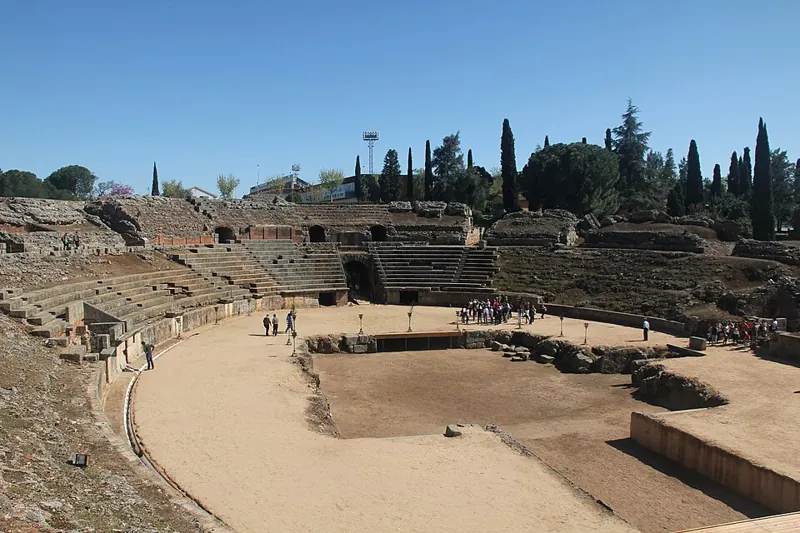
The amphitheatre becomes clearer beside the neighbouring theatre. Inaugurated in 8 BCE, its elliptical arena hosted gladiatorial games and animal spectacles rather than drama. Notice how entrances lead towards the centre and seating surrounds it from every direction. The large arena pit raises questions about equipment and operation; some interpretations remain hypotheses, so every opening should not become a spectacular certainty. Find the tribunes and consider the visibility of authority and the person funding the event. This approach reveals urban organisation and society without reducing the visit to imagined combat. Theatre and amphitheatre share an enclosure: check current access and give each building its own portion of your time. Comparing their shapes is an especially useful way to remember their different functions.
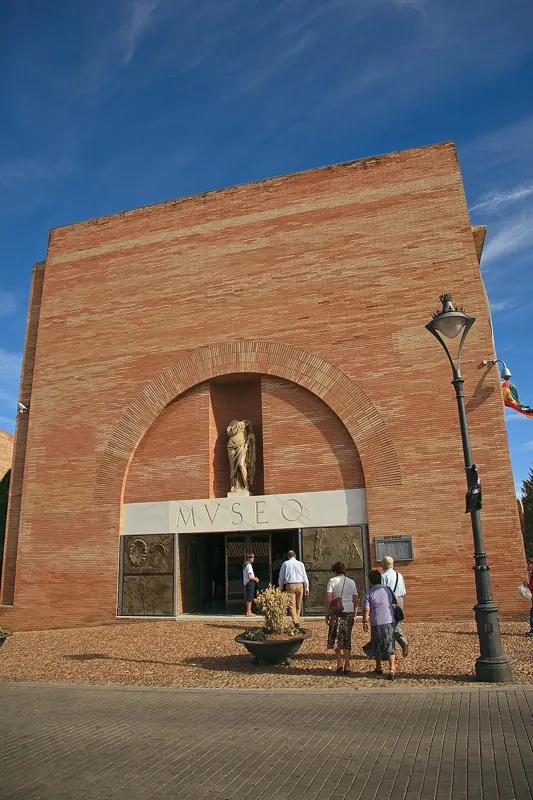
The National Museum of Roman Art changes the scale of your walk, from buildings to the people, images and objects that gave them meaning. Rafael Moneo's headquarters, inaugurated in 1986, uses contemporary architecture to converse with the Roman town without pretending to be ancient. Study how light and large spaces accompany the exhibits, then choose a mosaic, sculpture or inscription and consider its context. Ask where it came from and what it reveals about belief, work or social representation. The museum is another way to interpret archaeological sites rather than simply a store for missing objects. The extension inaugurated in 2026 continues this living institutional history. Check available galleries and the crypt's particular arrangements before planning your visit.
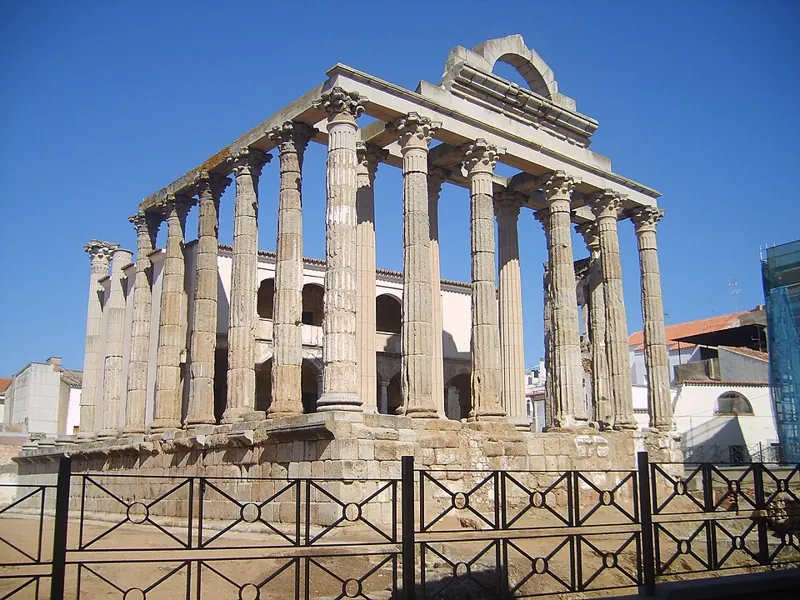
The Temple of Diana's name can mislead: the building honoured Rome and the emperor rather than its popularly named goddess. Its position in today's centre suggests the relationship between temple and forum, the colony's public and ceremonial space. Walk around it, comparing columns with neighbouring façades; the contemporary town helps measure its scale. Corbos Palace, inserted centuries later, shows how reuse also preserved the past. Rather than mentally removing everything later to discover one authentic Mérida, recognise overlapping periods. You can study the exterior from the street, while access to the enclosure and interpretation spaces follows its own arrangements. Seeing the outside is not the same as having an included admission. Allow time to compare viewpoints instead of taking a single frontal photograph.
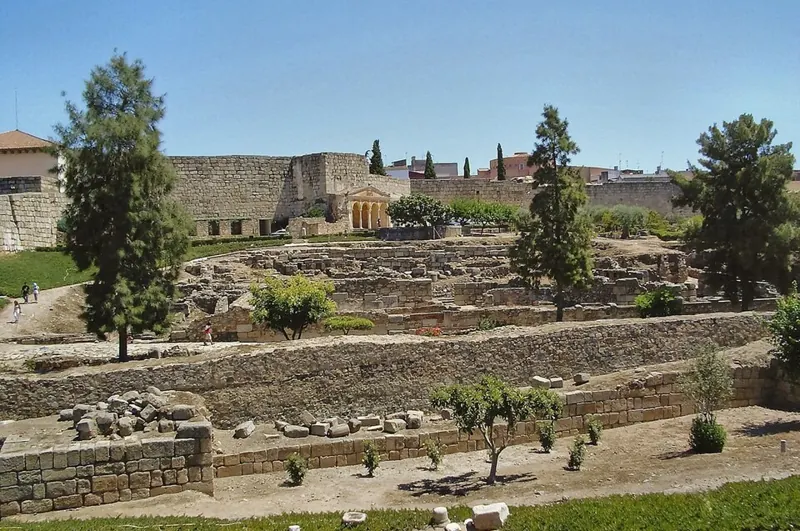
The alcazaba introduces a Mérida extending beyond Rome. Its entrance inscription dates inauguration to 835, and its position controlled the bridge crossing while protecting the city's rulers. Start with its perimeter and relationship to the Guadiana before examining individual details. Inside, the cistern shows that defending an enclosure also required securing water; reused materials recall the earlier buildings available in the surrounding landscape. Descending into the water store and following elevated sections differ from crossing an open yard, so choose according to mobility and actual access. Compare the fortress afterwards with the neighbouring Roman bridge: two periods share one strategic location. Give the site its own visit and do not confuse it with the Centro Cultural Alcazaba, a separate urban venue.
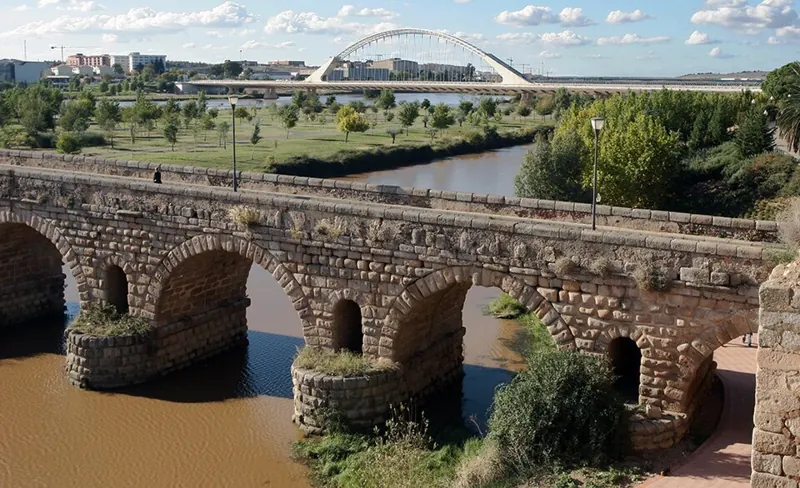
The bridge recalls Augusta Emerita as a town connected to roads and territories rather than a collection of isolated monuments. Its origins belong to the Roman foundation, but today's appearance includes repairs after floods, conflict and centuries of use. That continuity is more revealing than imagining every stone laid in one campaign. Walk a section, comparing arches, cutwaters and the river's need for room when levels rise. The bank explains the structure's length, while the bridge itself connects fortress, town and landscape. The Consorcio records exclusively pedestrian use since 1993. Crossing the entire length is unnecessary: choose your distance and return according to available time. Keep to designated areas and check local notices if the Guadiana is experiencing exceptional conditions.
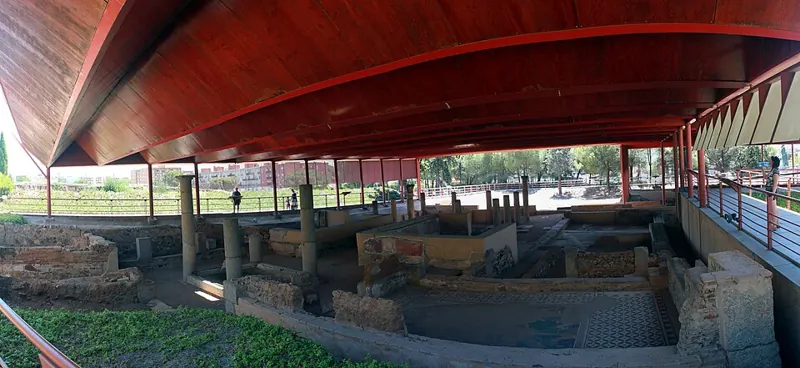
The House of the Mithraeum reveals domestic history beyond the grand public buildings. Built outside the Roman enclosure around the late first or early second century CE, its rooms were arranged around courtyards providing light and ventilation. The name comes from nearby remains interpreted as a possible Mithras sanctuary; it does not automatically make the house a temple. Study the distribution and changes in flooring and decoration between rooms. The cosmological mosaic invites reflection on representations of the world and its forces, not only the skill of the mosaicists. Ask which features express prestige and which support everyday living. The enclosure connects with the Columbarium area, requiring additional time; check your visit and distinguish this house from the House of the Amphitheatre.
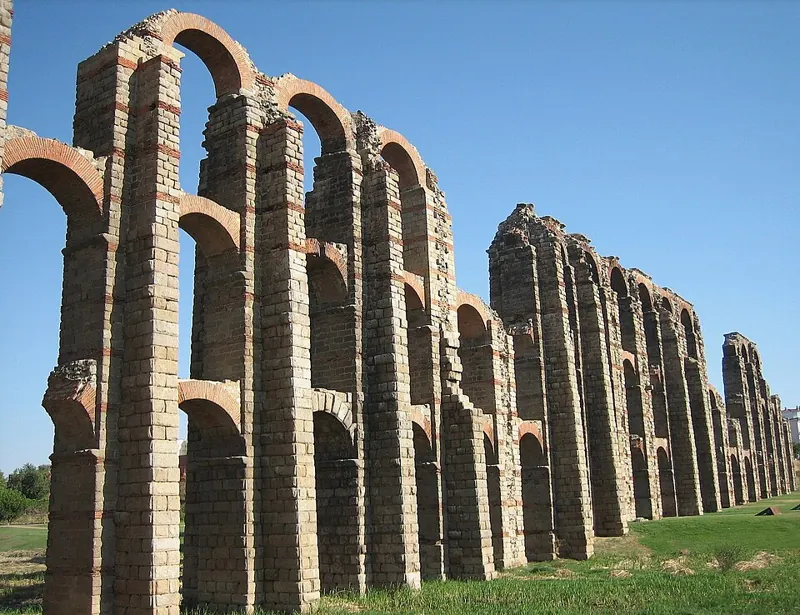
Los Milagros follows water before it reaches a fountain or house. The supply came from Proserpina, crossing the Albarregas valley on an arcade combining granite and brick. Not all the system was visible: sections ran underground and water settled before entering town. The relationship between channel, gradient and distribution explains more than simply counting surviving arches. Move around the park to see alignments overlap and sky appear between remains, then consider the maintenance an urban supply required. This outdoor stop is separate from the theatre-and-museum block: allow travel and a break, particularly in hot weather, rather than treating it as another doorway in the same enclosure. Looking at water infrastructure adds a practical dimension to the city's monumental story.
Restaurant beside the Trajan Arch with different dining spaces. Its website distinguishes à-la-carte dining-room reservations from arrival-order tapas and portions; confirm format, menu and allergens before planning your break.
Central restaurant featuring products and meats associated with Extremadura's dehesa. A meal can fit the Diana and Guadiana section; confirm opening, availability and dietary requirements directly.
Editorial selection based on the venues’ own websites, not a personal dining review or sponsorship. Check opening, menus, allergens and prices before visiting.
Optional guided visits
Guided visit to the Roman amphitheatre and theatre
Optional activities, separate from the independent walk. Listings advertise a Spanish-speaking guide; this page language does not change the tour language. The free tour operates on tips. The theatre and amphitheatre visit advertises admission: check the specific option, inclusions and conditions before booking. Confirm dates and the meeting point, which may vary. Affiliate links: we may earn a commission if you book. Checked on 21 October 2026.
Renfe places Mérida station on Calle Cardero and lists medium- and long-distance connections: search your date and engineering notices rather than old timetables. Alsa publishes Mérida-Seville from the Avenida de la Libertad bus station; search your actual origin and return. Train and bus arrive at different locations, adding travel to theatre or museum. The central sites suit walking, but Los Milagros and Mitreo form separate blocks. There is no metro. Confirm outing connections and last returns or arrange your own transport; a station named after a town does not guarantee arrival beside its monument. Markers indicate the area rather than audited entrances. Consult the Consorcio accessibility plan for suitable approaches. From Calle Cardero railway station or Avenida de la Libertad bus station, first arrange travel to accommodation or your chosen sector. Exclude that transfer from the short two-hour walk. Check the Consorcio product you need and organise MNAR separately rather than assuming one ticket covers every site and museum.