Two hours
Two hours: Onyar houses, Rambla, Call and cathedral exterior. Return via Sant Feliu and Independència square; save walls and interiors for another visit.

WHAT TO SEE AND HOW TO PLAN
Girona links Onyar houses with the lanes, churches and walls of the Barri Vell. Eight stops let you choose your pace; expect steps and slopes, with separate time for interiors.
Durations are indicative: queues and all indoor visits are not included.
Two hours: Onyar houses, Rambla, Call and cathedral exterior. Return via Sant Feliu and Independència square; save walls and interiors for another visit.
One day: river and Rambla morning, Call and one confirmed cultural interior, lunch and cathedral. Add Arab Baths or a wall section according to opening and energy.
Day 1: Onyar, Rambla, Call and cathedral with interior time. Day 2: Sant Feliu, Arab Baths and walls. Costa Brava and Figueres are separate outings needing transport.
Alternate bridges, squares and breaks. Find colours along the river and different arches on the Rambla. With pushchairs, check access: Call, cathedral and walls involve steps or slopes.
Prioritise cathedral, Arab Baths or Museum of Jewish History with confirmed opening. Plan a sheltered break and fewer transfers; avoid walls and wet stairways.
OpenStreetMap loads on request. Markers are indicative, not audited entrances. Use links for street directions.
Audio uses your device voice and depends on your browser. The full text is always available to read.
1 / 8 · GIRONA
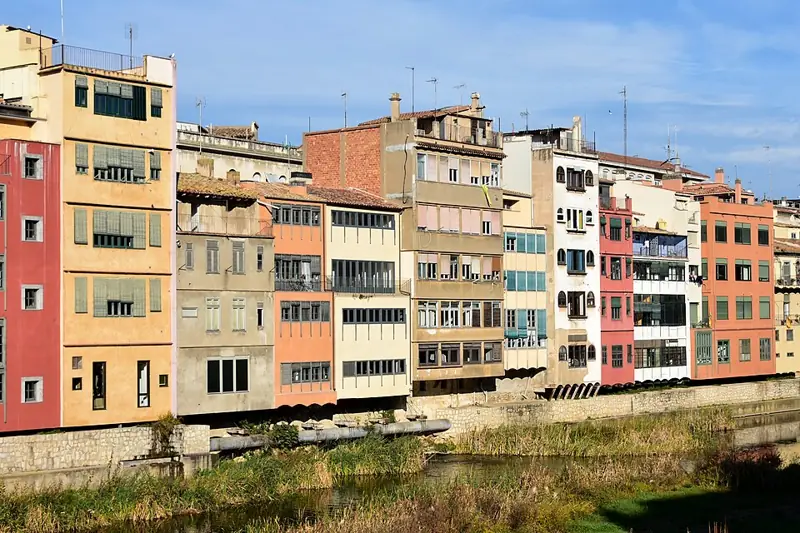
The Onyar façades reveal themselves from the bridges: each crossing changes reflections, colour and the relationship with the old town. These are homes rather than an empty backdrop. Look for Casa Masó and distinguish an outside view from a separately arranged visit. Pause without blocking pedestrians, then cross towards the Rambla for another perspective.
Explanation source ↗2 / 8 · GIRONA
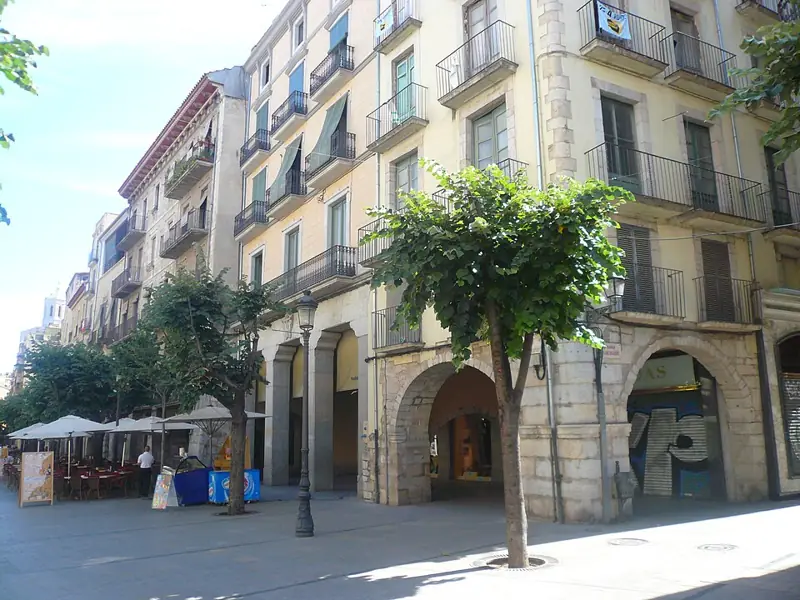
The Rambla developed as a medieval market space. Its arcades retain a scale quite different from a modern avenue. Notice unequal arches and shops occupying the ground floor. Looking up reveals later façades, including Casa Norat. Use this stretch for a break before entering the narrower streets of the Barri Vell.
Explanation source ↗3 / 8 · GIRONA
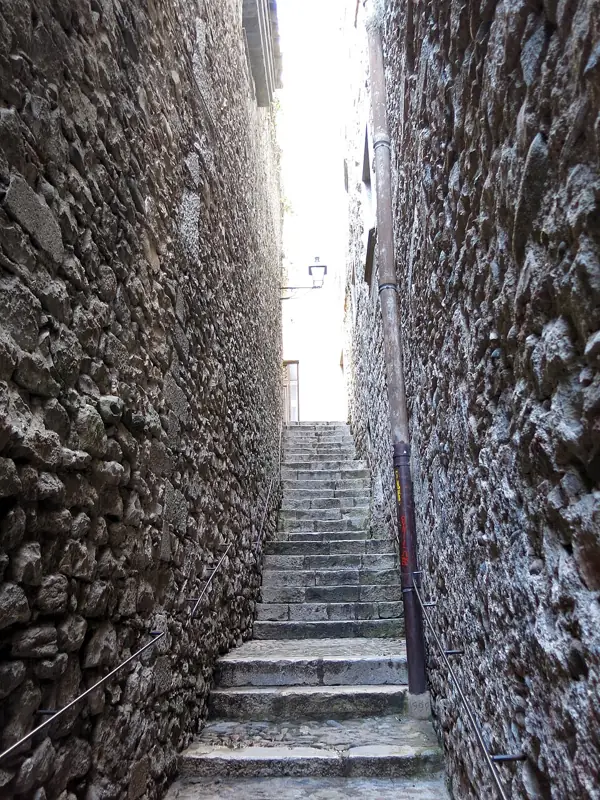
The Call preserves lanes and courtyards within the old core. Its layout suggests everyday urban life, but stone alone cannot explain the Jewish community’s history. Walk the slopes slowly and consider the Museum of Jewish History for context. Residential doorways and private courtyards are not visitor spaces; keep entrances clear.
Explanation source ↗4 / 8 · GIRONA
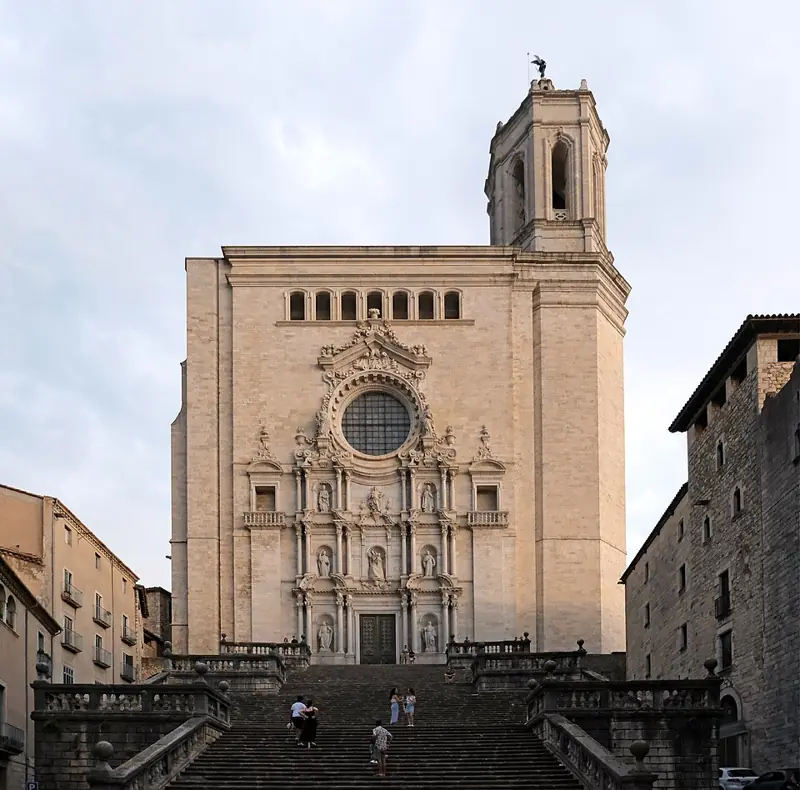
The staircase creates a monumental approach, yet the cathedral belongs to several periods. Compare its baroque façade with surviving Romanesque elements and, inside, the broad Gothic nave. Their combination reflects successive building decisions. View the exterior on your walk; check admission and allow separate time for the cloister and collections.
Explanation source ↗5 / 8 · GIRONA
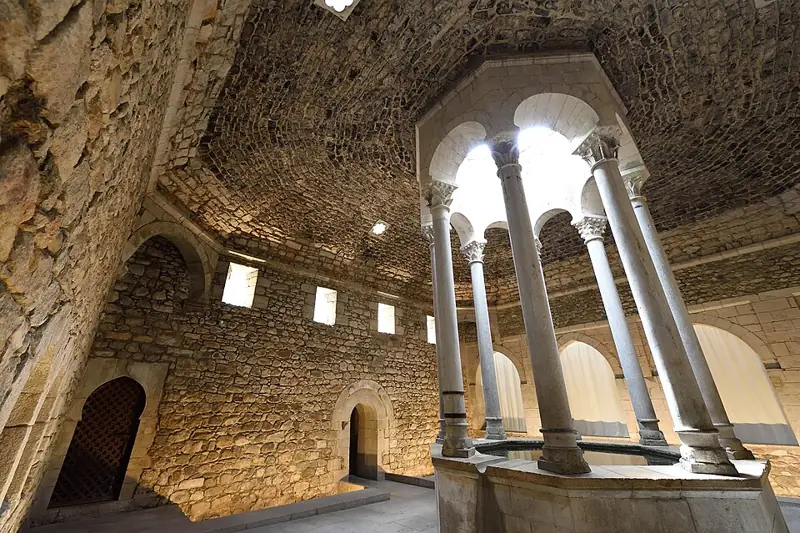
Despite their name, the Arab Baths are a Romanesque building inspired by earlier bathing traditions. Inside, notice how slender columns support the structure above the central pool and guide the light. These are not working baths. Visit to understand their spaces, checking admission and opening before including the interior in your itinerary.
Explanation source ↗6 / 8 · GIRONA
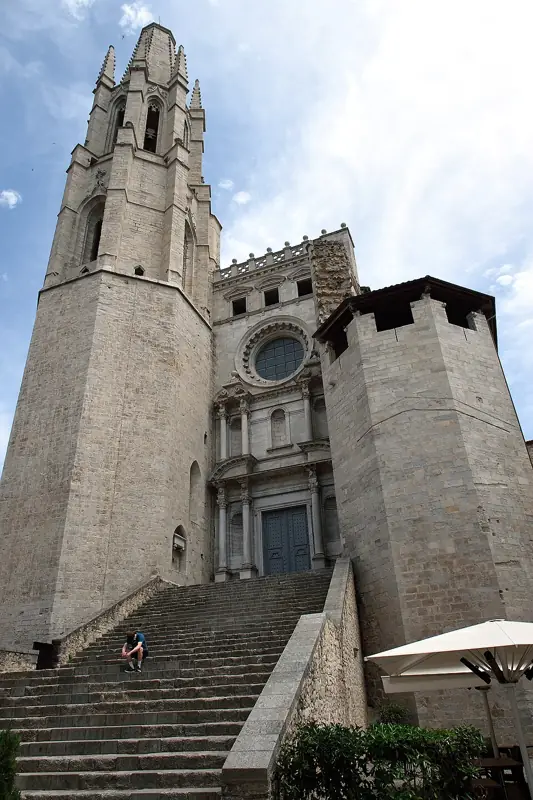
Sant Feliu changes character with your viewpoint: its slender bell tower contrasts with a fortress-like body. Romanesque apse, Gothic naves and baroque façade reveal successive stages. If entering, allow attention for the ancient sarcophagi. Plan around worship and distinguish walking past the exterior from exploring the whole church.
Explanation source ↗7 / 8 · GIRONA
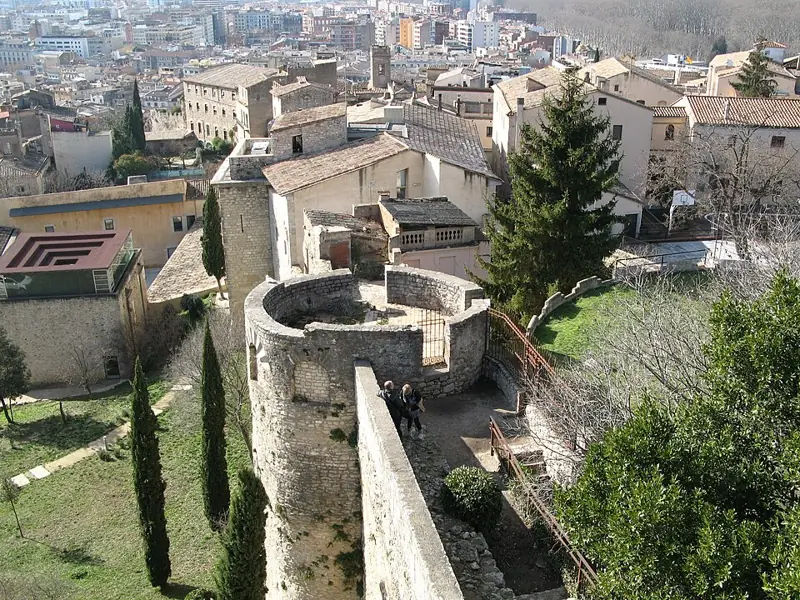
The walls turn a defensive structure into a viewpoint over roofs and towers. Following them helps explain successive urban enclosures and the role of height in protection. You need not walk the whole circuit. Consider steps, heat and wet surfaces; the map marker is indicative and does not guarantee an accessible entrance.
Explanation source ↗8 / 8 · GIRONA
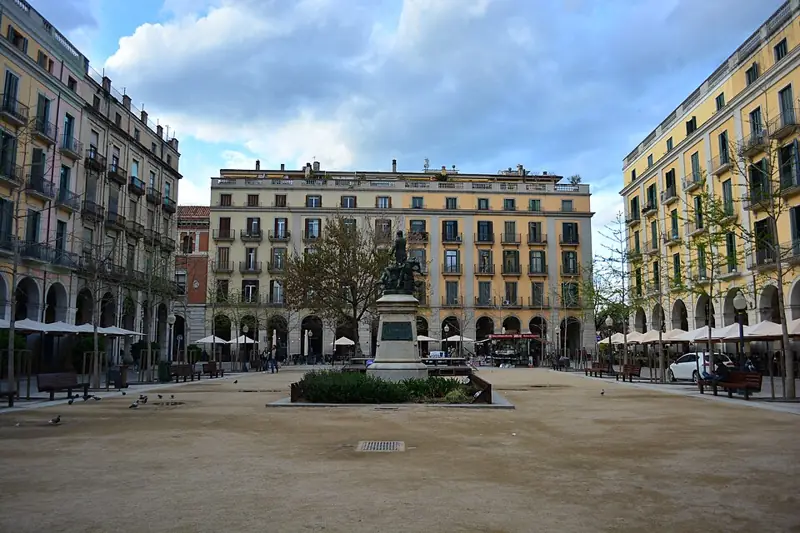
Across the river, this arcaded square offers a more regular geometry than the old-town lanes. Martí Sureda’s design occupied the former Sant Agustí convent site. Notice how the porticoes connect restaurants and everyday routes. The central monument commemorates Girona’s defenders of 1809; examine it before choosing where to finish your walk.
Explanation source ↗Plaça de la Independència, Girona
Traditional Catalan and seasonal cooking on the square. Check the menu and book directly; terrace availability is not assumed.
Official website ↗ · Walking directions ↗Pujada de Sant Domènec, 4, Girona
Café and restaurant on a stepped old-town street. Check menu, opening and access before choosing it.
Official website ↗ · Walking directions ↗Barri Vell, Girona · ubicación en web oficial
Specialty coffee and daytime food with cycling connections. Its website states ordinary reservations are not accepted; check the menu before visiting.
Official website ↗ · Walking directions ↗Editorial selection based on the venues’ own websites, not a personal dining review or sponsorship. Check opening, menus, allergens and prices before visiting.
Check final prices, conditions, tour language and availability on Civitatis. Optional paid activities; affiliate links may earn a commission.
See activities in Girona ↗Check Renfe for rail arrivals and Tourism Girona for road, bus and airport links. Girona–Costa Brava airport is outside the city centre: check transfers before booking. In the Barri Vell allow for slopes and steps and check driving restrictions. Map markers are indicative, not an accessibility audit.
Emergencies: 112. For non-urgent medical assistance, consult local services.