Two hours
Two hours: Plaza Mayor, cathedral exterior, Hanging Houses and bridge from one end. Add Mangana if pace allows; not every museum.

WHAT TO SEE AND HOW TO PLAN
Discover Cuenca through stone and the space between its gorges. Eight old-town stops connect squares, bridges, homes and museums. Expect slopes, steps and uneven paving; timings do not include every interior.
Durations are indicative: queues and all indoor visits are not included.
Two hours: Plaza Mayor, cathedral exterior, Hanging Houses and bridge from one end. Add Mangana if pace allows; not every museum.
One day: square and cathedral with admission confirmed, lunch in upper town, Hanging Houses and bridge afternoon. Mangana and San Martín according to energy; choose one museum.
Day 1: squares, cathedral, Hanging Houses and bridge. Day 2: Cuenca Museum, San Miguel and San Martín. The Enchanted City is outside town and needs transport and a separate outing.
Alternate short stops and square breaks. Crossing the bridge is optional: consider heights and wind. With a pushchair, check steps and practical connections; accessibility is not guaranteed.
Choose cathedral and Cuenca Museum with opening confirmed, a booked meal and limited travel. Avoid improvised descents on wet stone and check bridge restrictions. San Miguel cultural visits depend on programming.
OpenStreetMap loads on request. Markers are indicative, not audited entrances. Use links for street directions.
Audio uses your device voice and depends on your browser. The full text is always available to read.
1 / 8 · CUENCA
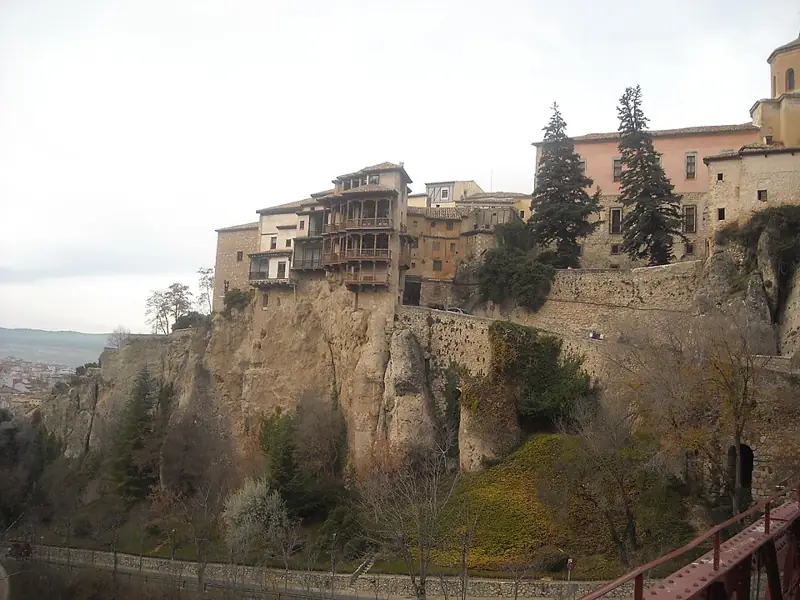
The Hanging Houses explain the relationship between homes and cliff edges. Look at the timber balconies and how buildings occupy the Huécar gorge rim. Their exact origin remains debated; later restorations also shaped today’s ensemble. Two houses have contained the Museum of Spanish Abstract Art since 1966. Viewing the exterior, entering the museum and crossing the gorge to understand the silhouette are different experiences, requiring different amounts of time.
Explanation source ↗2 / 8 · CUENCA
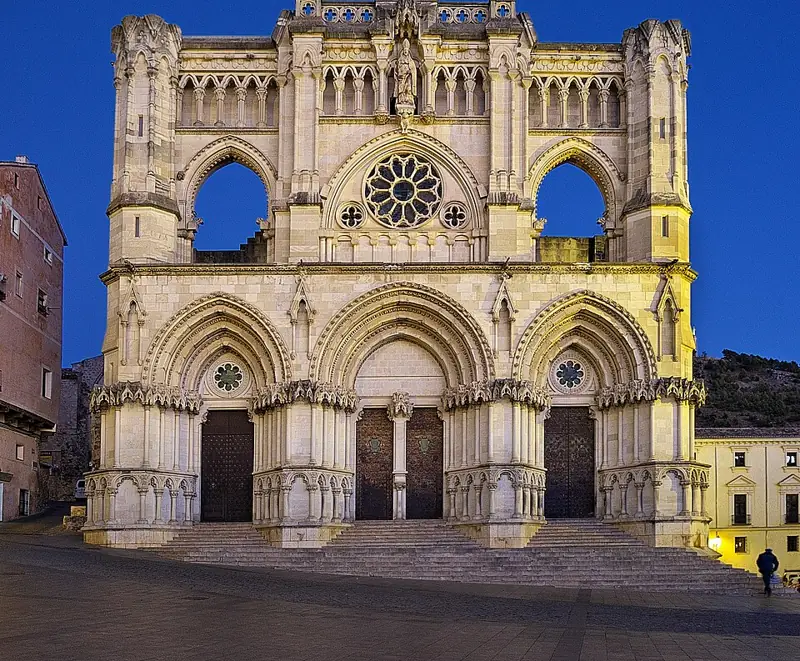
The cathedral combines contributions from different periods rather than one fixed style. From the square, compare its façade with neighbouring buildings and notice how it dominates an irregular urban space. Inside, choir stalls, screens and chapels create changing viewpoints. Interior visiting needs time and separate admission. Check worship and opening arrangements, and distinguish an explanation outside from a complete visit through the church and its associated spaces.
Explanation source ↗3 / 8 · CUENCA
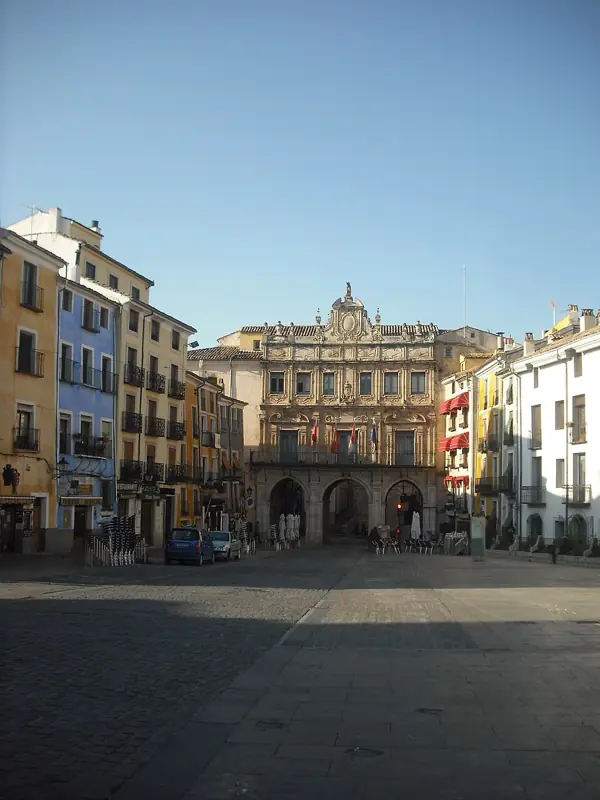
Plaza Mayor acts as a hinge between walks. Streets do not meet in a regular grid: they connect slopes, passages and buildings adapted to the terrain. Locate the cathedral and town hall before continuing towards the Hanging Houses or San Miguel. It is a useful place to orient yourself and rest, without assuming every route has the same difficulty. View façades from several positions and leave room for local traffic.
Explanation source ↗4 / 8 · CUENCA
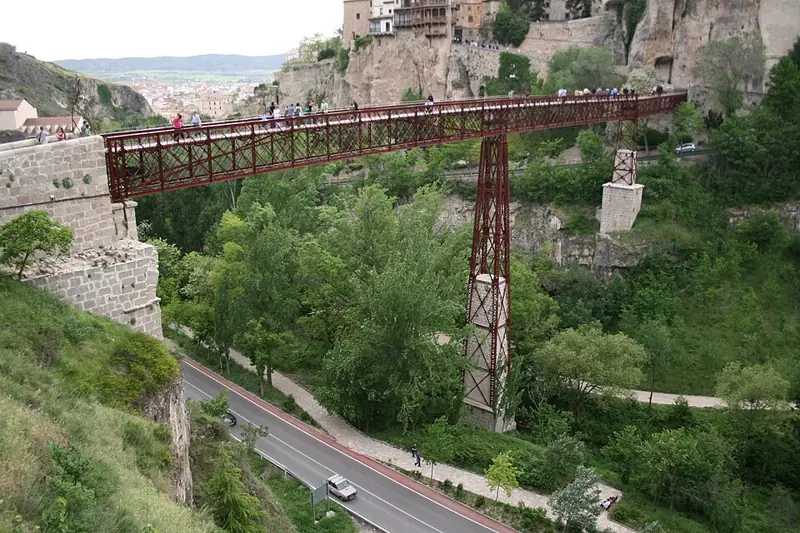
The iron bridge replaced a stone crossing linking the city with San Pablo convent. Inaugurated in1903, its apparent lightness contrasts with rock faces and surrounding buildings. This viewpoint explains the projecting Hanging Houses. If heights make you uncomfortable, view the bridge from one end. Crossing is not necessary to appreciate the landscape; check any restrictions and avoid stopping where you would obstruct people passing along the narrow walkway.
Explanation source ↗5 / 8 · CUENCA
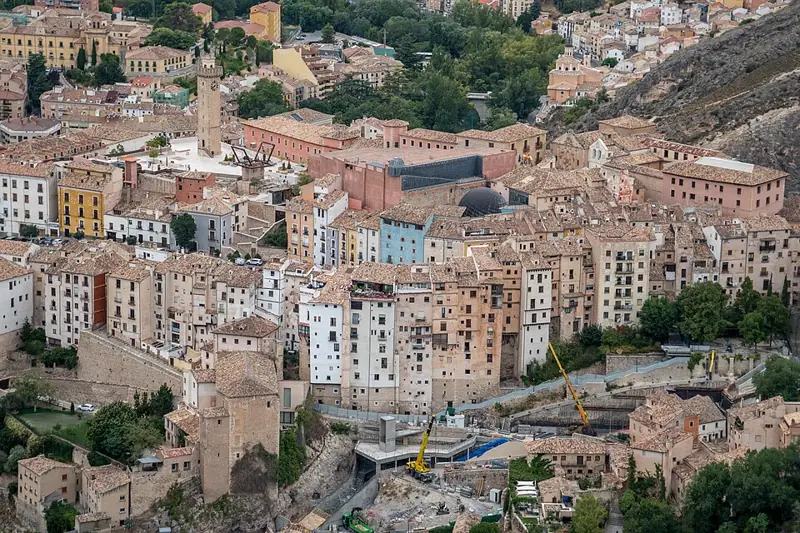
San Martín’s so-called skyscrapers are a domestic response to steep terrain. A façade of moderate height from the street can reveal many more storeys towards the gorge. Compare levels without entering private homes. The interest lies in building, ground and viewpoint rather than modern skyscraper measurements. The neighbourhood has slopes and steps: choose a comfortable viewpoint and plan your return before descending further into its streets and passages.
Explanation source ↗6 / 8 · CUENCA
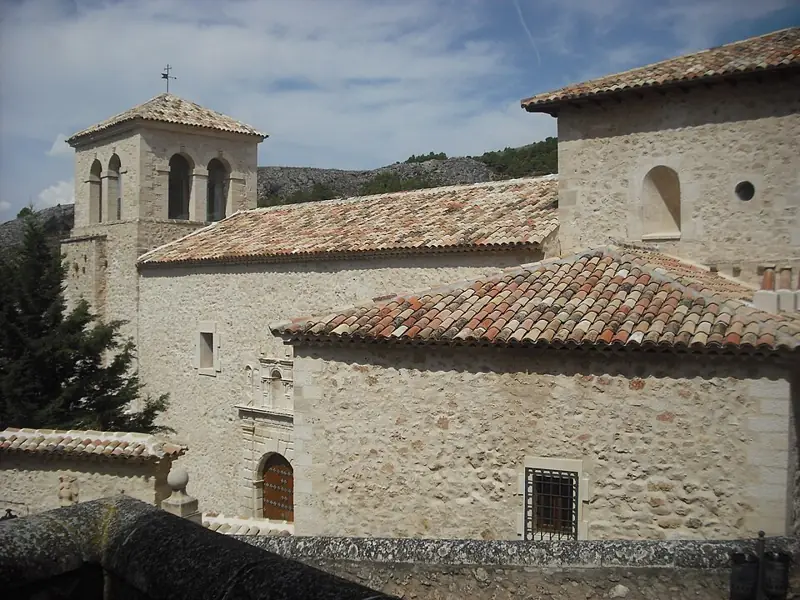
San Miguel overlooks the Júcar landscape and shows how churches can change function. Its medieval east end coexists with later alterations. Cultural activities have their own programming and admission arrangements. Outside, observe the volumes and their fit along the city edge. Do not assume a religious visit or a concert will be available on arrival: this stop is planned as an exterior viewpoint, with interior access checked separately.
Explanation source ↗7 / 8 · CUENCA
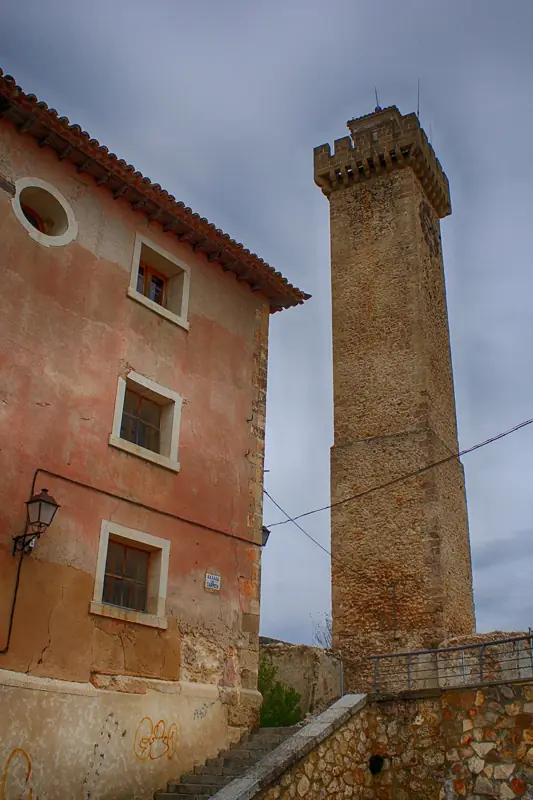
Mangana combines the city clock with a square occupying a place of successive uses. The tower does not represent a single period: its transformations reveal how Cuenca has reinterpreted its own image. Look at the silhouette from the square and then the surrounding landscape. This is an exterior visit; climbing the tower is not automatically included. Use the pause to connect the view with streets you have just explored.
Explanation source ↗8 / 8 · CUENCA
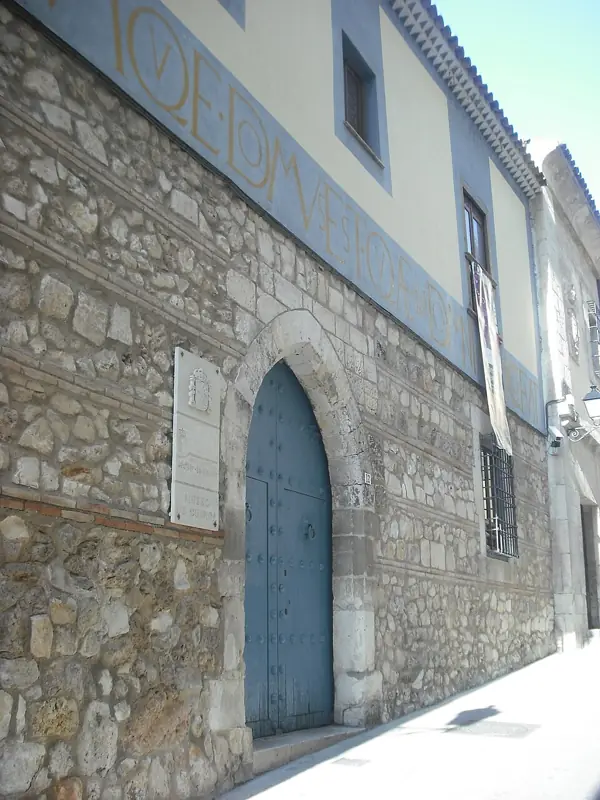
Cuenca Museum adds depth to a walk through the present city. Archaeological collections compare objects and ways of life from different parts of the province. Housed in Casa del Curato near the cathedral, it deserves dedicated time rather than a hurried stop between photographs. Choose one object and ask where it came from and how it was used. Check open galleries; preserved collections are not necessarily displayed in full.
Explanation source ↗Calle San Pedro, 58, planta -2, Cuenca
Regional cooking with contemporary preparation in former stables. Allow time along San Pedro and book; the website lists Tuesday and Wednesday closure.
Official website ↗ · Walking directions ↗Ronda Julián Romero, 4, Cuenca
Old-town restaurant with Cuenca traditions and gorge views. Terrace use depends on weather; confirm seating and access when booking.
Official website ↗ · Walking directions ↗Paseo del Huécar, 2, 16001 Cuenca
Restaurant in a natural cave by the Huécar. Descend from the upper town and plan the return. Check exact location, menu and access on its website before visiting.
Official website ↗ · Walking directions ↗Editorial selection based on the venues’ own websites, not a personal dining review or sponsorship. Check opening, menus, allergens and prices before visiting.
Check final prices, conditions, tour language and availability on Civitatis. Optional paid activities; affiliate links may earn a commission.
See activities in Cuenca ↗Fernando Zóbel high-speed station is outside the old town. Check Renfe and onward transport: Tourism Cuenca lists route 10 between coach and AVE stations, and routes 1 and2 towards Castillo. Check direction, calendar and transfers rather than assuming a direct bus to your lodging. The upper town has slopes and steps. Official tourism coordinates are indicative, not audited entrances.
Emergencies: 112. For non-urgent medical assistance, consult local services.