Discover Baeza through squares, university courtyards and an olive-covered horizon. Eight stops explore its Renaissance town alongside medieval defences and Antonio Machado's memory. Alternate architecture and landscape, allow time for an interior, and keep Úbeda, Sabiote or Jaén as separate outings.
Connect Pópulo's administration, university education and religious architecture. Follow Pópulo, university and Jabalquinto to Santa María and the cathedral, choosing one interior rather than turning a compact walk into a race between admissions.
02Zarateman · CC0 · Wikimedia Commons · Versión reducida
Defences, Vandelvira and landscape
Estimated time: 2 hours outdoors, plus chosen interiors
View Aliatares from the street, then continue to San Francisco to recognise fragments and changing uses. Cross the monumental core towards the Walls Walk. This second urban block leads into landscape; adapt the order to your accommodation without assuming tower ascent.
A separate day compares two Renaissance towns without merging them. Vázquez de Molina Square brings together Santa María, palaces and the Salvador Chapel. Begin with the outdoor composition, then select a confirmed interior; the ensemble deserves its own time.
Search the current Baeza-Úbeda connection, checking arrival stop and return. Add station-to-centre travel; proximity does not guarantee departures at any hour.
The castle follows a fortress's transformation into a Renaissance residence associated with Francisco de los Cobos and Vandelvira. Combine its exterior with old-town streets; access depends on actual arrangements rather than simply reaching the entrance.
Arrange road travel both ways and check castle access before leaving. For buses, verify actual services and changes; no frequent direct Baeza connection has been certified.
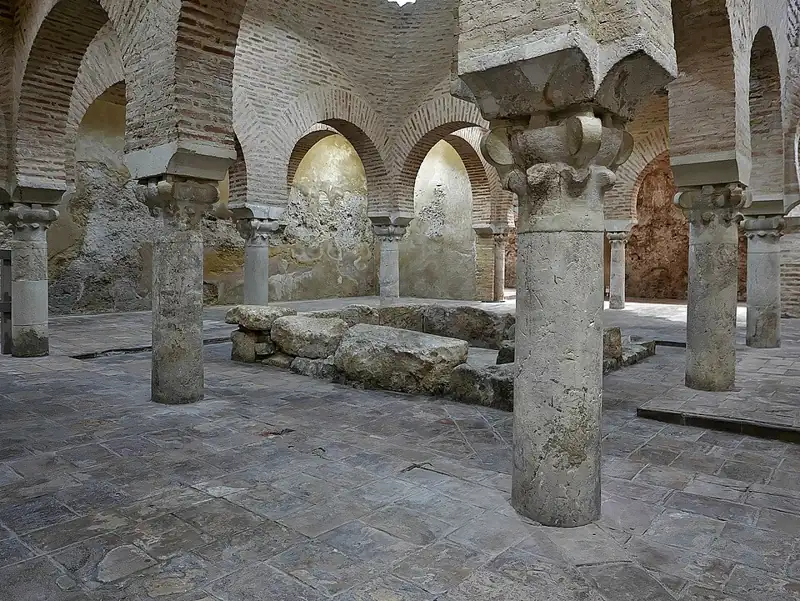
Villardompardo Palace preserves eleventh-century baths beneath a later residence. Allow a day to understand these layers and explore the Magdalena surroundings afterwards. This is a heritage visit, not bathing in operating thermal baths.
Alsa publishes the Baeza-Jaén route; search your date and final return. Add travel from Jaén bus station to the cultural centre and confirm bath opening before planning the day.
Make a small discovery notebook: a fountain animal, coat of arms, diamond ornament and a new word from Machado's classroom. Choose a few goals and let everyone sketch one. Workshops depend on programming; assess slopes and paving for buggies, and shorten the panoramic walk according to heat and tiredness.
In the rain
Arrange two confirmed indoor blocks, cathedral and Machado interpretation space, with a meal between them. Keep outdoor stretches brief where comfortable. Jabalquinto remains a university building and San Francisco's auditorium is not a continuously open museum; confirm access before treating either as a substitute.
What to try and where to pause
Connect the olive landscape with the table by asking about the oil and its origin. Vandelvira and Canela en Rama offer different meal options without assumed menus, prices or availability. Organised tastings require their own arrangements; buying oil does not automatically include a mill visit.
Sources for this update
Turismo Úbeda · Plaza Vázquez de Molina
Diputación de Jaén · Castillo de Sabiote
Diputación de Jaén · Baños Árabes
Alsa · conexión Baeza-Jaén
Turismo Baeza · Paseo de las Murallas
Choose your walk
Durations are indicative: queues and all indoor visits are not included.
Plan my route
Street map
OpenStreetMap loads on request. Markers are indicative, not audited entrances. Use links for street directions.
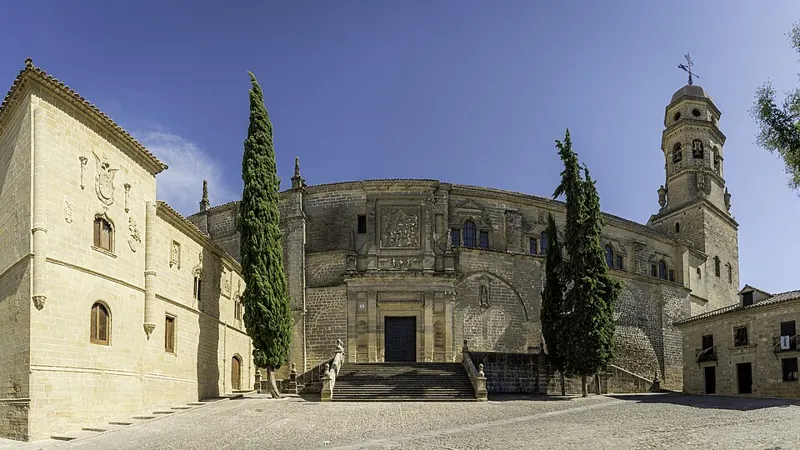
The cathedral reveals Baeza as a town built in successive layers. A Christian church occupied the former mosque after the conquest of 1227; its Renaissance appearance developed through rebuilding after the collapse of 1567, involving Andrés de Vandelvira. Find the Puerta de la Luna and compare its medieval forms with the classical organisation of the naves. That contrast explains more than a single stylistic label. Inside, follow the supports upwards towards the vaults before concentrating on a chapel or museum object. The exterior deserves an unhurried circuit too: change your viewing distance to understand how tower, square and narrow streets fit together. Check which areas your chosen visit includes, especially if you want more than the main church.
Zarateman · CC0 · Wikimedia Commons · Versión reducida
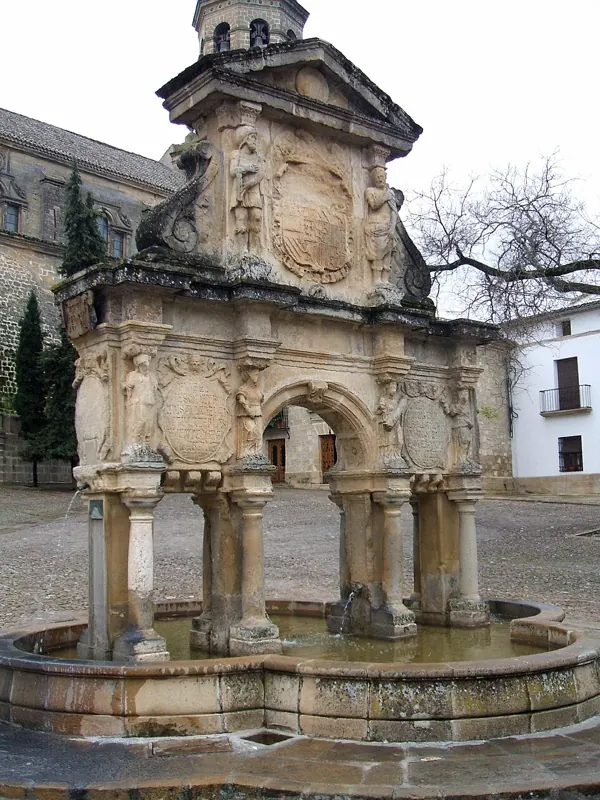
Santa María's fountain turns an everyday improvement into a monumental statement. Commissioned by the town council to celebrate the arrival of water in 1564, it takes the form of a small triumphal arch. Study the central opening, paired columns and coats of arms: public supply is accompanied by symbols of authority. Step back until cathedral and surrounding façades enter the same view. This square shows how public space brings buildings with different functions together, without requiring an interior visit to each one. Photograph the whole composition first and a fountain detail afterwards. Comparing the two makes its actual scale, ornament and role as a visual centre easier to understand. Leave room for people using the square as well as visitors.
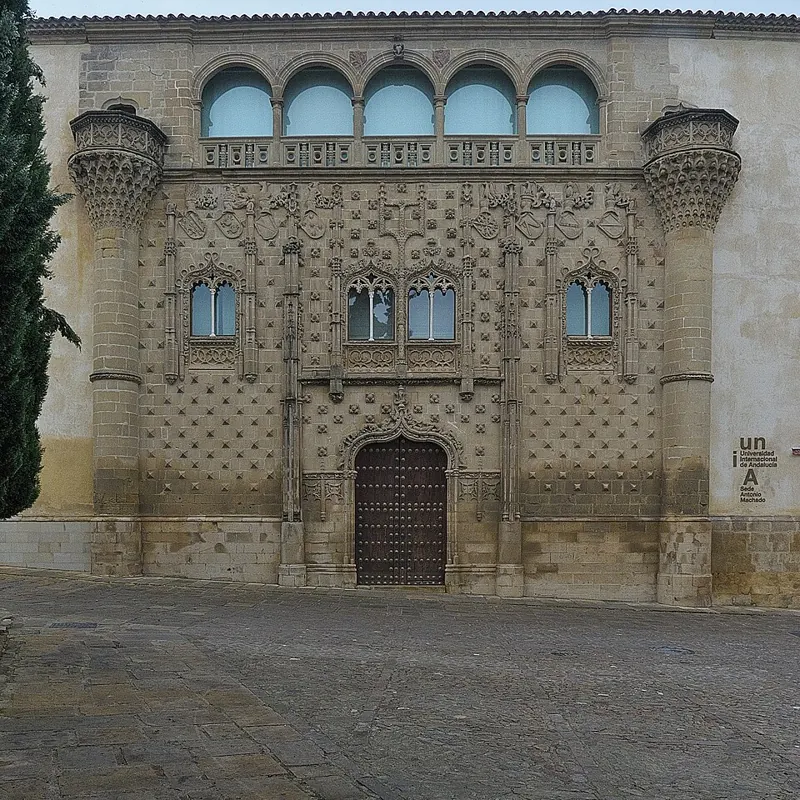
Jabalquinto changes the architectural language of the walk. Juan Alfonso de Benavides commissioned the palace in the late fifteenth century; its Isabelline Gothic front combines diamond-point ornament, heraldry and decoration that rewards slow looking. Begin with the overall composition, then follow one motif between windows and upper details. The Renaissance courtyard and Baroque staircase, when accessible, add later chapters to the original residence. The building belongs to the Antonio Machado campus of the International University of Andalusia, so academic life continues within the monument. Compare its exterior with Santa Cruz opposite and the old university nearby. The three offer different ways of expressing prestige, education and religious space. Check university access rather than assuming every room functions as a museum.
Zarateman · CC0 · Wikimedia Commons · Versión reducida
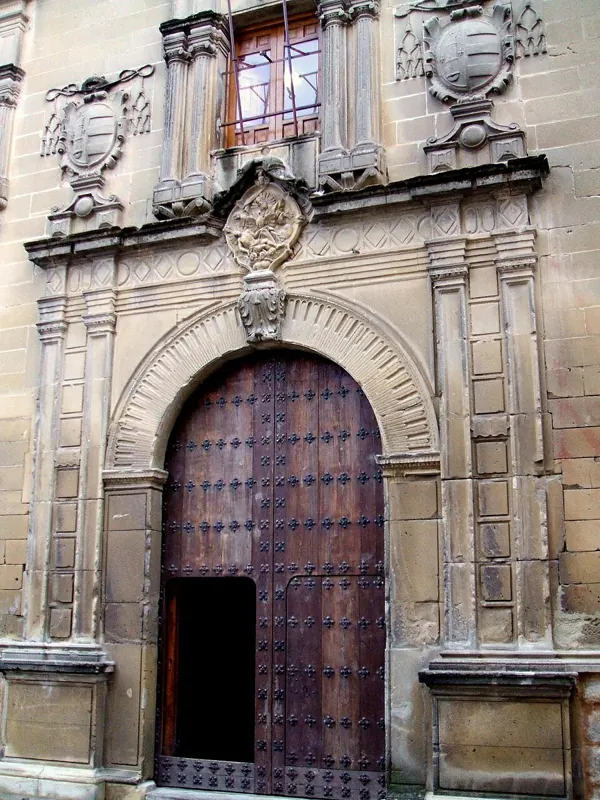
The old university links the Renaissance with a much more recent school history. The institution began in 1538, but Antonio Machado taught French here between 1912 and 1919 when the building was already a secondary school. That distinction prevents imagining him teaching at a surviving Renaissance university. Examine the Mannerist façade and, if admitted, follow the courtyard arcades before approaching the classroom and interpretation space. Desks, documents and displays encourage thoughts about individual pupils as well as a famous writer. Turn the visit into a question: what differs between learning in this building and attending school today? Afterwards continue the Machado thread towards the Paseo de las Murallas, where the town meets its surrounding landscape.
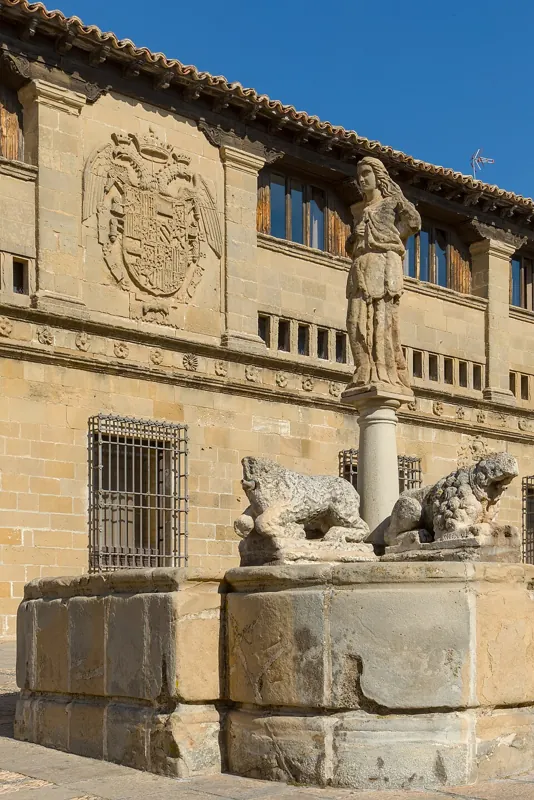
Pópulo Square shows that a historic ensemble can also be a reconstructed composition. Its present arrangement includes twentieth-century changes and relocations; not everything stands precisely where it began. The former courthouse and notarial offices recall administration, while the butcher's building speaks of food supply. Find the Jaén Gate and Villalar Arch next: adjacent passages with different histories, one linked to defences and the other to imperial victory over the Comuneros. The fountain combines animals and a female figure whose identification as Imilce is disputed tradition rather than archaeological certainty. Notice how each façade frames the water and compare the composition with Santa María's fountain. This walk begins with questions as well as photographs, making the square more than a picturesque backdrop.
Zarateman · CC0 · Wikimedia Commons · Versión reducida
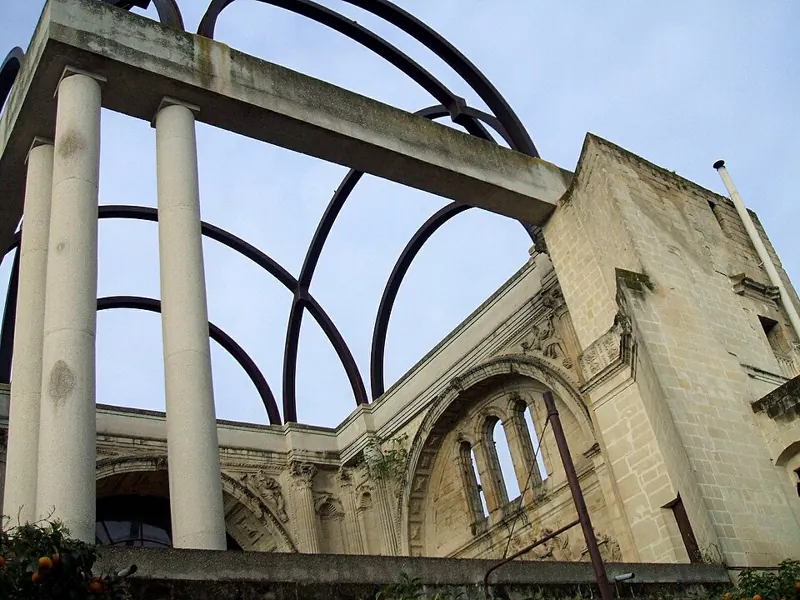
San Francisco asks you to imagine what is missing without confusing imagination with reconstruction. Its foundation in 1538 linked the Benavides family to a funerary chapel designed by Andrés de Vandelvira. Damage, losses and changing uses left an incomplete complex; the church has been adapted as an auditorium. The chapel's surviving stone altarpiece and reliefs suggest the project's ambition even though its complete volume is gone. Follow the walls visually, distinguishing historic masonry, gaps and contemporary intervention. Then find Vandelvira's bust outside: it restores a human name to the architecture. Treat this as an exterior stop and check auditorium or associated-room access before planning an interior visit. A performance booking and a heritage visit may involve different arrangements.
Zarateman · CC0 · Wikimedia Commons · Versión reducida
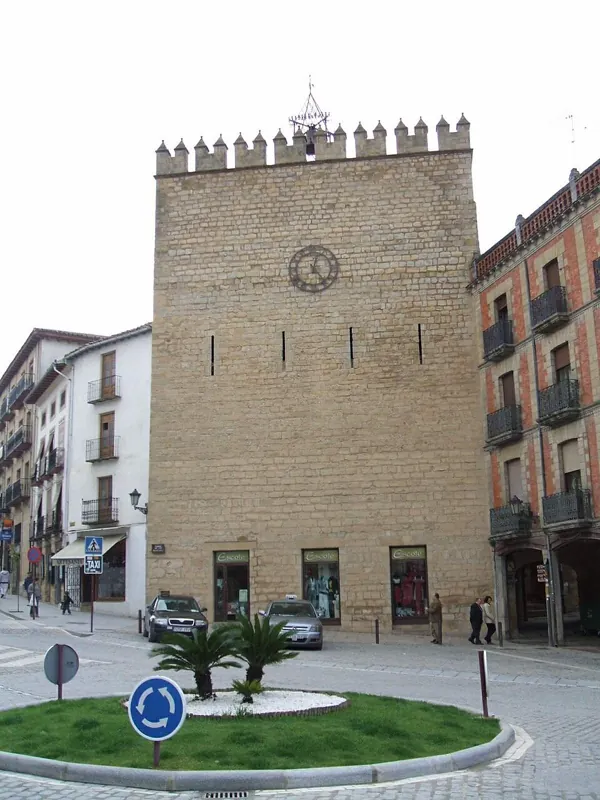
Aliatares Tower changes the story of the walk: before palaces and classrooms came a town that needed defending. This remnant of the Muslim enclosure remains a recognisable vertical landmark among shopping streets. Examine the dressed stone, arrow slits and crenellated top, then locate the clock, a nineteenth-century addition that gave the former military structure a civic role. Its interest lies in overlapping periods rather than in finding a complete fortress. View the tower from two corners and see how its silhouette changes against neighbouring buildings. Continue towards the monumental centre while considering the limits of the earlier town. This is a street-level stop and does not imply that a tourist ascent or interior visit is currently available.
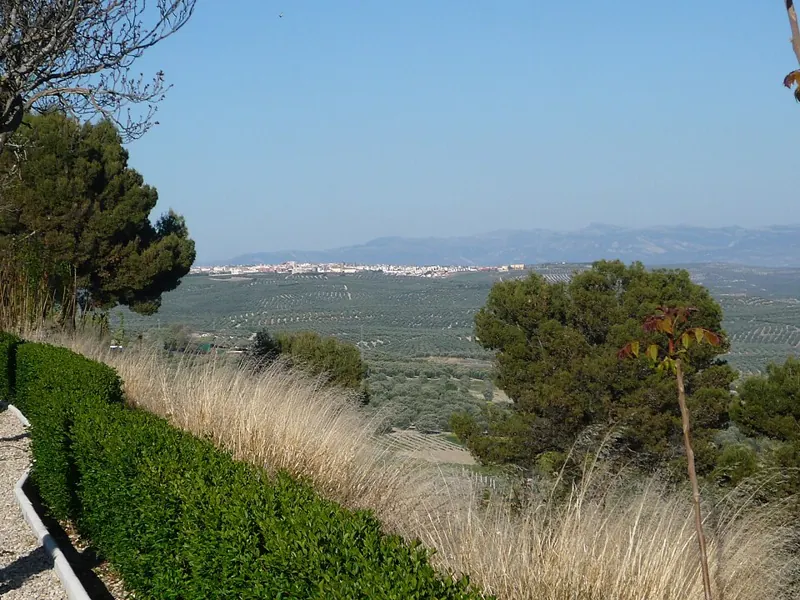
The Walls Walk opens the route towards the territory around Baeza. Following the southern edge of the former enclosure, it exchanges façades for olive groves, the Guadalquivir valley and distant ranges. Do not imagine a continuous surviving battlement walk: the name also records the former urban boundary. Find the viewpoint associated with Antonio Machado and spend a few minutes separating landscape layers, from nearby trees to the mountains. Turn back towards the town afterwards: its elevated position explains why architecture and views belong to the same experience. This makes a welcome pause after interiors, especially in softer light. The route is outdoors, so adjust distance, drinking water and breaks to the weather, keeping back from exposed edges.
Creative cooking in a sixteenth-century building in the historic centre. Allow a dedicated meal break and confirm the current offer, booking and dietary requirements directly.
Central tavern in a restored nineteenth-century house. An option between walking blocks; check the current menu and availability rather than assuming particular tapas or set menus are included.
Editorial selection based on official tourism listings, without a personal visit or sponsorship. Check opening, menus, allergens and prices before visiting.
Optional activities, separate from the independent walk. The listings advertise a Spanish-speaking guide; this page language does not change the tour language. The free tour operates on tips. The guided tour advertises cathedral admission, but other interior access may vary and the olive-oil tasting is not guaranteed on Sundays. Check dates, meeting point and conditions on Civitatis. Affiliate links: we may earn a commission if you book. Checked on 20 October 2026.
Linares-Baeza railway station is outside Baeza's historic centre, in Linares-Baeza. Check Renfe and arrange the onward road connection separately rather than assuming an immediate transfer. Alsa lists routes stopping at Avenida Alcalde Puche Pardo: search your actual origin, date, direction and return before booking. Bus-stop and parking transfers add to the walk. Explore the monumental core on foot, allowing for slopes and stone paving; no complete accessibility audit has been made. Use authorised parking and check historic-centre restrictions before following navigation. Úbeda, Sabiote and Jaén require separate travel and a planned return. Markers indicate the surrounding area, not audited entrances. Begin at Pópulo to orient yourself and consult the official map. The short walk starts in the centre: add travel from the bus station at Avenida Alcalde Puche Pardo. Arriving by train at Linares-Baeza requires a separate road connection; the station name does not mean you are already in Baeza.