Two hours
Around two hours: Altozano, Municipal Museum exterior, cathedral exterior, Casa de Hortelano exterior and Lodares Passage. Excludes full interiors, park and Fairground.

WHAT TO SEE AND HOW TO PLAN
Albacete combines distinctive cutlery traditions, twentieth-century commercial architecture, squares and green spaces. Walk the centre; the park and museum extend southwards, while the Fairground lies in another direction and does not mean a permanent festival. Coordinates are approximate; accessibility has not been audited.
Durations are indicative: queues and all indoor visits are not included.
Around two hours: Altozano, Municipal Museum exterior, cathedral exterior, Casa de Hortelano exterior and Lodares Passage. Excludes full interiors, park and Fairground.
Morning in the centre with the Cutlery Museum subject to opening and a food break. Afternoon at Lodares and the park; choose the Museum of Albacete if enough visiting time remains.
Day one: centre, cutlery and Lodares. Day two: park and Museum of Albacete. Add the Fairground only after checking access or a particular event, planning travel and return.
Combine a short central walk with the park, breaks and a museum suited to interests. Do not assume unreserved workshops or permanent fairground rides. Allow water and rest rather than eight compulsory stops.
Prioritise Cutlery, Municipal or Albacete museums with confirmed opening. The passage is not guaranteed shelter and does not permit access to private areas; shorten park and Fairground outings in bad weather.
OpenStreetMap loads on request. Markers are indicative, not audited entrances. Use links for street directions.
Audio uses your device voice and depends on your browser. The full text is always available to read.
1 / 8 · ALBACETE
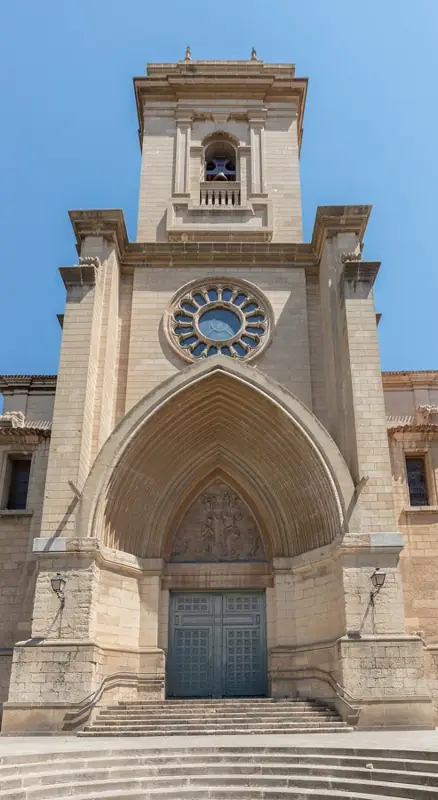
The Cathedral of San Juan Bautista reveals a prolonged building history. Begun in 1515 over an earlier church, it was not completed until the twentieth century, so its forms belong to several campaigns rather than one fixed style. Observe the building from the square and change position before approaching the entrances. The exterior does not summarise everything found inside. If the church is open, allow time to understand the arrangement of space and its artistic elements, checking which areas permit visits. Religious activity remains part of the setting, so respect quiet and services. Afterwards, compare this heritage with nearby Casa de Hortelano, where another period left a very different façade and another way of representing the city.
Explanation source ↗2 / 8 · ALBACETE
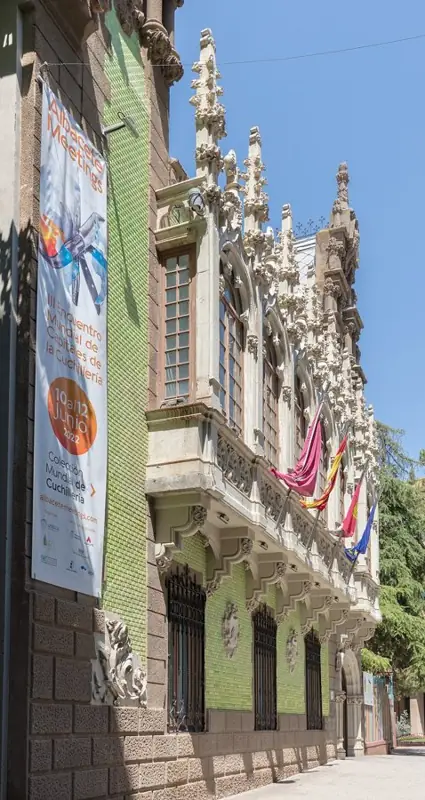
Since 2004, Casa de Hortelano has housed the Municipal Cutlery Museum. Its Modernist façade deserves a pause, but the visit mainly concerns crafts, materials and a tradition that helps explain Albacete. Knives, scissors and pocketknives are more than objects to view: they refer to techniques, workshops, work and everyday uses. Explore the rooms by considering how a tool combines function and design rather than concentrating only on size or decoration. Check admission arrangements and activities before visiting; not every experience is available without reservation. Touch objects only when staff explicitly permit it. The museum deserves time of its own and should not be confused with a shop or a permanent manufacturing demonstration operating throughout the day.
Explanation source ↗3 / 8 · ALBACETE
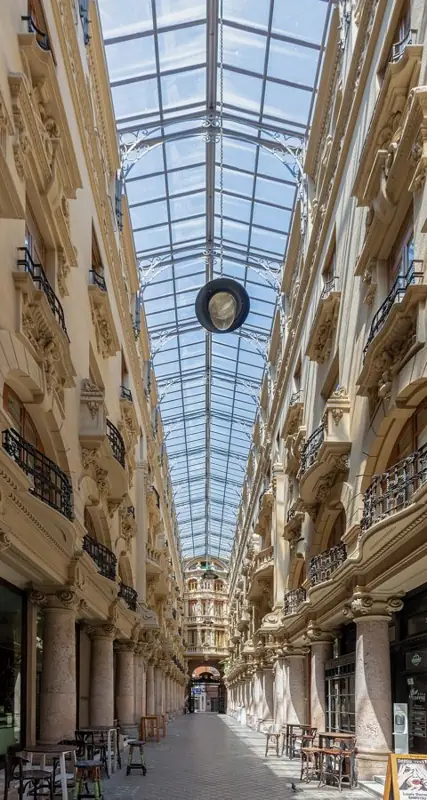
Lodares Passage expresses the ambitions of a modern city in the early twentieth century. Designed in 1925 by Buenaventura Ferrando Castell for Gabriel Lodares, it combines shopping and housing in a gallery inspired by European passages. Look upwards: roof, balconies, columns and decoration turn a connection between streets into an architectural experience. Walk slowly without blocking entrances and compare both ends before examining details. This is neither an empty backdrop nor a museum with independent admission: it remains part of urban and residential life. Respect closures and private uses. The stop helps explain why Albacete's heritage extends beyond religious buildings and ancient monuments, revealing the relationship between commerce, everyday movement and aesthetic ambition in a changing city.
Explanation source ↗4 / 8 · ALBACETE
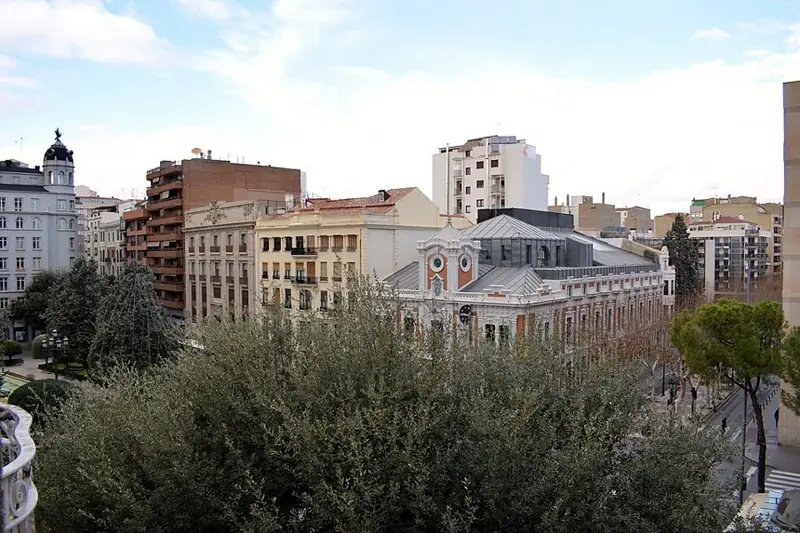
Altozano works as a meeting place and orientation point, but another historical layer lies beneath its everyday activity. The tourist office provides information about the square's transformation, while the air-raid shelter below recalls the Spanish Civil War. That relationship between surface and underground encourages a less obvious reading of urban space: a square preserves difficult memories as well as façades and terraces. Visiting the shelter requires checking current access arrangements; it is not automatically included in an exterior walk. Pause without blocking entrances and notice how streets converge here. The Municipal Museum in the former Town Hall adds a nearby cultural perspective. Use this stop to adjust your route according to museum opening, available time and remaining energy.
Explanation source ↗5 / 8 · ALBACETE
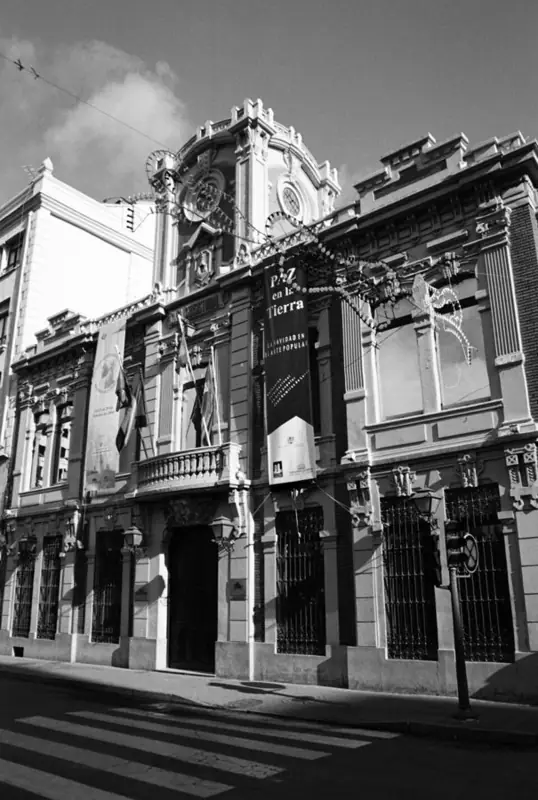
The Municipal Museum occupies the building used as Town Hall until 1986 and opened as a museum in 1995. This transformation shows how a place of government can become a cultural space without losing its relationship with the city. From Altozano, first observe the façade, then check which rooms and exhibitions are available. Do not confuse this institution with the Museum of Albacete in the park: their buildings and routes differ. Temporary programming changes, so do not expect a particular exhibition without checking beforehand. Allow time to relate the displays to their building and square. If closed, the exterior stop still helps explain the institutional and cultural development of the urban centre and its changing public functions.
Explanation source ↗6 / 8 · ALBACETE
Separate outing beyond the central walk
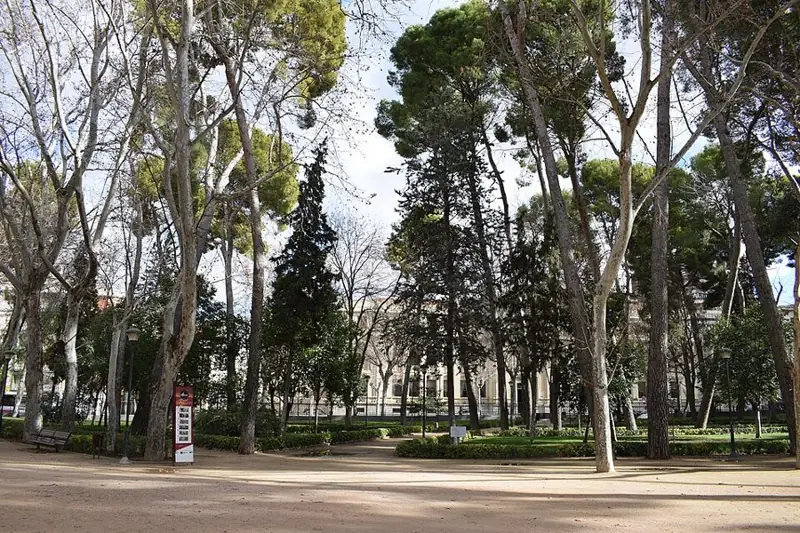
Abelardo Sánchez Park offers a green pause south of the central route. Its role in Albacete goes beyond connecting streets: it provides walking, rest and activity space and also contains the Museum of Albacete. Choose a circuit proportionate to your available time and notice how trees and paths change the pace after the shopping streets. You do not need to explore every corner to enjoy it. With children, find appropriate play areas without assuming particular facilities or activities are open; check current information. Respect plants, animals and people resting. This extension works especially well with the museum, provided admission arrangements are checked separately and enough time remains for a comfortable return to your accommodation at the end of the walk.
Explanation source ↗7 / 8 · ALBACETE
Separate outing beyond the central walk
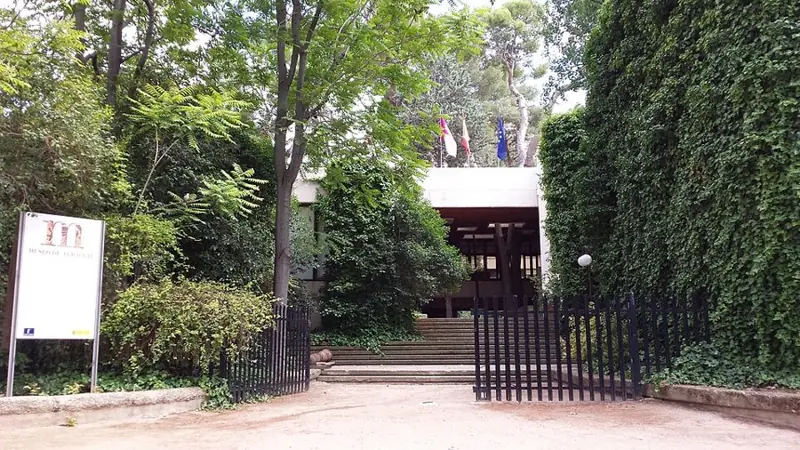
Inside the park, the Museum of Albacete changes the scale of the walk from one city to the history of its province. Archaeology brings together evidence of prehistory, Iberian culture and the Roman world, among other periods. Sculptures, inscriptions and everyday objects connect artefacts with people, territories and ways of life. Rather than photographing every case, choose a few questions and read the explanations slowly. Displays may change for conservation, loans or other needs, so no particular object is guaranteed. Check opening and admission before arranging your journey. The museum deserves time of its own and is different from the Municipal Museum at Altozano. Afterwards, pause in the park to reflect on what you have seen during the visit.
Explanation source ↗8 / 8 · ALBACETE
Separate outing beyond the central walk
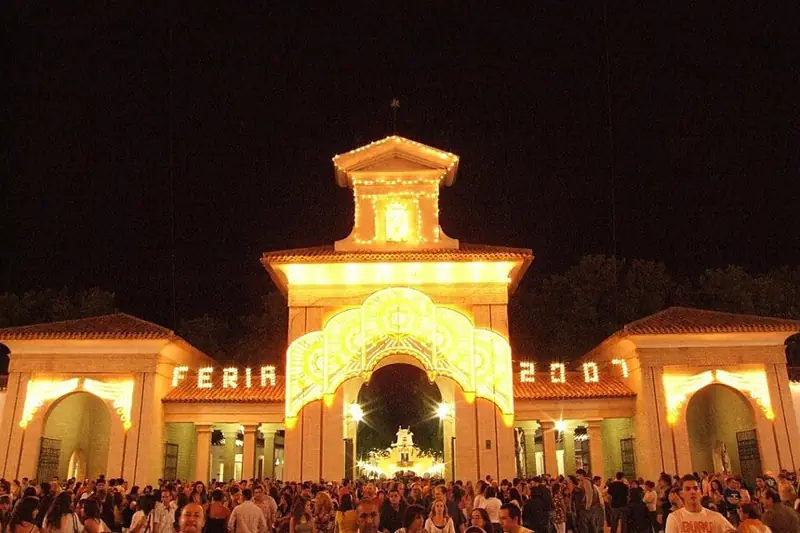
The historic Fairground explains Albacete's relationship with trade and celebration. Built in 1783 on the Santa Catalina threshing grounds, it gave the fair a permanent architectural presence, recognisable even outside its main festive period. Its plan and entrances tell a different story from a traditional square or museum. One distinction is essential: seeing the enclosure does not mean stalls, concerts, rides or performances operate every day. Check the calendar, visiting conditions and accessible areas before setting out; outside events, the experience may mainly involve the exterior. This extension lies in another direction from Abelardo Sánchez Park, so organise your journey deliberately rather than adding both outings without considering distance, time and energy remaining after the central walk.
Explanation source ↗Guzmán el Bueno 18, Albacete
Manchegan cooking in a house with pronounced bullfighting décor. Check menus and bookings directly and consider whether the setting suits your preferences.
Official website ↗ · Walking directions ↗Baños 2, Albacete
A central option combining traditional recipes and contemporary dishes. Check the menu, available produce and allergens before booking.
Official website ↗ · Walking directions ↗Alcalde Conangla 102, Albacete
A Manchegan restaurant with family history. Confirm the entrance, menu and availability directly when planning a meal with time of its own.
Official website ↗ · Walking directions ↗Editorial selection based on the venues’ own websites, not a personal dining review or sponsorship. Check opening, menus, allergens and prices before visiting.
Check conditions, language and availability on Civitatis. The guided visit has a fixed price; the free tour is funded by tips. Optional activities; affiliate links may earn a commission.
See activities in Albacete ↗Check Renfe for trains and EMISALBA for the bus station and connections. The urban operator publishes current routes, stops and disruptions. Walk between central stops, allowing extra distance in different directions for the park and Fairground. Airport transfers and guaranteed timetables are not included. Confirm journeys for your date. Markers are approximate; accessibility has not been audited.
Emergencies: 112. For non-urgent medical assistance, consult local services.