Two hours
Two hours: María Pita, Old Town, San Carlos Garden and San Antón exterior. No lengthy museum visits or journeys to the Tower or Monte de San Pedro.

WHAT TO SEE AND HOW TO PLAN
A Coruña combines an old town, harbour and open ocean. A central walk links María Pita, the Old Town, San Carlos and the exterior of San Antón; beaches, Domus, the Tower of Hercules and Monte de San Pedro need separate blocks of time. Check current interior access to the Tower: a municipal works notice was consulted on 17 October 2026.
Durations are indicative: queues and all indoor visits are not included.
Two hours: María Pita, Old Town, San Carlos Garden and San Antón exterior. No lengthy museum visits or journeys to the Tower or Monte de San Pedro.
One day: central walk in the morning and lunch near María Pita. In the afternoon choose the beaches and Domus or the Tower exterior. Use bus or taxi between areas if you do not want a long coastal walk; do not also add Monte de San Pedro.
Two days: Old Town, harbour and beaches on day one. Domus and the Tower exterior on day two, using transport as needed. Allocate a separate block and journey to Monte de San Pedro without relying on the panoramic lift. Check current opening for interiors.
With children: a short María Pita and Old Town walk or a dedicated interactive visit to Domus. Add part of the Orzán-Riazor promenade if weather allows. Do not attempt every stop; the Tower and hill require separate journeys and breaks.
Rain: prioritise Domus and a central meal, using transport between areas. Include San Antón only if the museum confirms opening. Avoid exposed coast, the Tower grounds and Monte de San Pedro during strong winds or storms; no route is entirely sheltered.
OpenStreetMap loads on request. Markers are indicative, not audited entrances. Use links for street directions.
Audio uses your device voice and depends on your browser. The full text is always available to read.
1 / 8 · A CORUÑA
Separate outing beyond the central walk
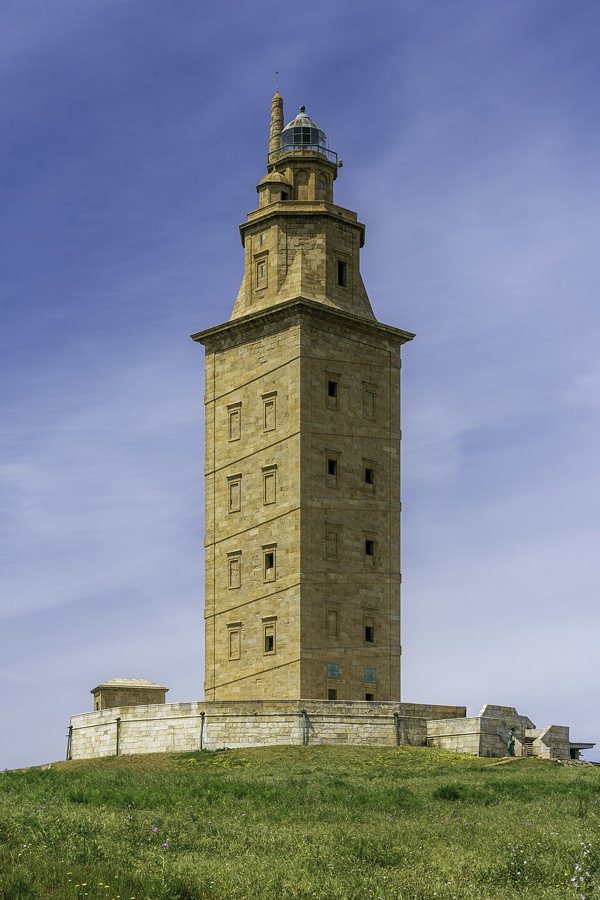
The Tower of Hercules is not a ruin that has lost its purpose: it still provides a signal for vessels passing A Coruña. Its Roman core was built around the end of the first or beginning of the second century, while the familiar granite exterior belongs to Eustaquio Giannini’s eighteenth-century restoration. This relationship between ancient structure and later adaptation helps explain its heritage value, recognised by UNESCO in 2009. From outside, imagine the lighthouse as part of a maritime network rather than an isolated tower. The sculpture park adds stories of Hercules, Breogán and the ocean. Notice checked on 17 October 2026: a municipal notice reports an interior closure for works; confirm current access before planning an ascent.
Explanation source ↗2 / 8 · A CORUÑA
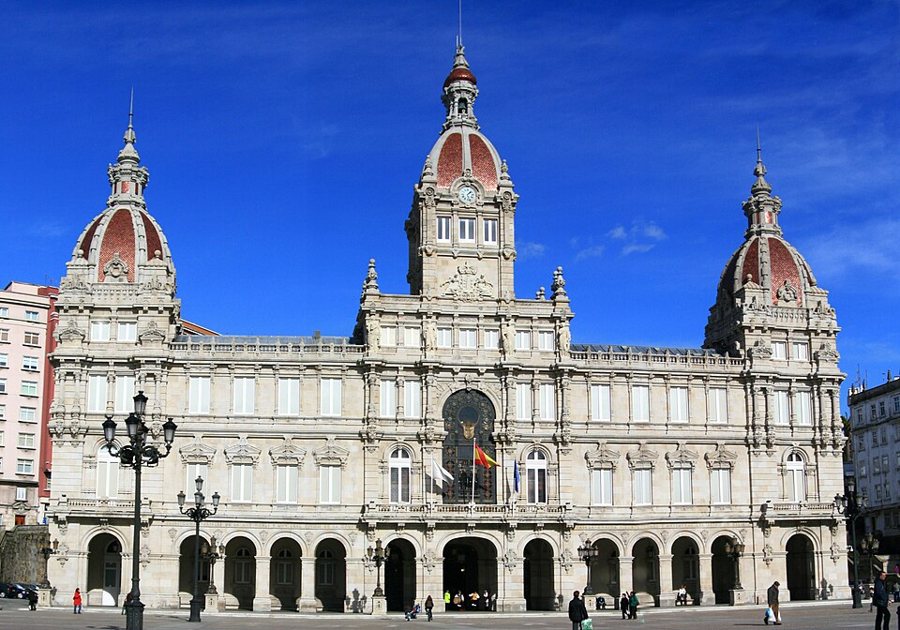
This square turns an episode of resistance into the city’s symbolic centre. Its statue commemorates María Pita and the people who defended A Coruña during the English attack of 1589. The individual heroine should not obscure the collective defence or the prominent role played by other women. The square itself is considerably younger: it was planned in the nineteenth century as the city reorganised connections between its old core and commercial neighbourhoods. The Municipal Palace occupies its northern side; Pedro Mariño began the building in 1908. Compare this imposing civic frontage with the arcades and glazed galleries around the square. Two histories meet here: remembrance of a siege and the later creation of a modern urban centre.
Explanation source ↗3 / 8 · A CORUÑA
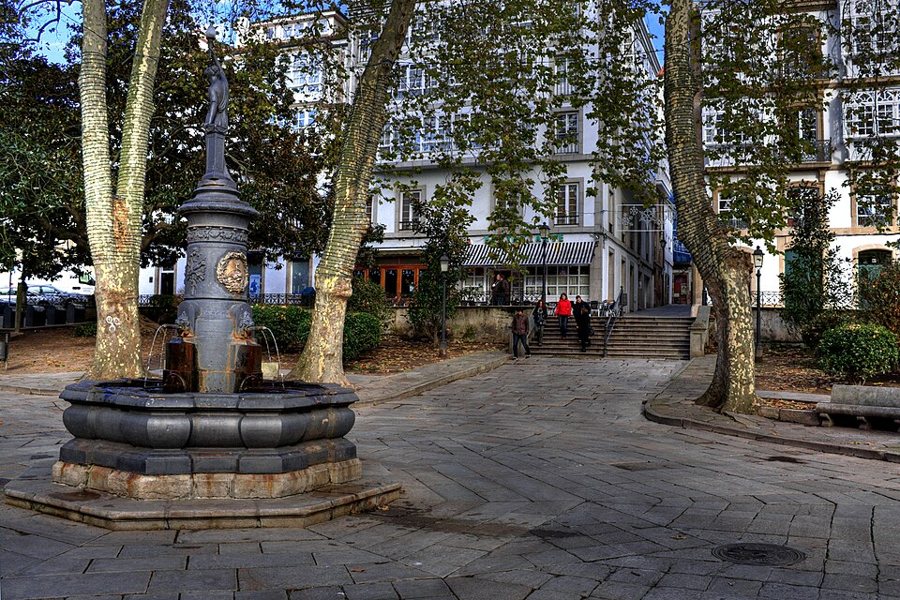
The Old Town tells A Coruña’s story on a smaller scale than the seafront. Here a doorway, a street corner or a modest square can carry the narrative. Santiago church and the Collegiate Church of Santa María do Campo preserve Romanesque forms; convents, noble houses and streets recalling old trades surround them. Azcárraga Square and the Bárbaras area show how a historic neighbourhood can remain a place of everyday community life. Literary memories also intersect here: Emilia Pardo Bazán’s former family home houses the Real Academia Galega. Rather than looking for one dominant façade, compare religious stonework, domestic buildings and public spaces. Together they explain a district formed over centuries that remains inhabited, beyond its role as a collection of monuments.
Explanation source ↗4 / 8 · A CORUÑA
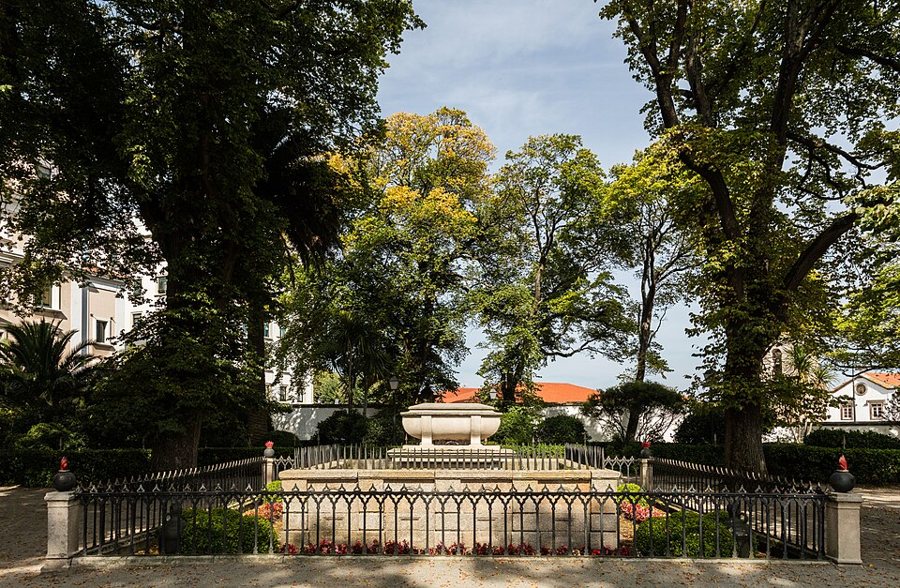
San Carlos Garden contains a tomb that connects A Coruña with the Napoleonic Wars. British general John Moore lies here after dying at the Battle of Elviña in 1809 while his army sought to embark. Before becoming a garden, the enclosure had been a fortress and a gunpowder store. Its enclosed design, with paths leading towards the funerary monument, transforms a defensive space into a place of remembrance. The harbour view supplies the missing element in the story: the sea provided the troops’ route of retreat. Notice how walls, planting and tomb work together. This is more than a green corner of the Old Town; it is a deliberately composed landscape preserving an international memory within the city.
Explanation source ↗5 / 8 · A CORUÑA
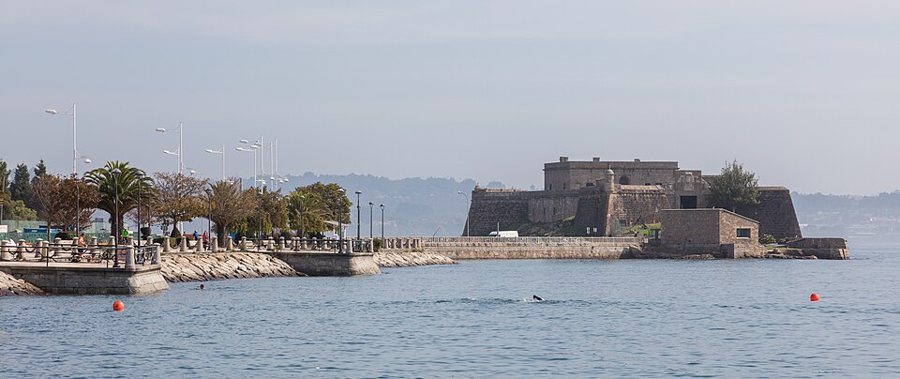
San Antón began on a small island in the bay, separated from the city it was intended to defend. Fortress construction started in 1588, and its layout reflects the need to control the harbour entrance. Before its twentieth-century connection with the mainland, reaching it required a boat. Its purposes changed over time: defensive position, prison and, since 1968, archaeological and historical museum. This transformation links military architecture with Galicia’s past, including objects from hillfort culture and the Roman period. From outside, consider the relationship between location, water and surveillance. Electrical works were officially announced in 2026; check the museum’s opening status rather than assuming interior access is available simply because the surrounding promenade can be reached.
Explanation source ↗6 / 8 · A CORUÑA
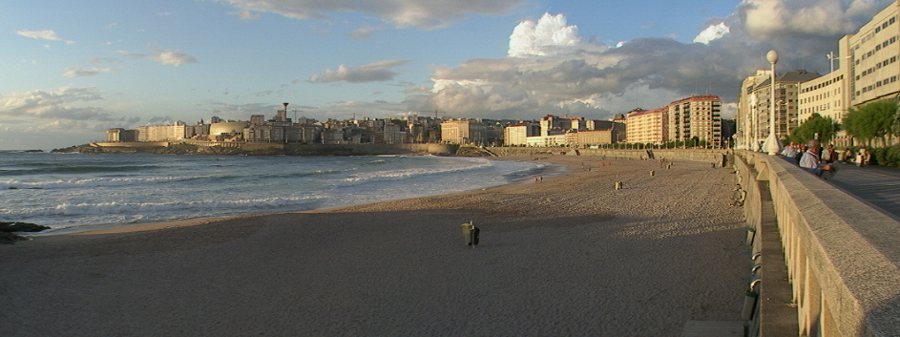
Orzán and Riazor form the great ocean-facing frontage of central A Coruña. Unlike the harbour, sheltered towards the estuary, this sweep of sand looks directly out to the Atlantic. The city therefore presents two very different maritime faces within a narrow area. Walking the promenade explains that geography better than a map. A breakwater separates the beaches, although from a distance they appear as a single curved bay. Picasso played along these shores during his childhood in A Coruña, connecting artistic memory with moving water and urban life. Notice the sequence of homes, avenue, sand and sea. The setting offers a walk throughout the year, but watching the waves must not be confused with safe conditions for swimming.
Explanation source ↗7 / 8 · A CORUÑA
Separate outing beyond the central walk
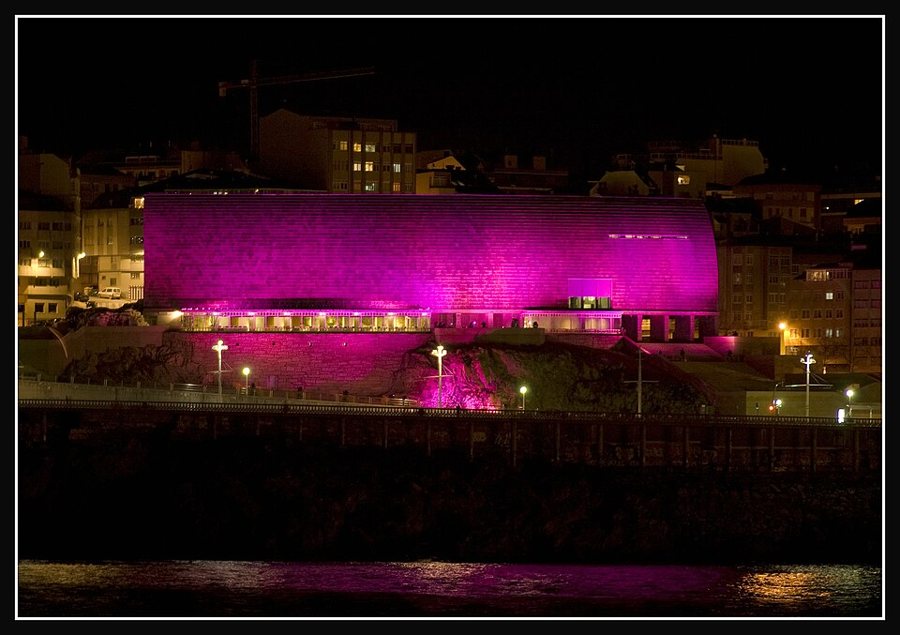
Domus changed the presentation of science when it opened in 1995: the museum’s subject is ourselves. Arata Isozaki’s building faces the ocean with a curved façade recalling a sail. Its Galician slate cladding makes the exterior part of the city’s Atlantic story. Inside, the approach goes beyond looking at objects: visitors experiment and ask questions about bodies, minds and the characteristics of our species. Nutrition, genetics and the working of the brain are among the subjects addressed by its exhibitions. This combination of architecture and participation explains its role within A Coruña’s scientific museums. Give it a dedicated visit, because testing and understanding interactive exhibits calls for a different pace from walking past historic monuments along the waterfront.
Explanation source ↗8 / 8 · A CORUÑA
Separate outing beyond the central walk
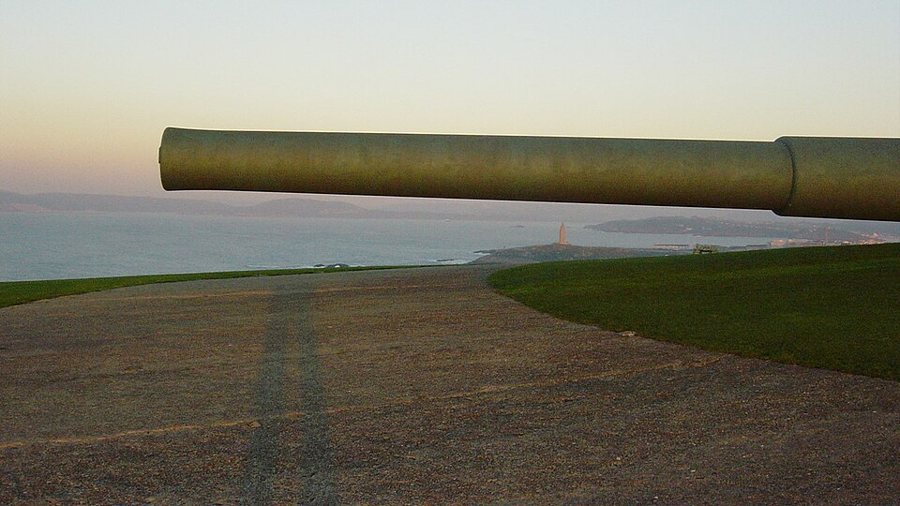
Monte de San Pedro reveals A Coruña from above while showing how a military landscape can be transformed. Before opening as a public park in 1999, the site served as a defensive position above the Atlantic. The large Vickers guns, installed in 1933, recall that role and reveal the scale of coastal surveillance. Today green spaces share attention with views across the urban peninsula, coastline and estuary entrance. Consider how the terrain explains the choice of location: seeing far into the distance was a strategic advantage before becoming a tourist attraction. Treat this as a separate extension from the centre. The tourism website states that the panoramic lift is temporarily closed; this does not mean the park is closed, but another access route is needed.
Explanation source ↗Calle Capitán Troncoso, 4, 15001 A Coruña
Market-led fish and seafood cooking near María Pita. A seated meal option after exploring the Old Town.
Official website ↗ · Walking directions ↗Calle Fernando Macías, 28 bajo, 15004 A Coruña
Restaurant near Riazor and Pontevedra Square. Suitable for a seated meal after the beach promenade; consult its current menu.
Official website ↗ · Walking directions ↗Rúa Real, 77, 15003 A Coruña
Galician fish and seafood cooking at the Rúa Real restaurant. This is distinct from the group’s other taverns.
Official website ↗ · Walking directions ↗Editorial selection based on the venues’ own websites, not a personal dining review or sponsorship. Check opening, menus, allergens and prices before visiting.
Check final prices, meeting points, tour language and availability on Civitatis. Boat trips depend on sea conditions. Optional paid activities; affiliate links may earn a commission.
See activities in A Coruña ↗Alvedro Airport is linked to A Coruña by the 4051/A4 bus listed by Aena; check current stops and schedules. Compañía de Tranvías operates city buses: its name does not imply an operating tourist tram. The Tower, Domus and Monte de San Pedro are not a compact two-hour central circuit. The tourism website lists the Monte de San Pedro lift as temporarily closed; arrange another access route and check park status. Coordinates are approximate and accessibility has not been audited.
Emergencies: 112. For non-urgent medical assistance, consult local services.